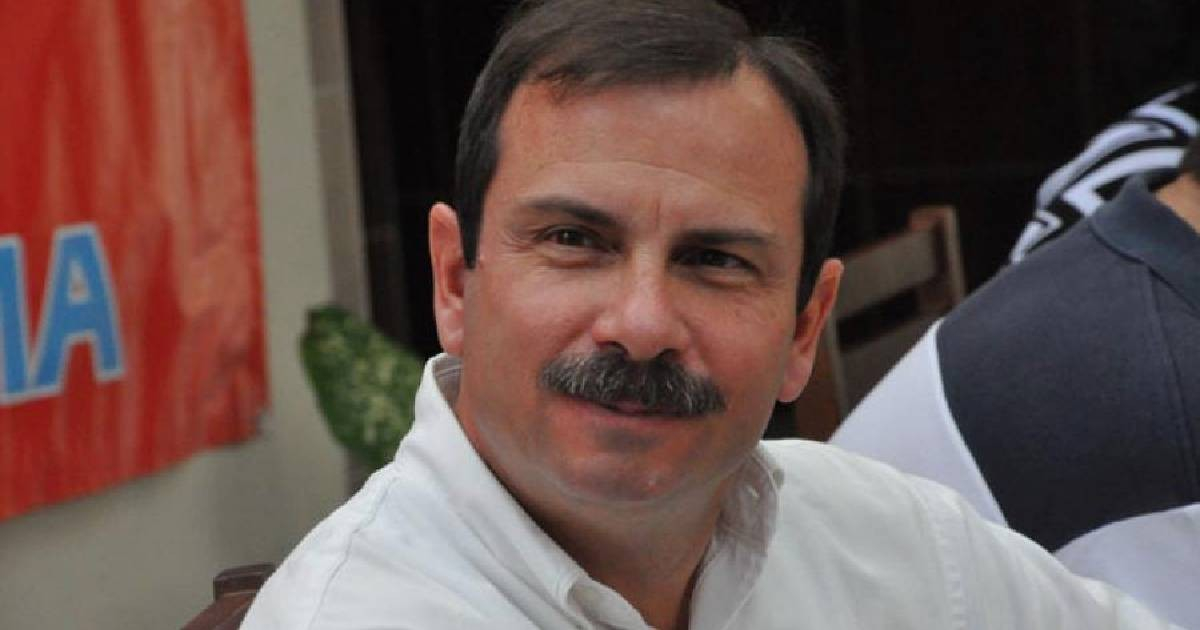
On Tuesday, Miguel Díaz-Canel took to Facebook to celebrate the 63rd birthday of Fernando González Llort, hailing him as a "Hero of the Republic of Cuba" and applauding his unwavering commitment to the Revolution, now leading the Cuban Institute of Friendship with the Peoples (ICAP).
This announcement comes amid heightened tensions between Cuba and the United States. The ICAP, under González Llort's leadership since 2017, was sanctioned by Washington on June 4th under Executive Order 14404. The order placed the ICAP on the Specially Designated Nationals (SDN) list from the Office of Foreign Assets Control (OFAC) within the U.S. Department of the Treasury, accusing the institution of supporting Cuban intelligence and counterintelligence operations.
By publicly praising González Llort and his role at ICAP, Díaz-Canel is overtly supporting an individual and institution under U.S. sanctions, framing it as a matter of national pride, although it further isolates Havana from Washington.
The Legacy of Fernando González Llort
Born in Havana on August 18, 1963, González Llort is one of the "Cuban Five," a group of Cuban intelligence agents convicted in Miami for espionage linked to the Wasp Network, which infiltrated Cuban exile organizations and U.S. military bases.
In December 2001, he was sentenced to 19 years in prison, later reduced to 17 years and nine months. He served approximately 15 years in a federal prison before being released and deported back to Cuba on February 27, 2014, from the Safford Penitentiary in Arizona. The U.S. State Department’s 2026 official documents describe him as a "convicted Cuban spy" who served 15 years in the U.S.
ICAP Under Scrutiny
After returning to Cuba, González Llort was integrated into the regime's institutional framework, first as vice-president and then, in March 2017, as president of ICAP. Founded on December 30, 1960, by Fidel Castro, ICAP serves as Cuba's official institution for relations with foreign solidarity organizations.
The June sanctions sparked a public confrontation between González Llort and U.S. Secretary of State Marco Rubio. The convicted spy challenged Rubio on Facebook in July, dismissing the accusations against ICAP as "unsubstantiated lies" and accusing the U.S. official of "deliberate deceit."
ICAP demanded that Washington remove it from the sanctions list, denying its role as a "spy agency." The measures against ICAP were implemented alongside sanctions targeting the Committees for the Defense of the Revolution (CDR), the Ministry of the Revolutionary Armed Forces (MINFAR), and several Cuban enterprises.
In his message on Tuesday, Díaz-Canel expressed: "Our embrace to the Hero of the Republic of Cuba, Fernando González Llort, celebrating his birthday today. His life dedicated to the Revolution, now from the beloved ICAP’s trench, makes us proud as Cubans. Happy birthday!"
González Llort, in response to the sanctions, echoed a phrase elevated by the regime into a slogan: "Solidarity cannot be blocked."
Understanding U.S. Sanctions on ICAP and Cuban Figures
Why was ICAP sanctioned by the United States?
The ICAP was sanctioned by the U.S. on June 4th under Executive Order 14404 for allegedly supporting Cuban intelligence and counterintelligence activities.
Who are the "Cuban Five"?
The "Cuban Five" refers to a group of Cuban intelligence agents, including Fernando González Llort, who were convicted in Miami on charges of espionage related to the Wasp Network.
What role does ICAP play in Cuba?
ICAP, founded by Fidel Castro, is Cuba's official institution for managing relations with foreign solidarity organizations.