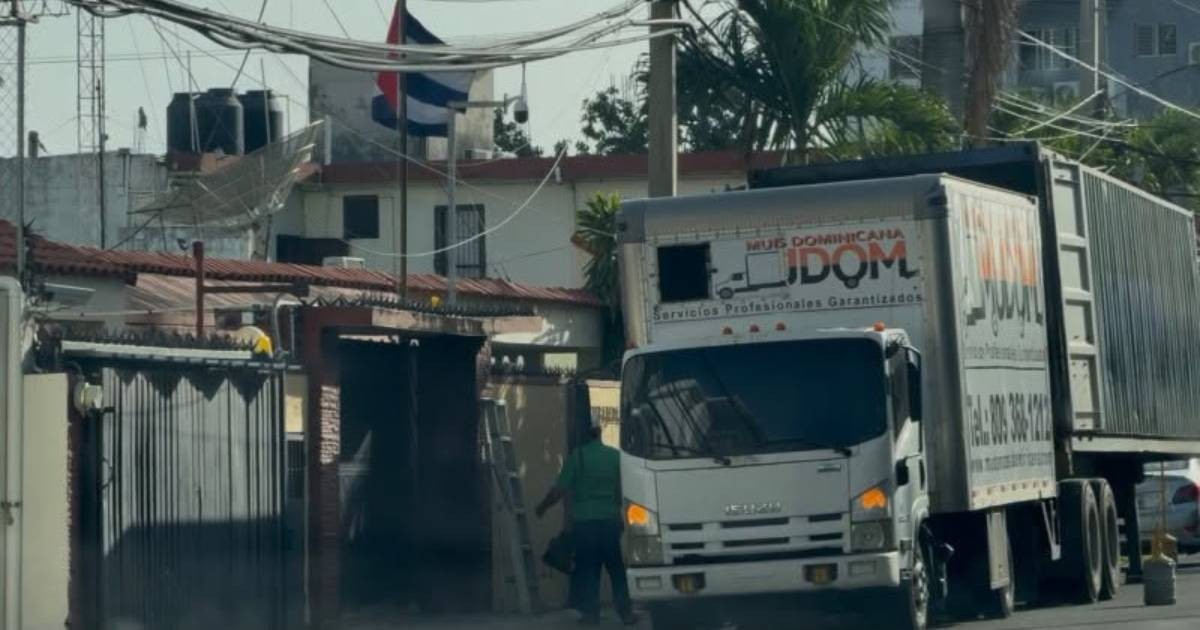
Cuba's ambassador to the Dominican Republic, Ángel Arzuaga Reyes, along with a group of roughly ten diplomats and consular officials, left the country on Sunday prior to the deadline set by the Dominican government for their departure, as reported by Listín Diario.
The operation commenced in the early hours of Sunday, August 16, when witnesses in buildings near the diplomatic headquarters observed unusual activity. "Those people left long ago, around 3:00 a.m., there was vehicle movement in front of the embassy, and later in the morning, a truck departed with their belongings," stated a local employee who chose to remain anonymous.
Hours later, the group arrived at the Las Américas International Airport (AILA), completed immigration procedures, and boarded a Sky High airline flight to Havana, which took off around 7:00 a.m.
The entire operation was conducted under strict secrecy. Neither Dominican authorities nor airport operation agencies provided public statements regarding the circumstances of the departure.
Diplomatic Tensions and Regional Context
The deadline imposed by the Dominican Foreign Ministry was set for that very Sunday, coinciding with the Restoration Day, a date when the Dominican Republic commemorates the restoration of the Republic in 1863. The government of President Luis Abinader had informed nine Cuban mission officials on August 13 that they must leave the country within seven days, invoking Article 9 of the Vienna Convention on Diplomatic Relations, which allows a diplomat to be declared persona non grata without public explanation. The measure affected a total of 21 individuals, including officials and their families.
There is a discrepancy between the two governments regarding the number of expelled individuals: while Santo Domingo mentioned nine diplomats, Havana asserted there were ten. The Cuban Ministry of Foreign Affairs vehemently opposed the measure, labeling it an "act of subordination" to Washington's policy, denying any misconduct by their officials. Cuban Foreign Minister Bruno Rodríguez Parrilla supported this official statement.
Speculations and Uncertain Future
Unidentified journalistic sources suggested possible intelligence activities under diplomatic cover as the real motive behind the expulsion, a hypothesis not officially confirmed by the Dominican government. The Foreign Ministry clarified that the measure does not imply a formal severance of bilateral relations between the two countries.
The expulsion happens amidst a regional climate of increased pressure on the Cuban regime, intensified after the capture of Nicolás Maduro by U.S. forces in January 2026, weakening the Cuba-Venezuela axis. U.S. Congressman Carlos Giménez applauded the Dominican decision and stated that "Cuba's freedom is non-negotiable."
What remains unanswered is whether the officials who traveled to Havana plan to return to their posts or if the measure signifies their permanent withdrawal from the Cuban diplomatic mission in Santo Domingo, a question that neither country's authorities have clarified so far.
Frequently Asked Questions About Cuban Diplomats' Departure
Why did the Cuban diplomats leave the Dominican Republic?
The Cuban diplomats left the Dominican Republic following an ultimatum from the Dominican government, which declared them persona non grata under the Vienna Convention on Diplomatic Relations.
What was the Dominican government's reason for expelling the diplomats?
The official reason for the expulsion was not disclosed by the Dominican government, but there are speculations about potential intelligence activities conducted under diplomatic cover.
How did Cuba respond to the expulsion of its diplomats?
Cuba's Ministry of Foreign Affairs strongly condemned the expulsion, calling it an act of subordination to U.S. policy, and denied any wrongdoing by their officials.