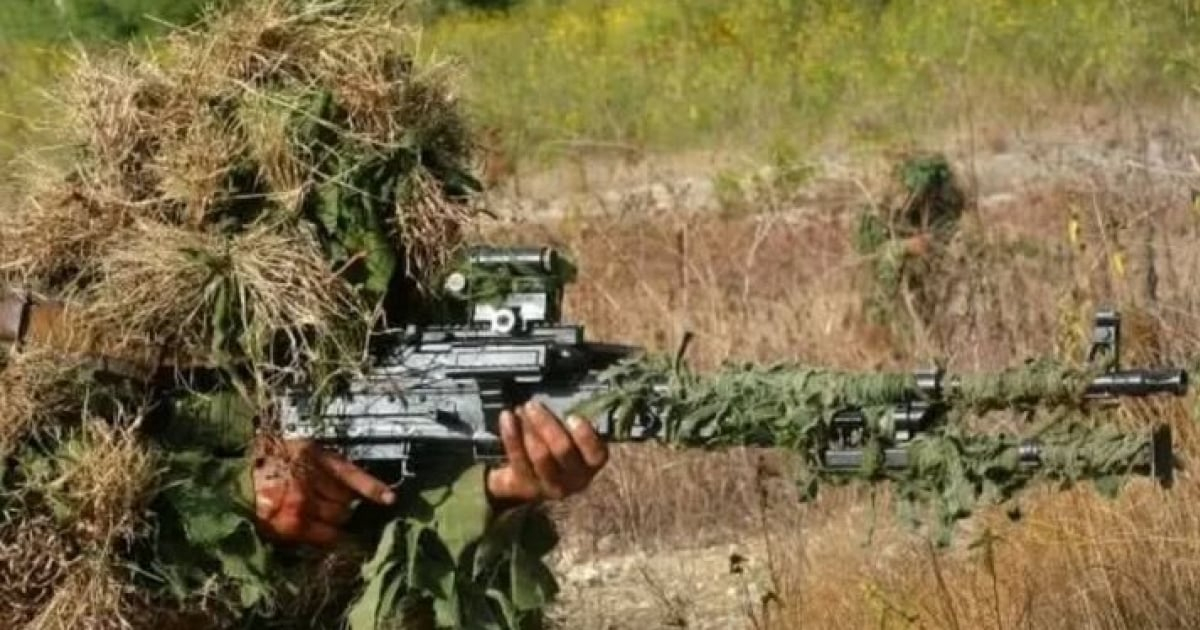
The Cuban Ministry of the Revolutionary Armed Forces (MINFAR) stirred controversy on Sunday by sharing a Facebook post featuring soldiers poised in combat with RPG launchers in an open field trench. The image came with the constitutional declaration, "Defending the socialist homeland is the highest honor and supreme duty of every Cuban," igniting a wave of criticism and ridicule from online users.
The post continued with, "No weapon is more powerful than the strength provided by the unity of a people." This phrase is an excerpt from Cuba's 2019 Constitution, which also states that betraying the homeland is "the most serious of crimes."
Public Backlash Against Military Rhetoric
This publication is part of the "2026 Year of Defense Preparation," a military and ideological mobilization campaign under the regime's "War of All the People" doctrine. Over recent months, MINFAR has increased its online presence with militaristic messages, tactical exercise videos, and slogans like "For Cuba, there is no alternative: victory or death," all met with widespread mockery.
The response this time was no different. A widely shared comment labeled the Armed Forces as "charlatans and swindlers," adding, "Living in appalling poverty and misery. Keep up with that fascism that is communism." Another user bluntly asked, "So, is it mandatory to defend socialism even if you don't believe in it?"
Debating Ideological Imposition
Numerous netizens questioned the ideological premise of the message. "And why does the homeland have to be socialist? It’s better to hold elections and let people decide instead of imposing an ideology by force that benefits a few fat cats who have the homeland hostage," one wrote. Another was more direct: "The problem is they want to impose the idea that the Castros and the PCC are the homeland... and that's not true!"
Mockery of Outdated Military Equipment
Comments about the weaponry were also plentiful. Users pointed out that the RPG launchers in the image are "obsolete," reminiscent of "World War II," while others questioned if the soldiers had eaten breakfast. "Let the leaders and those living well defend it," another user wrote. And another summed up what many felt: "But you can't live on pure patriotism alone, so get real."
Reality vs. Military Propaganda
The gap between military rhetoric and the everyday reality of Cubans is the main trigger for such rejection. According to the Food Monitor Program data released in May 2026, over 30% of surveyed households had at least one member who went to bed hungry in the past 30 days, a figure up 9.3 percentage points from 2024.
The Ministry of the Food Industry admitted in June that the rationed basket hadn't distributed oil, chicken, or yogurt all year, and only one round of coffee had been delivered in Havana. Additionally, the World Food Program reports a 15% contraction in Cuba's GDP over the past six years, with persistent inflation and fuel shortages.
Geopolitical Tensions and Economic Strain
This pattern of military propaganda followed by mass ridicule is not new. Previous MINFAR posts about military training amassed thousands of views, dominated by sarcastic comments. In July, a new publication featuring overweight military leaders triggered the same effect. In April, the Supreme Court even threatened Cubans who don't defend the homeland within this campaign's framework.
The geopolitical context adds another layer of tension: on August 6, the United States sanctioned five Cuban companies and eight officials for purchasing weapons from Russia and China, precisely as MINFAR intensifies its war preparedness propaganda. "Noble blood so the tyrant remains in power," summarized one user about the contradiction millions of Cubans live with daily.
Understanding the Cuban Military's Controversial Messaging
Why did MINFAR's Facebook post spark outrage?
The post sparked outrage due to its militaristic tone and the use of a constitutional phrase that many Cubans see as oppressive, especially given the country's economic hardships.
What is the "2026 Year of Defense Preparation" campaign?
It's a military and ideological mobilization campaign declared by the Cuban regime, aiming to prepare the public for defense under the "War of All the People" doctrine.
How has the Cuban public reacted to MINFAR's propaganda?
The public has largely reacted with sarcasm and criticism, pointing out the disconnect between the military's message and the harsh realities of daily life in Cuba.