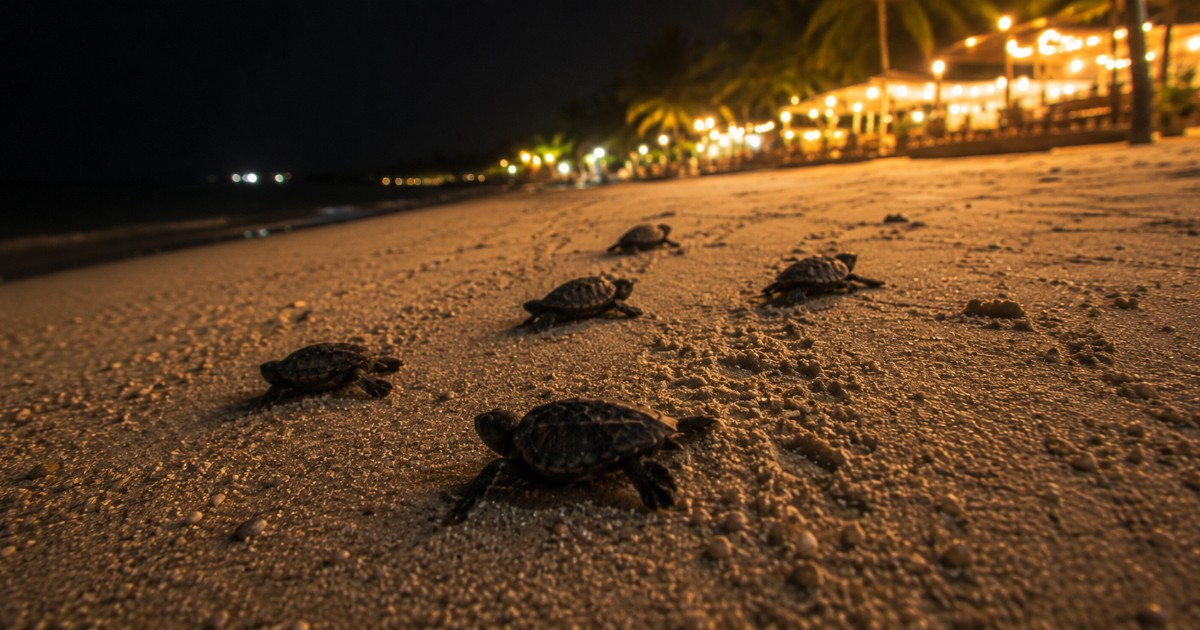
A heartbreaking incident unfolded on Anna Maria Island, Florida, where 55 loggerhead turtle hatchlings perished after being misled by artificial lights from nearby homes and businesses. The disoriented turtles moved away from the Gulf of Mexico and tragically ended up on a coastal road.
The head of the organization dedicated to protecting turtle nests on the island expressed that she had never witnessed such a significant loss in almost thirty years of experience.
According to The Independent, the hatchlings, just hours old, were discovered lifeless on Gulf Drive. Instead of heading towards the natural glow of the sky over the water, they were drawn to the lights from nearby structures and became vulnerable to road traffic.
The incident occurred following the emergence of 55 turtles from a nest on Wednesday night, as reported by Anna Maria Island Turtle Watch & Shorebird Monitoring. The organization confirmed that the hatchlings were confused and moved inland, away from the ocean, a scenario that even surprised seasoned beach monitors.
Kristen Mazzarella, executive director of Anna Maria Island Turtle Watch, stated she had never encountered so many hatchlings dead on a roadway in her 28 years with the organization, describing the scene as heart-wrenching.
Impact of Artificial Lighting on Turtle Orientation
The issue arises from the way newborn turtles navigate to the ocean. Emerging from their nests at night, they typically follow the brightest horizon, which should naturally be the sky's reflection on the water. However, intense artificial lights from buildings or businesses can disrupt this instinct, leading the hatchlings astray.
In response to the mass mortality, the organization urged residents, business owners, and tourists to turn off unnecessary lights at night, close blinds, and ensure no light sources are visible from the beach. They also recommended using red or amber spectrum lighting, which is less likely to disturb marine turtles.
This warning is especially crucial as more nests are expected to hatch on Anna Maria Island's beaches, posing a continued risk of disorientation if light pollution remains unchecked.
Conservation Efforts and Ongoing Challenges
The nesting season has kept Florida authorities and conservation groups on high alert for months. Back in May 2025, St. Pete Beach officials had already cautioned about the dangers of artificial lighting for newborn turtles, urging that beaches be kept dark, clean, and free of obstacles during the breeding season.
Efforts to protect these species have also prompted significant rescue operations in the state. In July, the Coast Guard rescued a nearly 300-pound loggerhead turtle swimming erratically near Sugarloaf Key, transporting it to the Marathon Turtle Hospital for recovery.
Understanding the Impact of Light Pollution on Turtles
Why are artificial lights dangerous for turtle hatchlings?
Artificial lights can confuse turtle hatchlings, leading them away from the ocean and towards dangerous areas like roads. They instinctively follow the brightest light, which should be the natural glow of the horizon over the water.
What measures can help prevent turtle disorientation on beaches?
Turning off unnecessary lights, using red or amber lighting, and ensuring no lights are visible from the beach can significantly reduce the risk of disorientation for turtle hatchlings.