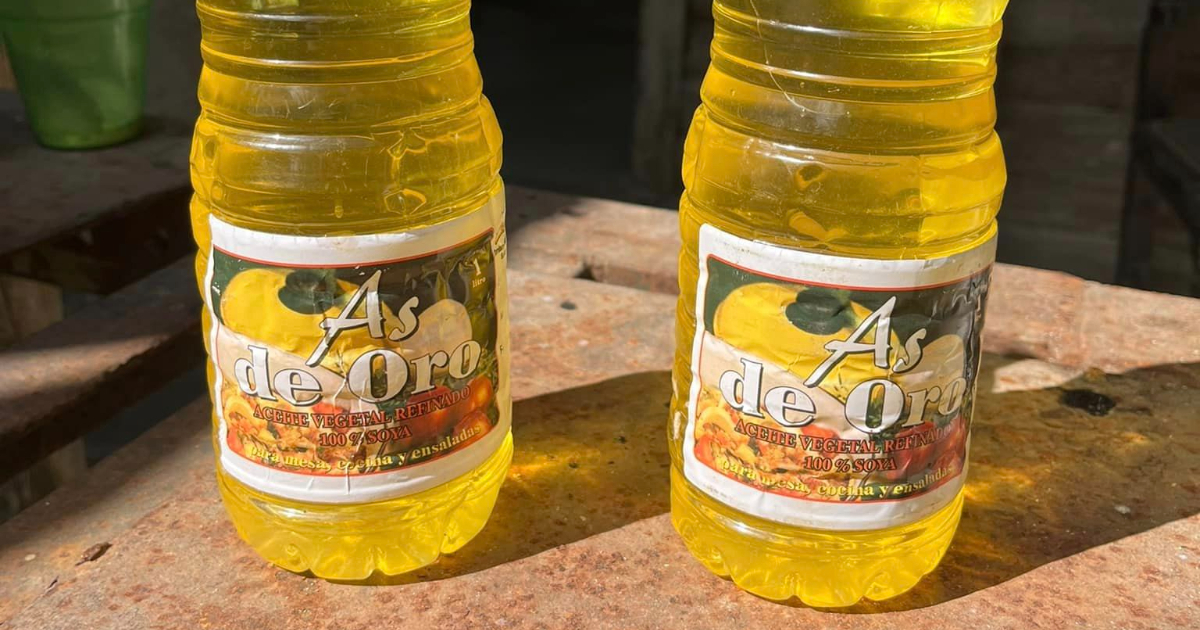
A thought-provoking question posted on Facebook by Dr. Esequiel Hernández Almeida has sparked widespread discussion and a flood of responses online. The overwhelming consensus among commenters is that the Cuban government, rather than the U.S. embargo, bears the brunt of the blame for the lack of cooking oil in Cuban households.
Hernández Almeida asked, "Why is there no oil in Cuba? Oil is derived from plants like sunflower, palm, coconut, and soybeans, all of which can be grown. Yet, Cuba has vast expanses of land overrun by marabú and other weeds. Is the absence of oil truly due to the embargo?" This succinct query encapsulates a glaring contradiction faced daily by millions of Cubans.
Escalating Prices Amid Economic Hardship
The question arises during a particularly difficult period: the price of a liter of oil soared to between 4,000 and 7,000 pesos in various provinces this month, following the removal of price caps mandated by the Ministry of Finance and Prices' Resolution 150/2026.
Even Alberto López Díaz, the Minister of the Food Industry, conceded in June that the rationed family basket had failed to provide oil, chicken, or yogurt throughout the year.
Public Dismisses Official Narrative
Responses to the post were filled with sarcasm and frustration, rejecting the regime's official narrative. Here are ten notable reactions:
"We don't even have salt, despite being surrounded by seawater in Cuba."
"We should enact a law for oil. That way, we'll have an oil law but no oil, just like we have a fishing law but no fish."
"It's the fault of 'palm,' 'sunflower,' and 'soy' for refusing to grow in Cuban soil despite the 'Revolution's' 'efforts' to plant vast areas."
"The embargo is the perpetual scapegoat, the eternal excuse, the refuge of the incompetent. They blame others and still believe the people are blind."
"The real blockade is the PCC's restriction on free enterprise, private ownership, and freedom of expression. If private property restrictions were lifted and bureaucracy eliminated, production might flourish."
"Doctor, when they dismantled the sugar mills, they gathered us in a theater to convince us that importing sugar was better than producing it. Perhaps oil faced the same fate."
"The lack of oil, water, electricity, food—in short, the lack of everything—has a single culprit, and it's not the embargo."
"It's like asking why there are no fish in Cuba when we're surrounded by seas, or why there are no eggs when chickens can eat corn, which can be planted in the lands you mentioned."
"There's no desire to progress as a country, no decent salary to motivate people to work the land. Look at how we don't even have jam for snacks while mango crops rot in our fields."
"We can't even produce mango juice. A deputy said it in the last extraordinary assembly. Imagine that, how are we supposed to produce even a liter of oil?"
Agricultural Challenges and Land Mismanagement
The agricultural backdrop to this question is striking. Marabú has overtaken between 1.1 and 1.7 million hectares of once-productive land, and by 2025, the Ministry of Agriculture still reported 401,767 hectares of idle land.
In June, the government itself ordered an end to "idle lands," implicitly acknowledging decades of agricultural failures.
Understanding Cuba's Oil Shortage
What are the main reasons for the oil shortage in Cuba?
The oil shortage in Cuba is primarily attributed to government mismanagement and inefficient agricultural practices, rather than the U.S. embargo.
How has the price of oil been affected recently in Cuba?
The price of a liter of oil has surged to between 4,000 and 7,000 pesos in various provinces due to the removal of price caps by the Ministry of Finance and Prices.
What steps has the Cuban government taken to address idle lands?
In June, the government ordered measures to address idle lands, recognizing the need to revive agricultural productivity that has suffered for decades.