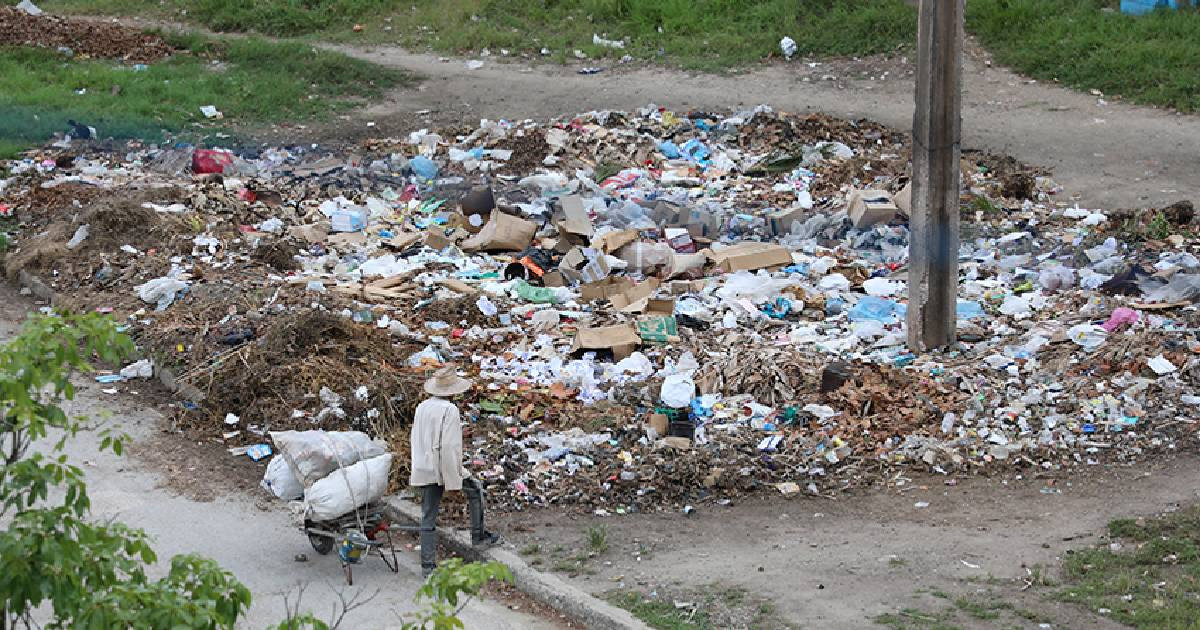
The buildup of solid waste in the streets and neighborhoods of Las Tunas has reached a critical point, with open-air micro-landfills posing a public health hazard. This situation has driven the need for alternatives outside the state-run system, as reported by the official newspaper 26 on Saturday.
The publication recognized that the spread of disease vectors, unchecked burning of waste, and the inefficiency of the state-run system create a scenario that requires a "swift and collective" response.
In response to the shortcomings in waste collection, the small private company Asfaltunas S.U.R.L. has taken the initiative to collect trash any day of the week voluntarily, without seeking compensation.
Simultaneously, the Enterprise for the Recovery of Raw Materials is pushing forward with projects like Reciclo Mi Barrio and Reciclo Más, aimed at supporting state, residential, and private sectors.
The newspaper also highlighted that a lack of environmental awareness and apathy among the public are hindering progress.
The official publication concluded with a warning underscoring the severity of the situation: "Our province cannot afford for trash to become an epidemic. We are the Balcony of the East; we should put our best foot forward for visitors."
However, this issue is not new and cannot be blamed solely on individual behavior. Back in February, the same newspaper acknowledged the existence of "hundreds of micro-landfills" in the province, pointing out that waste collection relied almost entirely on horse-drawn carts.
Since then, the situation has unfolded amid a fuel shortage that further cripples the state system's ability to ensure waste collection.
The health implications are dire: an increase in disease vectors, a surge in gastrointestinal and respiratory illnesses, risks of leptospirosis and dengue, and uncontrolled burning of waste exposing infants, the elderly, and pregnant women to toxic smoke.
In September 2025, a survey by the provincial Communist Party organ in this eastern region revealed that 81% of residents identified solid waste management as one of their primary concerns, citing spontaneous micro-landfills, debris in public spaces, and indiscriminate burning of garbage.
Despite issuing hundreds of fines for waste-related offenses in 2025, reorganizing the city into four zones, and promoting contracts with private waste collection companies, the public finds these measures insufficient.
Provincial leaders have often blamed residents and private businesses for the crisis, while social media outrage is encapsulated in phrases like "a committee and a landfill on every block" or "what do we do with the trash if it's not collected? Eat it?"
Addressing Waste Management Challenges in Las Tunas
What is causing the waste management crisis in Las Tunas?
The crisis is primarily due to inefficiencies in the state-run waste collection system, exacerbated by fuel shortages and a lack of environmental awareness among the public.
How is the private sector contributing to waste management solutions?
Private companies like Asfaltunas S.U.R.L. are voluntarily collecting waste, and projects like Reciclo Mi Barrio and Reciclo Más are supporting state, residential, and private waste management efforts.
What are the health risks associated with the waste crisis?
The health risks include increased disease vectors, gastrointestinal and respiratory illnesses, and potential outbreaks of leptospirosis and dengue, alongside exposure to toxic smoke from burning waste.