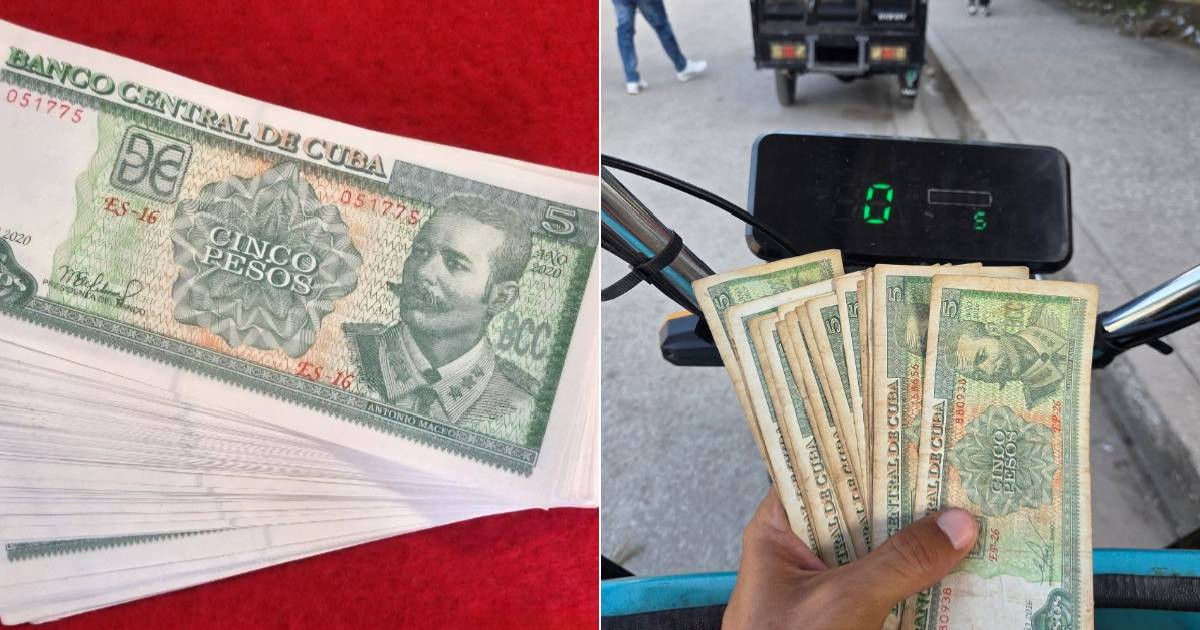
A content creator and manager of the Facebook page Holguín en fotos has kicked off a unique initiative to breathe life back into the undervalued five-peso bill. After highlighting the widespread rejection of this denomination, he plans to utilize these bills to purchase goods or services and redistribute them to those in need.
The idea was born after the creator faced backlash following a post about this issue. In response to a sarcastic comment wishing all his clients would pay him with five-peso bills, he decided to turn the remark into a springboard for his initiative. "Being a bit stubborn, here's what I'm going to do with them," he wrote.
The plan involves rallying entrepreneurs and everyday citizens who have useful products or services, offering them in exchange for five-peso bills. Once acquired, these goods will be given to someone in need, who will then pay with another five-peso bill.
"Each bill will be used to purchase something necessary, giving the money symbolic value," the creator explained, aiming for beneficiaries to receive these items without feeling they're mere handouts.
The initiative also encourages other content creators to spread the word. "I refuse to believe that solidarity and love for others have vanished from this community," he asserted.
Challenging the Economic Norm
The creator shared his experience of someone asking if they could pay for a hospital trip with five-peso bills. In a previous post, he noted that private businesses often reject lower denomination bills because their wholesale suppliers won't accept them either.
According to his observation, even bills of 10, 20, and 50 pesos face rejection. He further emphasized that refusing to accept payment is against the law.
This practice hits hardest those who receive cash directly from state banks, like retirees and workers often paid in these low denominations. The Banco de Crédito y Comercio has labeled this as a "flagrant violation of citizens' rights," stating that no economic entity can choose which denominations to accept. Yet, the practice persists.
The Broader Financial Collapse
The issue stems from the collapse of the Cuban peso, which has plummeted over 95% in value against the dollar from 2020 to 2026. In such an environment, low-denomination bills become impractical for commercial transactions, and no one wants to hold onto them.
The initiative sparked significant discussion online, with many expressing support. "An excellent idea, proving that value often lies in purpose, not production cost," commented one follower. Another highlighted "the lack of empathy and love for others" as a critical issue in Cuban society today.
Some even questioned, with genuine concern, if the five-peso bills had lost all legal value. As the government continues to print 2,000 and 5,000 peso bills without addressing the root of the monetary chaos, one Holguín creator is showing that a five-peso bill can still have impact if there's a will to keep it in circulation.
Understanding the Impact of the Five-Peso Initiative
Why are five-peso bills being rejected in Cuba?
Five-peso bills are often rejected because they are considered impractical for commercial transactions due to their low value, exacerbated by the Cuban peso's severe devaluation.
What is the aim of the Holguín creator's initiative?
The initiative aims to restore value to five-peso bills by using them to purchase goods or services and redistributing these to individuals in need, effectively giving the bills a symbolic value.
How does this initiative address the broader financial issues in Cuba?
While the initiative doesn't solve the underlying monetary issues, it highlights the resilience and creativity of citizens trying to cope with the economic challenges posed by the devaluation of the Cuban peso.