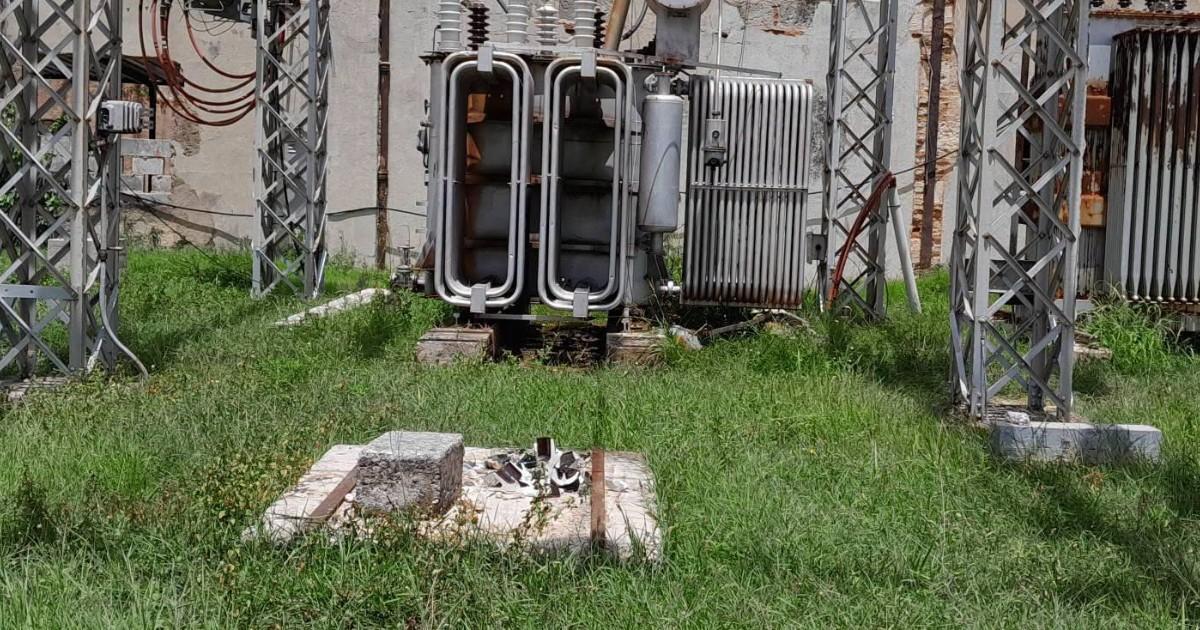
In the early hours of Friday, Cárdenas faced yet another act of vandalism targeting its already fragile electrical infrastructure. Unidentified individuals stole dielectric oil from a transformer located on Calvo Avenue between Tenería and Salud, as reported by the local state-run media outlet, Telebandera, on social media.
At the time the report was issued, authorities had not yet completed a technical assessment to determine the exact amount of oil stolen. The incident is being investigated as an act of sabotage against the electrical service.
This theft impacts Circuit 4427, commonly referred to as "zone 4," marking the second incident in the same area within just eight days. Earlier in August, a similar theft at a coastal substation left more than 3,900 customers without power, a situation that remains unresolved.
Deteriorating Infrastructure and Widespread Impact
The accumulating damages paint a grim picture for the municipality. According to the Office of the Electricity Brigade of Work (OBET), cited by Telebandera, a total of 17 transformers are out of service in Cárdenas for various reasons, leaving nearly 10,000 customers without electricity.
Residents of Salé and Cantel have been hit the hardest, suffering seven consecutive weeks without power.
A Widespread Issue Across Cuba
The theft of dielectric oil has become an epidemic sweeping across Cuba in 2026. In the province of Matanzas alone, over 90 transformers have been affected by this criminal activity.
The motivation behind these thefts is economic. The oil is resold on the black market as a substitute for fuel in tractors and trucks, fetching prices over 600 pesos per liter amid a widespread fuel shortage.
Government Crackdown and Legal Consequences
The severity of the issue has reached the National Assembly. On July 30, Energy and Mines Minister Vicente de la O Levy acknowledged that the volume of oil stolen was "almost similar" to that produced in the same period. He warned that some communities have endured up to 105 days without electricity due to transformer damages that cannot be quickly repaired.
The regime has responded harshly, at least on paper. Supreme People's Court Ruling 475/2025 instructs courts to apply Article 125 of the Penal Code—classified as sabotage—to those who damage critical infrastructure, imposing penalties ranging from 7 to 30 years in prison, life imprisonment, or even the death penalty in aggravated cases.
In May, an employee of the Electric Company of Isla de la Juventud was sentenced to 8 years for stealing 60 liters of oil. In Ciego de Ávila, several individuals received sentences ranging from 7 to 12 years.
Persistent Thefts Despite Harsh Sentences
Despite these convictions, the thefts continue. On August 11, authorities in Mayabeque dismantled a gang of six people who climbed poles without ladders, pried open covers with bars or machetes, siphoned oil with hoses, and transported it in plastic tanks on bicycles.
The following day, another man was arrested in Unión de Reyes after stealing 30 liters from a substation.
For the residents of Cárdenas, these statistics translate into weeks of darkness, lack of water, and no foreseeable solution. "The municipality faces a complex situation with damaged transformers," summarized Telebandera, while Salé and Cantel await the restoration of what was taken from them.
Understanding the Transformer Oil Theft Crisis in Cuba
What is causing the power crisis in Cárdenas?
The power crisis in Cárdenas is primarily caused by the theft of dielectric oil from transformers, which is then sold on the black market due to fuel shortages, leaving thousands without electricity.
How have the Cuban authorities responded to this crisis?
The Cuban government has implemented harsh penalties for those involved in sabotaging critical infrastructure, including long prison sentences and, in severe cases, life imprisonment or the death penalty.
What are the economic incentives behind transformer oil theft?
The economic incentive for stealing transformer oil lies in its resale value on the black market, where it serves as a substitute for fuel in vehicles and machinery, fetching high prices due to scarcity.