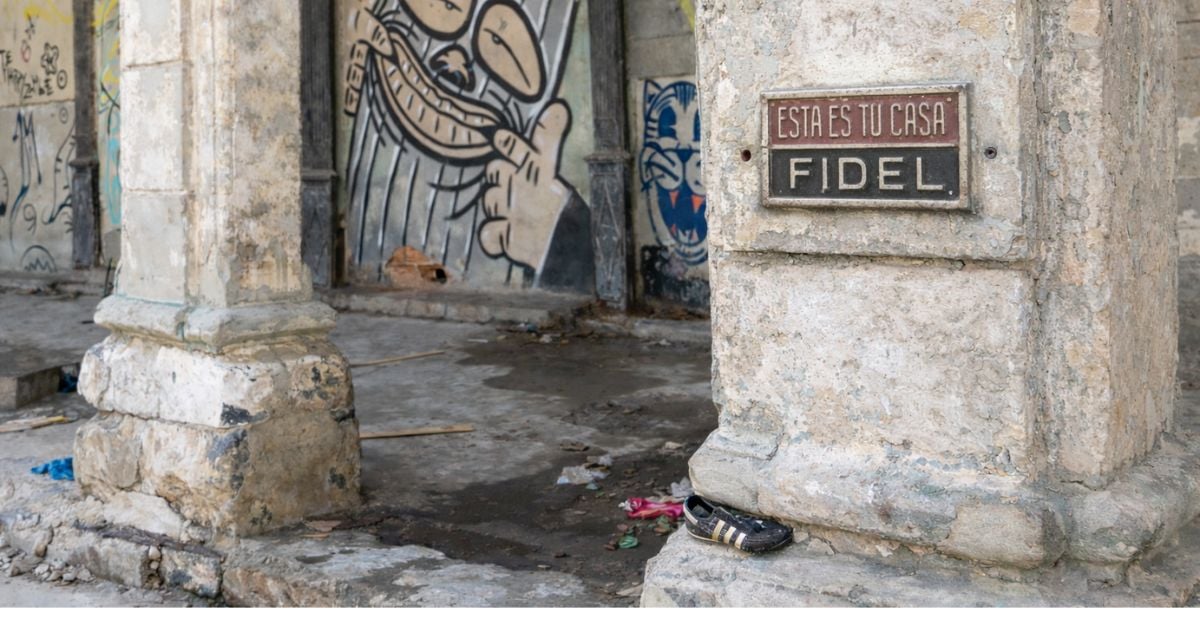
Cuban Prime Minister Manuel Marrero Cruz took to X on Saturday to mark the global centenary commemorations of dictator Fidel Castro (1926-2026), even as Cuba grapples with one of its most severe electrical collapses in recent history.
In his social media post, Marrero emphasized that "the celebration of the Commander in Chief's centenary in various countries reaffirms his universal stature and the extraordinary relevance of his legacy."
He further proclaimed, "Fidel lives in every place where truth and justice are defended."
The post was accompanied by four images showcasing commemorative events in at least five countries: a gathering on a mountain with Cuban flags and banners reading "100 Years with Fidel / Fidel Lives," an event at the United Nations Educational, Scientific and Cultural Organization (UNESCO) headquarters in France, a panel featuring the flags of Cuba and Mozambique, a commemorative plaque in Addis Ababa (Ethiopia), and the Australian premiere of the documentary "Fidel Up Close" at the National Film and Sound Archive in Canberra.
This message from the prime minister is part of the official campaign launched by the regime throughout 2026, which was declared the Year of the Centenary of the Commander in Chief Fidel Castro Ruz upon the proposal of Miguel Díaz-Canel to the National Assembly in December 2025.
The centerpiece of this campaign was the first International Colloquium "Fidel: Legacy and Future," held from August 10 to 13 at the Havana Convention Palace, attended by more than 1,500 delegates from 63 countries, over 1,000 of whom were foreigners.
During the closing ceremony at the Karl Marx Theater, Díaz-Canel declared that Castro's legacy "has returned in a way that should terrify his adversaries: hundreds, thousands, millions of people of diverse ages and beliefs worldwide are expanding his legacy."
In the same event, former leader Raúl Castro, aged 95, made his first public appearance in months, sitting in the front row with Díaz-Canel and Marrero, though he did not deliver any speeches or statements.
The government's rhetoric starkly contrasts with the grim reality faced by Cubans, who endure prolonged blackouts lasting over 24 hours in several areas.
In provinces like Matanzas, power outages have exceeded 80 consecutive hours this year, while in Havana, blackouts average between 15 and 24 hours daily, according to reports on the energy crisis.
The Economic Commission for Latin America and the Caribbean (ECLAC) projects a 6.5% contraction in Cuba's GDP for this year, placing the island in one of its worst economic crises in decades.
While the official website of the Presidency described Castro's figure as "a quantum privilege shining in the darkest night," Cubans responded with sarcasm on social media: "The night isn't dark; it's BLACKED OUT," one user commented.
Another remarked, "A true Liberator... liberated Cuba from food, electricity, development, and freedom."
The official commemorative agenda extends until December 4, 2026, marking the tenth anniversary of Castro's burial at the Santa Ifigenia Cemetery in Santiago de Cuba.
Understanding Cuba's Current Challenges and Fidel Castro's Legacy
What is the significance of Fidel Castro's centenary celebrations?
The centenary celebrations of Fidel Castro aim to honor his legacy and international influence, as promoted by the Cuban regime. These events are part of a broader campaign to emphasize the lasting impact of Castro's leadership on Cuba and the world.
How are Cubans reacting to the government's rhetoric about Fidel Castro?
Many Cubans express skepticism and sarcasm towards the government's praise of Fidel Castro, especially given the current hardships they face, such as severe power outages and economic struggles.
What challenges is Cuba currently facing?
Cuba is experiencing significant economic difficulties, highlighted by a projected GDP contraction of 6.5% and widespread electrical outages, which exacerbate the daily hardships of its citizens.