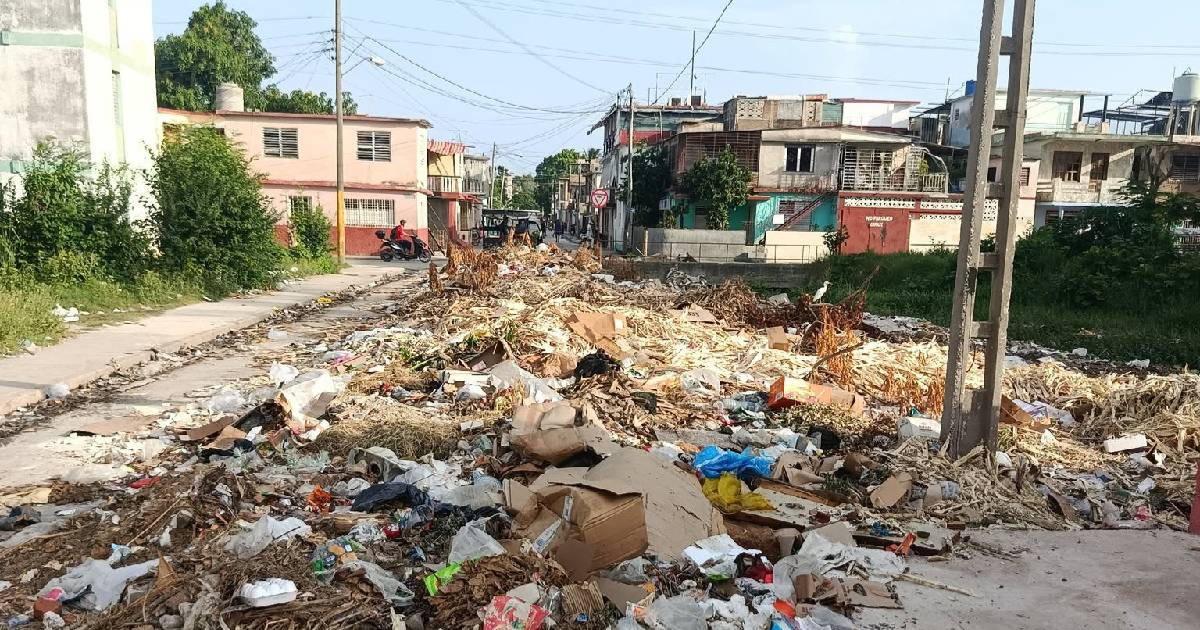
An uncontrolled build-up of garbage has completely obstructed a street in Holguín, as reported by Elizabeth Ballester on the Facebook group Best Shopping in Hlg this Friday.
The photo shared by Ballester reveals heaps of plastic, cardboard, branches, debris, and organic waste scattered along Manuel Dositeo Aguilera Street, between Cuba and Garayalde. The image shows residential buildings in the background, just a few blocks away from the Vladimir Ilich Lenin General University Hospital.
According to the post accompanying the image, the waste is also encroaching upon food stalls, exacerbating the challenges faced by residents struggling to access basic necessities.
Comments from locals highlight a perception of decline that extends beyond the immediate area. "Holguín used to be an example with its clean streets; now we're seeing horrors," one resident lamented, while another reminisced about the city once being regarded as "the cleanest city in Cuba."
Another local expressed that this issue is widespread throughout Holguín, with clogged sewers and rainwater flooding homes. "Nothing works," she noted.
One resident summarized what many believe about the regime's excuses: "They blame the blockade; it's their go-to for everything."
Public Spaces and Infrastructure Affected
The deterioration isn't limited to streets. A citizen reported that the children's park, Los Caballitos, has become another dumping ground, where waste is left by Communal Services workers and trucks near a daycare center and a block away from the Provincial Hygiene Center.
In the absence of solutions, some residents have suggested organizing community clean-ups to prevent further dumping. Others questioned the promises linked to new kiosks and their supposed impact on the trash problem.
Municipal Response and Consequences
The situation underscores the declining waste management services in Holguín, with locals demanding action to stop streets from being blocked with trash and to protect areas designated for food sales.
The Holguín Communal Services Company has acknowledged shortages of trucks, fuel, spare parts, and personnel but has not provided any concrete solutions.
A few weeks ago, the provincial broadcaster Radio Angulo published an article titled "Holguín: From the Cleanest Cities in Cuba to a Dump," acknowledging that the efforts by Communal Services are "clearly insufficient" and that "each passing day, the mounds grow, spill over, and invade sidewalks, turning the environment into a constant source of contamination."
The crisis has spread across the city, with trash heaps burning nightly since April, rivers turning into dumps worsening urban flooding, and access roads being blocked or set on fire.
In October and November of 2025, the accumulated garbage was identified as a key factor in a dengue and chikungunya outbreak affecting nearly all 14 municipalities in the province.
In late 2025, Prime Minister Manuel Marrero admitted to the institutional failure in managing the national waste collection crisis, though this acknowledgment has yet to result in any visible solutions.
Understanding Holguín's Garbage Crisis
What caused the garbage pile-up in Holguín?
The garbage accumulation in Holguín is due to inadequate waste management services, including shortages of trucks, fuel, and personnel.
How has the garbage issue affected Holguín residents?
Residents face blocked streets, encroachment on food stalls, and increased health risks, including a dengue and chikungunya outbreak.
What has been the government's response to the waste crisis?
The government has acknowledged the issue but has not provided effective solutions, leading to continued deterioration of waste services.