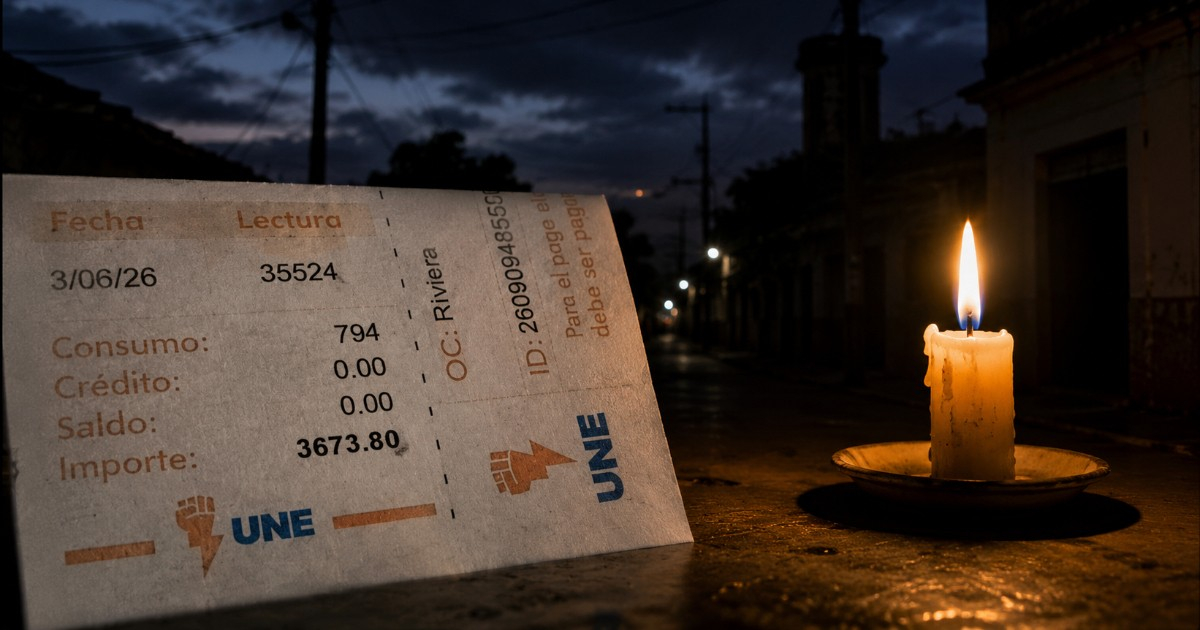
This past Friday, Havana's Electric Company announced disruptions in the telebanking service used for paying electric bills. The issues are due to external server link failures at the Union Eléctrica (UNE).
According to the official statement, "The telebanking service for paying electric bills is experiencing issues because of existing problems with the external link of the Union Eléctrica's servers."
The company mentioned that the Enterprise for Automation, Technology, and Information (ATI) is collaborating with ETECSA to find an immediate solution. Meanwhile, they apologized to customers and advised them to stay informed via the institution's official channels.
Recurrent Issues with Digital Payments
This is not an isolated incident. Earlier in August, UNE halted digital bill payments through all its platforms — Transfermóvil, Enzona, and ATMs — for similar reasons: server failures triggered by disruptions in the National Electric System (SEN).
UNE previously acknowledged that "our servers have encountered issues due to the recent collapses of the electric system."
Impact of SEN Collapses on Technology
Each total SEN shutdown seems to damage UNE's technological infrastructure, effectively halting digital payment platforms along with the electricity supply.
In 2026 alone, Cuba has faced at least seven total SEN collapses, including two in March, three in July, and two in August. This past Friday, UNE reported an availability of merely 1,080 MW against a demand of 3,300 MW, forecasting a deficit of 2,140 MW.
Public Reaction and Skepticism
Social media reactions from citizens mixed irony with frustration. One user pointed out, "This issue has been going on for many days," indicating that the problem predates the official announcement.
Others questioned the billing logic: "What are they charging for if there's never any electricity?" Another asked, "What service actually works in Cuba?" A third, dripping with sarcasm, commented, "How strange! Everything in Cuba works 100%."
Some took the situation with dark humor: "Perfect, no payments required." Others asked for understanding: "Please, give us time to pay," wrote one user, while another admitted, "I haven't been able to pay the bill; I'll keep trying."
Several comments suggested a more structural issue with bank transfers. "The state almost never accepts them; it seems they're only for self-employed workers," wrote one user, questioning whether hindering private enterprise is the real objective.
Challenges of Digital Transactions in Cuba
The context makes the situation worse. According to official press reports from July 2026, only 3.77% of transactions in Cuba are digital, and fewer than 10% of private businesses routinely accept transfers, despite over 15,240 fines and 269 closures of establishments for not accepting electronic payments.
Recurrent failures in platforms like telebanking, Transfermóvil, and Enzona — exacerbated by blackouts that exceed 20 hours a day in some areas — heighten public distrust in digital payments and solidify a preference for cash, contrary to the regime's push for increased banking operations.
FAQ: Understanding the Telebanking Service Disruption in Havana
What caused the telebanking service disruption in Havana?
The disruption was caused by failures in the external server links of the Union Eléctrica (UNE).
How frequently do SEN collapses occur in Cuba?
Cuba experienced at least seven total SEN collapses in 2026, with occurrences in March, July, and August.
How do citizens in Cuba react to these disruptions?
The public response often includes irony, frustration, and skepticism, with many questioning the feasibility of billing systems without reliable electricity.
What is the impact of these technological failures on digital payments in Cuba?
Frequent technological failures and extended blackouts undermine trust in digital payments, reinforcing a preference for cash transactions.