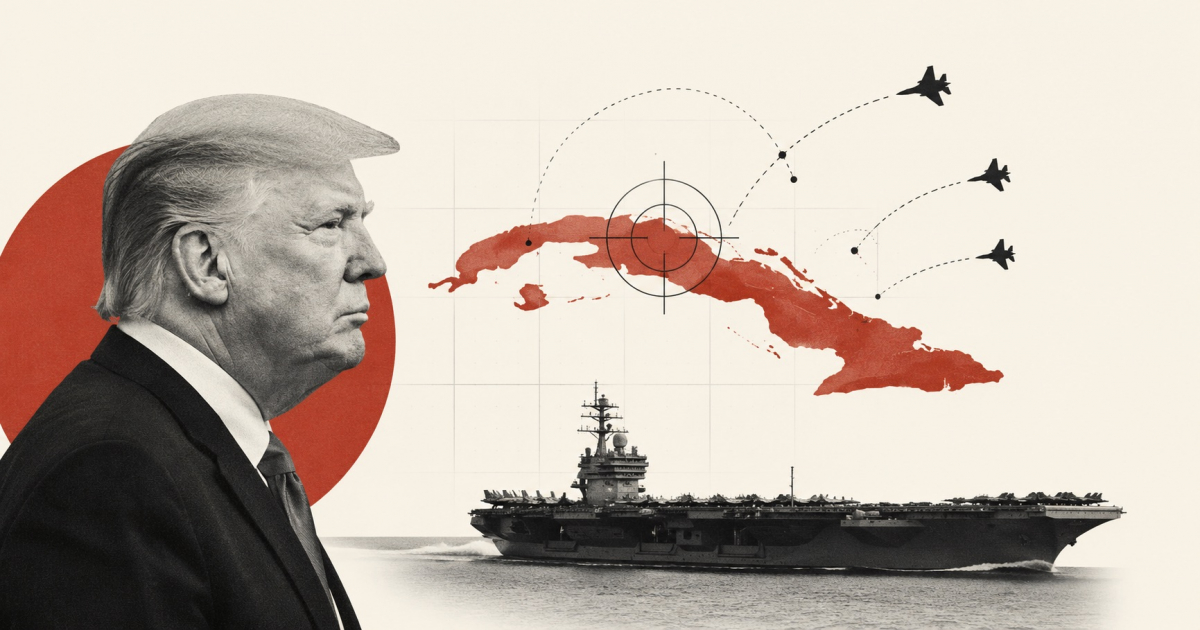
The Trump administration has shelved the possibility of military action against Cuba, opting instead to amplify unprecedented economic pressure, according to anonymous sources familiar with the administration's strategy, as reported by Bloomberg on Friday.
The primary goal is to sever all revenue streams to the Cuban regime. Rather than launching a special forces operation akin to the capture of Nicolás Maduro earlier this year, the focus is on creating internal divisions and paving the way for negotiations—a path that Havana has persistently rejected over nearly seven decades of one-party rule.
Reports from the U.S. media suggest that Washington currently sees deepening the financial isolation of Cuba's leaders as more effective than any military intervention. This strategy mirrors the tactics used by the United States in Venezuela in its efforts to capture Nicolás Maduro.
Sources, who spoke to Bloomberg under the condition of anonymity, indicate that the White House is concentrating on disrupting the flow of funds to the government, military leaders, and sectors connected to the Castro family.
While military action has not been explicitly ruled out—President Trump values unpredictability as a political tool—it has been deprioritized, partly due to the ongoing conflict in Iran, which is demanding substantial political and military resources. The president is keen to avoid deploying ground troops.
According to Bloomberg, Washington believes the Cuban system comprises various factions, including the Castro family, the Armed Forces, the Communist Party bureaucracy, and descendants of other historical revolutionary figures.
The Trump administration also maintains that an uncontrolled destabilization of Cuba could pose a security risk to the United States itself.
A U.S. official quoted by Bloomberg expressed that Washington is open to initiating "a new chapter" in bilateral relations, but perceives the current Cuban political leadership as the main hurdle.
This source further emphasized that a failed state just miles from U.S. shores would constitute a national security threat.
The administration has left all options on the table, asserting that the president possesses a variety of foreign policy tools. Additionally, the United States will continue leveraging its resources to address perceived threats from the Cuban government and to advocate for economic and political change within the country.
Escalating Sanctions on Revenue Sources
According to sources cited by Bloomberg, officials led by Secretary of State Marco Rubio are exploring further restrictions on resources reaching the Castro family and Cuban military leadership.
This aggressive stance has already resulted in new sanctions. The State Department has targeted GAESA, the military-run conglomerate that dominates the tourism sector.
In June, sanctions were imposed on CUPET and other energy entities; in July, on the Ministry of Tourism; and on August 6, actions were taken against five entities and eight individuals linked to arms acquisitions for the Cuban military.
Since January, over 240 sanctions have been implemented, and at least seven tankers have been intercepted, causing an estimated 80-90% drop in energy imports to the island.
The naval blockade on oil—facilitated by U.S. control over Venezuela, Cuba's former energy benefactor—has exacerbated the humanitarian crisis: frequent blackouts, fuel shortages, the closure of 73% of hotels, and around 25,000 tourism workers out of active employment.
UN agencies are warning of food and medicine shortages, as well as electricity cuts impacting hospitals and oncology treatment centers.
The situation in Cuba is more intricate than in Venezuela. U.S. officials believe that Miguel Díaz-Canel is under the influence of the Castro family, with power dispersed among its members and military leaders.
Unlike Venezuela, where Washington installed Delcy Rodríguez after Maduro's capture, Cuba lacks a credible political opposition or an agreed-upon alternative leader to spearhead a transition.
In May, CIA Director John Ratcliffe visited Havana and met with Interior Minister Lázaro Álvarez Casas and Raúl Guillermo Rodríguez Castro, Raúl Castro's grandson.
A CIA official noted that Ratcliffe aimed to convey the seriousness of the Trump administration, referencing the Venezuelan situation.
Understanding U.S. Strategies Against Cuba
Why has the U.S. decided against military action in Cuba?
The U.S. believes that intensifying economic pressure is a more effective strategy for creating internal divisions within the Cuban regime and promoting negotiations, as military action is currently deprioritized due to ongoing conflicts elsewhere, like in Iran.
What economic measures is the U.S. implementing against Cuba?
The U.S. has imposed over 240 sanctions, targeting entities like GAESA and CUPET, and has intercepted oil shipments, leading to severe reductions in energy imports and exacerbating the humanitarian crisis on the island.
How does the U.S. view the current Cuban leadership?
Washington sees the current Cuban leadership as a major obstacle to improved relations and believes the regime's power is fragmented among the Castro family and military leaders, lacking a unified opposition.