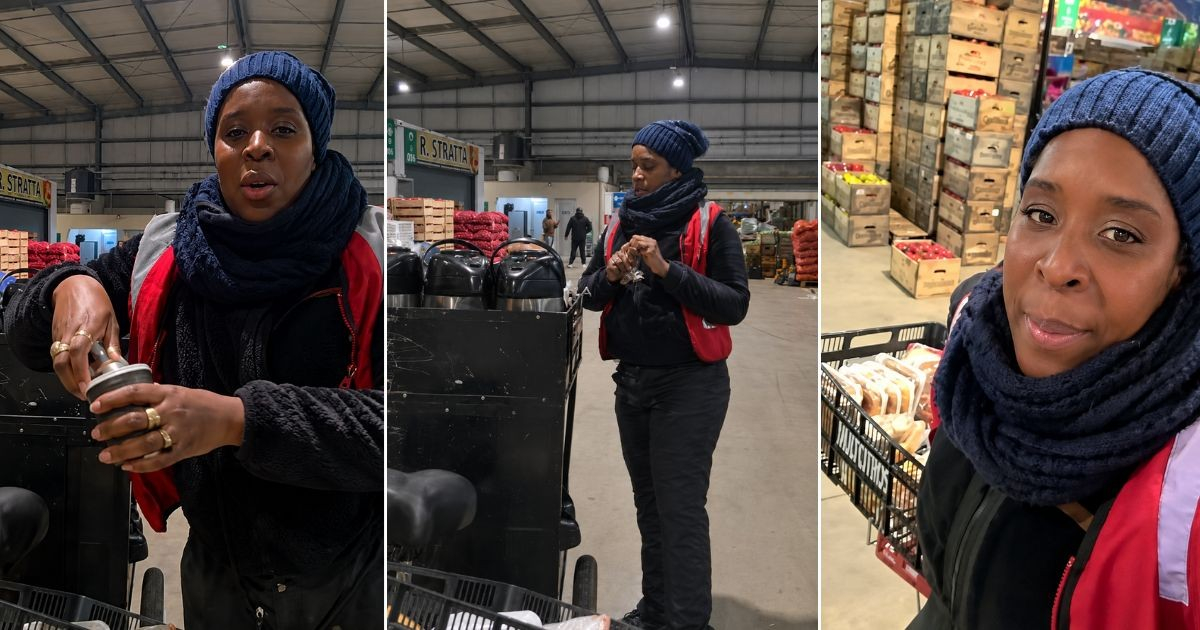
A Cuban woman living in Uruguay has ignited a heated debate on social media after questioning the work ethic of some individuals and responding to claims that migrants come to the country to take jobs away from locals.
The central figure in this controversy is Lisbel Becquer, who has been residing in Uruguay for several years and currently works the night shift at Montevideo's Agro-Food Unit (UAM), as reported by Montevideo Portal.
Her remarks quickly went viral, sparking both supportive and critical responses.
The Viral Video that Stirred the Debate
In the original TikTok video, the Cuban woman showcased a typical early morning shift and addressed a common phrase she claims to have heard repeatedly: "Why are Cubans taking our jobs?"
"If someone from another country, without any contacts or connections, takes your job, it seems the issue lies more on your side," she asserted.
Lisbel then extended an invitation to those questioning migrants to join her for a night of work, regardless of the conditions.
"Come work with me in the early hours. Rain, shine, whatever—come and see what it's like here," she challenged.
Challenges and Observations in the Workplace
The young woman acknowledged that working through the night has been one of the toughest experiences since moving abroad. However, she also observed a lack of enthusiasm among some coworkers about keeping their jobs.
"I've seen so many people come through here with so little enthusiasm that I ask myself: do you really not have a job, or did you not know how to keep the one you had?" she pondered.
Although she clarified that she didn't intend to judge all Uruguayans, her message was aimed squarely at those who blame foreigners for their employment struggles.
"Stop blaming the person next to you or the one coming from elsewhere for the things you do wrong," she advised.
Encouragement for Innovation and Entrepreneurship
Lisbel further encouraged finding alternatives when traditional employment seems scarce.
"If there's no job, create one. Be entrepreneurial, get creative, and put your mind to work. You'll see everything change because lying to yourself will cost you dearly," she stated.
Her comments did not go unnoticed. Several Uruguayans refuted her generalization, arguing that some companies prefer hiring foreigners due to their willingness to accept lower wages or less favorable conditions, shifting the conversation from work ethic to labor market conditions.
Conversely, others agreed with Lisbel, suggesting her experience highlights how some migrants value job opportunities more after leaving countries with tougher economic situations.
An Ongoing Debate on Migrant Workers
What began as a Cuban's account of her early morning work routine culminated in a clash of perspectives: those advocating for individual effort to succeed and those reminding that securing and maintaining a job also hinges on available working conditions.
The controversy over whether Cuban immigrants displace local workers is not new. In June, a Cuban woman discussing housing rental difficulties in Uruguay received a response suggesting she return to her country so foreigners wouldn't "take jobs from Uruguayans."
A similar discussion unfolded in September 2025 in Mexico, when another Cuban addressed accusations that migrants come to take jobs, stating, "Work isn't taken; it's earned through effort," defending the right of foreigners to seek opportunities to improve their lives.
In August of the same year, the employment story of a Cuban asylum seeker in Uruguay also divided opinions. While some praised her willingness to work, others accused foreigners of accepting low wages and working conditions that ultimately harm local workers.
Discussion on Cuban Migration and Employment in Uruguay
What sparked the recent debate on Cuban migrants in Uruguay?
Lisbel Becquer, a Cuban living in Uruguay, questioned the local work ethic and addressed accusations of migrants taking jobs, which ignited widespread discussion on social media.
How did Lisbel Becquer respond to claims about migrants taking jobs?
She argued that if a migrant without contacts can take a local's job, the issue may lie with the local's attitude towards work, and encouraged entrepreneurship as a solution.
What were the main reactions to Lisbel's statements?
Responses were mixed; some agreed with her views on valuing job opportunities, while others criticized her for generalizing and not considering the labor market conditions.