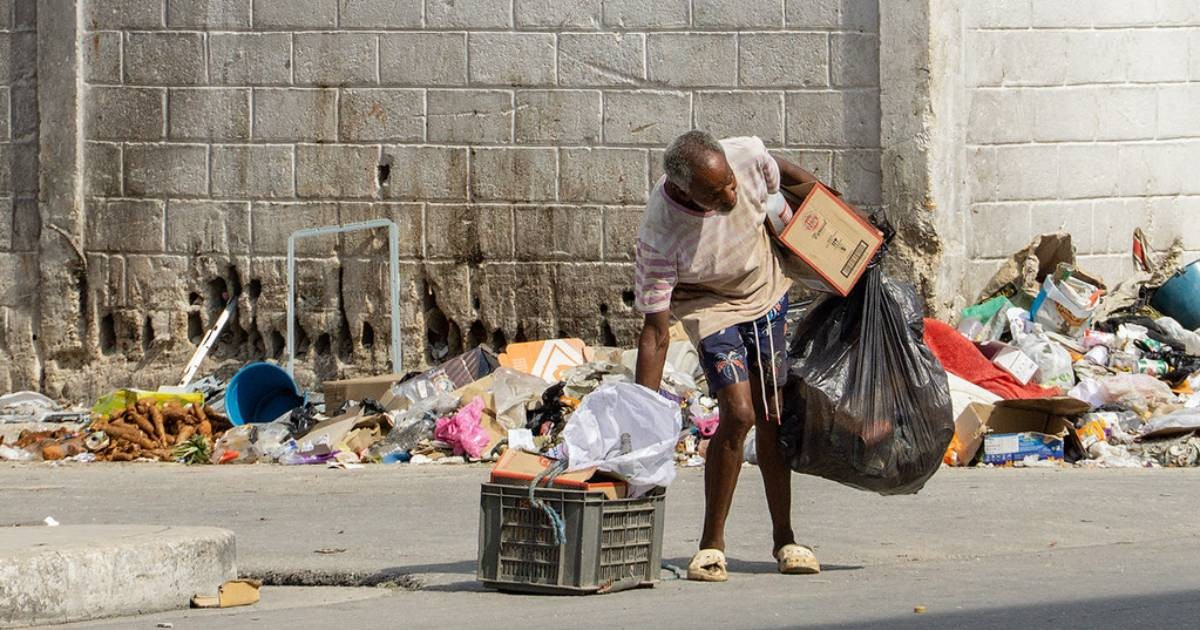
The latest findings from the Cuban Observatory for Human Rights (OCDH) reveal a grim reality: a staggering 94% of Cubans are now living in extreme poverty. Alarmingly, eight out of every ten individuals have had to skip meals due to financial constraints or food shortages, painting one of the island's most distressing social pictures in recent years.
Worsening Economic Hardship
The report, developed by both the OCDH and the Social Rights Observatory of Cuba, highlights a continued decline compared to previous assessments. It underscores that economic instability, food scarcity, and power outages are the primary concerns for the Cuban populace.
Conducted through 1,318 interviews between June 27 and July 29, 2026, across 79 municipalities in Cuba, the study claims a margin of error of ±2.8 percentage points and a 95% confidence level. To determine extreme poverty, the OCDH applied a benchmark of $1.90 per person per day, with an exchange rate of 510 Cuban pesos (CUP) per dollar observed between October 2025 and June 2026.
Disparity Between Income and Living Costs
A household of three would need at least 87,210 CUP monthly to rise above this poverty threshold. However, the gap is daunting: 68% of Cuban households earn less than 20,001 CUP per month, barely a quarter of the required income.
Food Insecurity: A Daily Struggle
One of the most alarming statistics relates to food security. Eight out of ten respondents reported skipping breakfast, lunch, or dinner at some point in the last six months due to lack of money or food. This crisis hits hardest among those over 61 years old, with nearly nine out of ten facing meal shortages.
Moreover, 63% of households report struggling to buy essential items, with a mere 6% managing expenditures beyond basic needs. The data illustrates a crisis not confined to dwindling purchasing power; for most, income shortfalls now threaten the ability to sustain daily nutrition.
Public Services on the Brink
The deterioration extends to public services and infrastructure perceptions. The electrical grid received the lowest ratings, with 95% of participants deeming it inadequate amid prolonged blackouts, some lasting up to 25 hours.
Garbage collection follows with 87% dissatisfaction, internet and phone services at 86%, water supply and sewage at 84%, hospitals at 82%, and road conditions at 80%. Unsurprisingly, 70% of Cubans cite power outages as their most pressing issue.
Overwhelming Disapproval of Government Management
This decline in living conditions corresponds with widespread disapproval of the government's economic and social management. According to the study, 95% of participants rate the performance of leaders Miguel Díaz-Canel and Manuel Marrero Cruz negatively, with 73% deeming it "very negative." Only 3% offer a positive assessment.
Expectations for recent economic measures are equally bleak. A significant 84% doubt the effectiveness of the government's 176-measure package announced in June 2026 to improve the country's situation. Skepticism is even more pronounced among young adults aged 18 to 30, rising to 88%.
Despite this, around half of those surveyed anticipate some favorable changes within the next six months, though this does not necessarily reflect confidence in the authorities. Meanwhile, 77% demand simultaneous political and economic reforms, with little support for maintaining the status quo.
Housing Insecurity and Elderly Vulnerability
Housing is another domain of concern. The report indicates that 21% of the population lives in unstable housing conditions, encompassing those without property rights, residing in shelters, or facing homelessness. Furthermore, 7% of homes are at risk of collapse.
Particularly troubling is the plight of older adults, with individuals over 70 comprising 44% of the homeless population, according to OCDH findings.
Demographic and Economic Decline
These findings align with a severe demographic crisis. In 2025, Cuba recorded 136,214 deaths compared to just 68,064 births, equating to nearly two deaths for every birth. The nation's population decreased to 9,434,593, over 313,000 fewer than in 2024, amidst declining birth rates, an aging population, and emigration.
Over the past four years, the proportion of Cubans living in extreme poverty has surged from 61% to 94%, as reported in the OCDH's series of studies. This increase underscores the urgent need for profound change.
Yaxys Cires, OCDH's Director of Strategies, emphasized that public dissatisfaction goes beyond immediate economic struggles. "The widespread demand for political and economic transformations shows that Cubans desire more than superficial adjustments or new promises. They seek a fundamental change that brings political, economic, and social rights," he stated during the report's presentation.
The statistics reveal an especially harsh reality for millions of families: inadequate income to meet basic needs, skipped meals due to food and monetary shortages, particularly vulnerable seniors, and public services that receive overwhelmingly negative evaluations from the majority of the population.
Understanding Cuba's Socioeconomic Crisis
What percentage of Cubans are living in extreme poverty?
According to the OCDH study, 94% of Cubans are currently living in extreme poverty.
How many Cubans have had to skip meals due to economic hardship?
Eight out of ten Cubans have had to skip meals due to lack of money or food.
What are the main public service issues highlighted in the report?
The report points out significant issues with the electrical grid, garbage collection, internet and phone services, water supply, hospitals, and road conditions.
How do Cubans perceive their government's management?
The study reveals that 95% of Cubans disapprove of the government's economic and social management, with 73% considering it "very negative."
What is the demographic trend in Cuba according to the report?
Cuba is experiencing a demographic decline, with more deaths than births and a shrinking population due to low birth rates, an aging population, and migration.