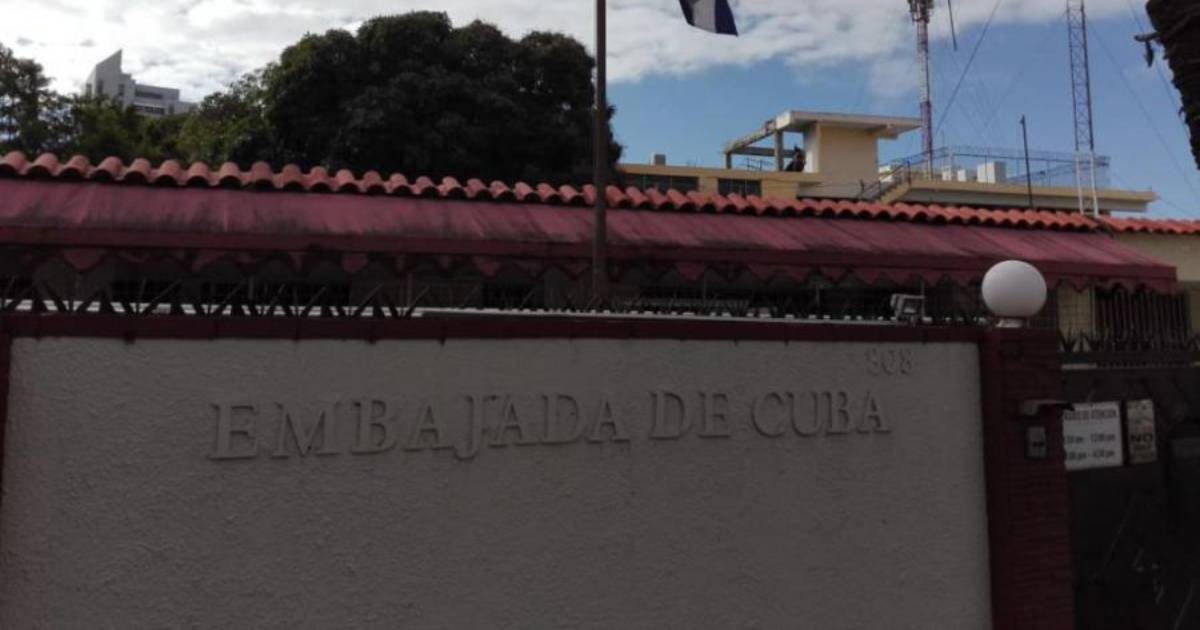
The Dominican Republic's Ministry of Foreign Affairs announced on Thursday that nine Cuban diplomats stationed in Santo Domingo, along with their family members, have been instructed to depart the country. This decision underscores the increasingly chilly relations between the two nations.
In an official statement, the Dominican Foreign Ministry specified that these diplomats have a seven-day window to exit the country, though the reasons for this directive remain undisclosed.
According to the Dominican newspaper Listín Diario, this affects approximately 21 individuals, including the diplomats, their spouses, and children. The deadline for their departure is set for Sunday, August 16.
Legal Grounds for Diplomatic Expulsion
Santo Domingo based its decision on international law, particularly Article 9 of the Vienna Convention on Diplomatic Relations, which allows a host country to declare any diplomat persona non grata without needing to justify the decision.
The Dominican Foreign Ministry emphasized that it would not publicly disclose the specific circumstances leading to this action. "The Dominican government adheres to the current regulations and will handle this matter discreetly through established diplomatic channels, aiming to preserve bilateral relations," the statement clarified. "As this concerns diplomatic communications, no further details will be provided."
Context of Deteriorating Relations
While the authorities have not detailed what prompted this decision, it occurs amidst signs of growing distance between Santo Domingo and Havana under President Luis Abinader's administration. In October 2025, the Dominican Republic excluded Cuba, Nicaragua, and Venezuela from the X Summit of the Americas scheduled in Punta Cana. The summit was later canceled and rescheduled for 2026.
President Abinader publicly criticized Cuba's political system in May, stating in an interview with journalist Eduardo Feinmann for Infobae, "They have their way of holding elections, but it is not a democratic state."
Another notable shift happened in July when the Dominican Republic abstained from the United Nations General Assembly vote on the U.S. embargo against Cuba, contrasting with its support for the resolution against the sanctions in October 2025.
Isolation of Havana in Latin America
The Dominican episode is part of a series of diplomatic setbacks faced by the Cuban regime in Latin America during 2026. In March, Ecuador expelled the entire Cuban diplomatic mission in Quito, giving them just 48 hours to leave. Havana responded by closing its embassy in Ecuador's capital, condemning the move as "unfriendly and unprecedented."
That same month, Costa Rica shut down its embassy in Havana and requested Cuba to withdraw its personnel from San José, citing concerns over deteriorating human rights on the island.
More recently, the Colombian government under President Abelardo de la Espriella severed diplomatic ties with Cuba and Nicaragua, as part of a broader strategy to reorganize its foreign presence, which includes the closure of 14 embassies and 15 consulates. De la Espriella took office on August 7.
Cuba has labeled previous regional distancing measures as "arbitrary" and "unjustified," attributing them to U.S. pressure. However, the Dominican Republic's recent decision is particularly notable given the countries' historical ties and the fact that Santo Domingo has invoked an international provision to demand the diplomats' exit without publicizing the reasons.
As of the closing of this report, Cuba's Ministry of Foreign Affairs (MINREX) had not released any official statement regarding the Dominican decision or the departure of its nine diplomats and their families.
Frequently Asked Questions About Dominican Republic's Diplomatic Move
Why did the Dominican Republic expel Cuban diplomats?
The Dominican Republic has not disclosed specific reasons for the expulsion, citing discretion in diplomatic communications. The action is based on international law provisions allowing such decisions without justification.
How does the Vienna Convention on Diplomatic Relations apply to this situation?
Article 9 of the Vienna Convention allows a host country to declare any diplomat persona non grata, requiring their departure without the need to explain the reasons behind the decision.
What is the impact of this expulsion on Cuba's regional relations?
This expulsion adds to a series of diplomatic challenges for Cuba in Latin America, highlighting increasing isolation as several countries have distanced themselves or severed ties with Havana.