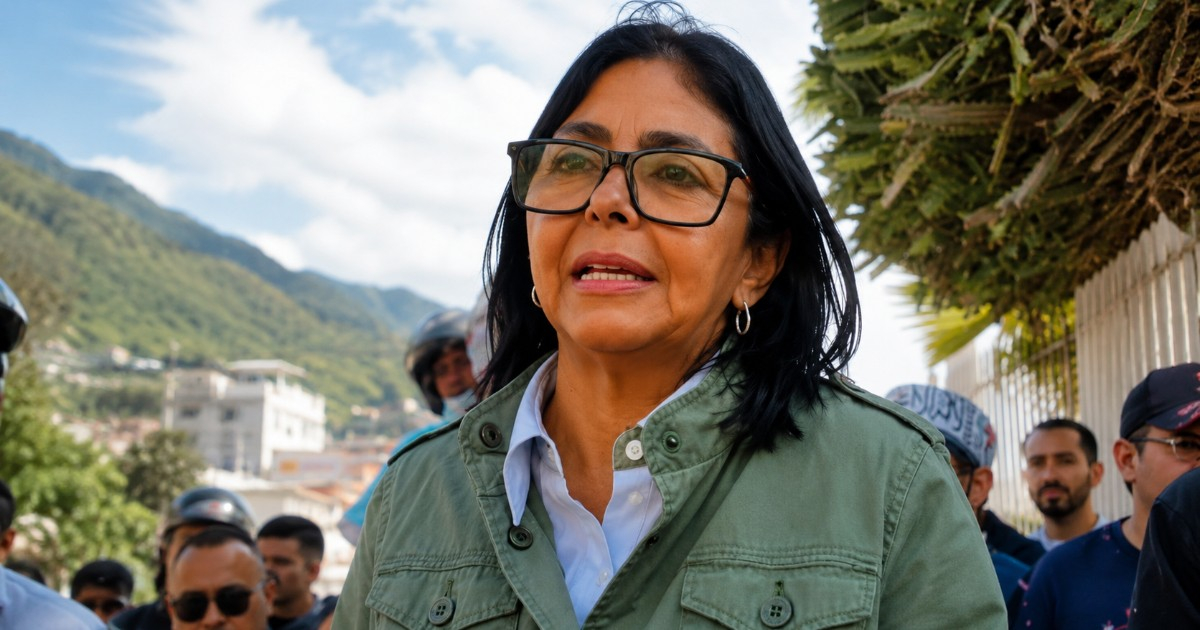
On Tuesday, the Venezuelan government led by Delcy Rodríguez and the State of Israel declared the reestablishment of consular services between the two nations, ending a 17-year diplomatic hiatus, as reported by El País.
This agreement, however, stops short of restoring full diplomatic relations. There will be no embassies or permanent representations; instead, an official channel has been set up to manage consular matters for citizens residing in each other's country.
Venezuelan Foreign Minister Félix Plasencia released a joint statement in which both governments emphasized that the agreement emerges "following discussions held between high-level authorities from both sides" after the Israeli humanitarian delegation visited Venezuela.
Significance of the Consular Agreement
The official statement also noted the critical role of the relationship between Israel and the Jewish community in Venezuela, describing it as a significant historical bridge of friendship between the two countries.
The catalyst for this rapprochement was the dual earthquakes that struck Venezuela on June 24, 2026, with magnitudes of 7.2 and 7.5, resulting in over 6,000 fatalities according to official figures.
International Response to Venezuela's Crisis
Israel was among the first nations to respond to the disaster, dispatching 16 rescuers and experts in collapsed structures from organizations such as Magen, Ready for Rescue, and SmartAID.
In July, Rodríguez publicly thanked Israel for its assistance and met with Israeli military officials, presenting them with commendations—a gesture that drew criticism from the more radical sectors of Chavismo.
Israeli Foreign Minister Gideon Saar hailed the agreement as another "diplomatic success," associating it with Colombia's recent recognition of Israeli sovereignty over the Golan Heights, a move only preceded by the United States in 2019.
Diplomatic Shift Amid Political Changes
This announcement marks a stark departure from Chavismo's historical stance. Hugo Chávez severed ties with Israel in January 2009, condemning the Gaza offensive with a fiery declaration that resurfaced on social media: "Cursed are you, State of Israel. Cursed are you! Terrorists and murderers."
The diplomatic shift occurs within the broader geopolitical realignment Venezuela is experiencing under the direct influence of Washington, following the capture of Nicolás Maduro on January 3, 2026.
Venezuela's New Diplomatic Directions
Alongside warming ties with Israel, Venezuela's foreign ministry has issued protest notes to Iran—long a key ally of Chavismo—over "disparaging and inappropriate remarks about Venezuelan institutions and authorities," demanding an end to any comments that undermine the nation's dignity, sovereignty, institutional integrity, or reputation.
Previously, Iranian Foreign Minister Abás Araqchi remarked in an interview that Iran "is not Venezuela," seemingly referencing the swift U.S. operation to capture Maduro.
Despite this diplomatic pivot, Palestine maintains its embassy in Caracas, with murals and monuments supporting its cause as a legacy of Chavismo's policies, a visible contrast to the new path charted by Rodríguez's government under Washington's guidance.
Frequently Asked Questions about Venezuela-Israel Relations
What does the reestablishment of consular services between Venezuela and Israel mean?
The reestablishment of consular services means that Venezuela and Israel have agreed to renew their consular relations, allowing for official channels to manage the needs of their citizens residing in each other's countries. However, it does not equate to full diplomatic relations with embassies or permanent representations.
Why did Venezuela and Israel originally sever ties?
Venezuela, under Hugo Chávez, cut diplomatic ties with Israel in January 2009 in protest against Israel's military actions in Gaza, known as Operation Cast Lead. This decision was part of a broader stance by the Chavista government against Israeli policies.
What prompted the recent diplomatic shift between Venezuela and Israel?
The shift was largely prompted by Israel's quick response to the devastating earthquakes in Venezuela in June 2026, which led to renewed discussions and a humanitarian aid mission, paving the way for restored consular services.