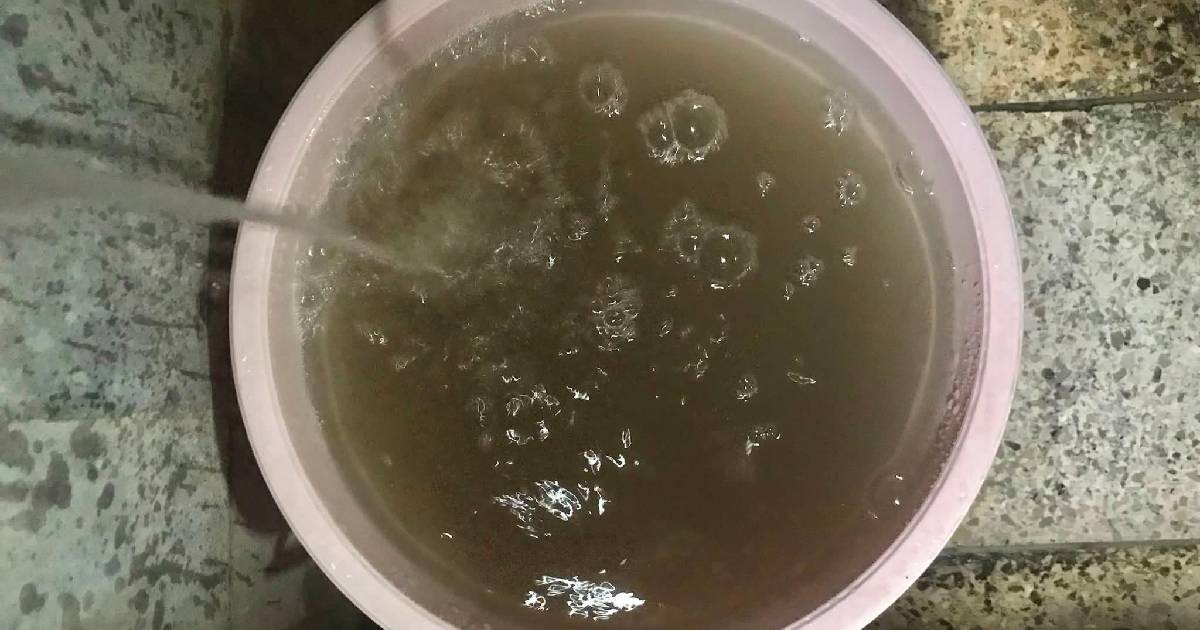
Inhabitants of Havana are reporting that water contaminated with sewage-like characteristics is flowing through the pipes in numerous neighborhoods across the city.
"Sewage runs through our pipes," lamented one resident on the Facebook group "Victims of Aguas de La Habana," a post that garnered over 1,052 reactions. The complaint was accompanied by a revealing photo: a white plastic bucket filling with murky, brownish-green water.
The overhead image displays a stream of liquid that is far from potable, falling onto a stained floor with walls showing signs of moisture and decay. No laboratory test is needed to grasp the gravity depicted in that snapshot.
Root Causes of Contamination
The mechanism behind this contamination is well-known and documented. The daily occurrence of blackouts, which halt water pumps, causes a drop in water pressure. This allows cracked or damaged pipes to draw in sewage water into the potable water system.
This issue was detailed by Periodismo de Barrio back in 2018, yet not only does the problem persist, it has worsened alarmingly.
Infrastructure Strain and Water Loss
The fundamental problem lies in Havana's sewer system, constructed between 1905 and 1915 for a city of approximately 600,000 residents. Today, it serves nearly two million people, with 1,755 kilometers of antiquated pipelines. Main conduits have been in continuous use for 60 to 70 years without adequate replacement.
Additionally, 87% of the capital's water infrastructure relies on the electrical grid, making every blackout a direct hit to water supply. Between 40% and 70% of pumped water is lost through leaks before reaching homes.
Escalating Crisis and Health Risks
The number of those affected continues to rise. In April 2026, officials acknowledged about 200,000 Havana residents facing supply issues. By May, Antonio Rodríguez Rodríguez, president of the National Institute of Hydraulic Resources, confirmed 376,055 affected individuals, with over 309,000 directly impacted by blackouts.
By July, Aguas de La Habana specialists reported over 500,000 consumers affected.
The health consequences are not hypothetical. As early as 2020, there were reports of poisoning outbreaks linked to the mixing of sewage and potable water pipes in Havana.
In March 2024, residents of Santiago de Cuba reported sewage obstructing a potable water register with the blunt declaration: "We're drinking water mixed with excrement."
In January 2026, sewage flowed beneath patient beds at the Juan Bruno Zayas Hospital in Santiago de Cuba. That same month, residents of Jesús María in Old Havana reported streets flooded with waste and garbage. In April, a viral complaint showed sewage inundating a Havana street near children's educational institutions.
By July 2026, the Food Monitor Program warned of a health crisis in the capital due to uncollected garbage, collapsed sewers, and waste flowing through public streets. They cautioned that "trash and waste can mix with drainage and seep into local water bodies."
Meanwhile, a Cuban woman recently reported going nine months without water in her Havana neighborhood, a situation the regime has neither resolved nor seems inclined to address with the urgency required.
Understanding Havana's Water Crisis
What is causing the water contamination in Havana?
The contamination is primarily due to decrepit infrastructure. When water pressure drops during frequent blackouts, damaged pipes allow sewage to enter the potable water system.
How serious is the water crisis in Havana?
The situation is dire, with over 500,000 residents affected. The crisis is exacerbated by infrastructure unable to support the current population and loss of water due to leaks.
What are the health risks associated with the water crisis?
The mixing of sewage and potable water can lead to outbreaks of poisoning and other health issues, as seen with past incidents in Havana and Santiago de Cuba.