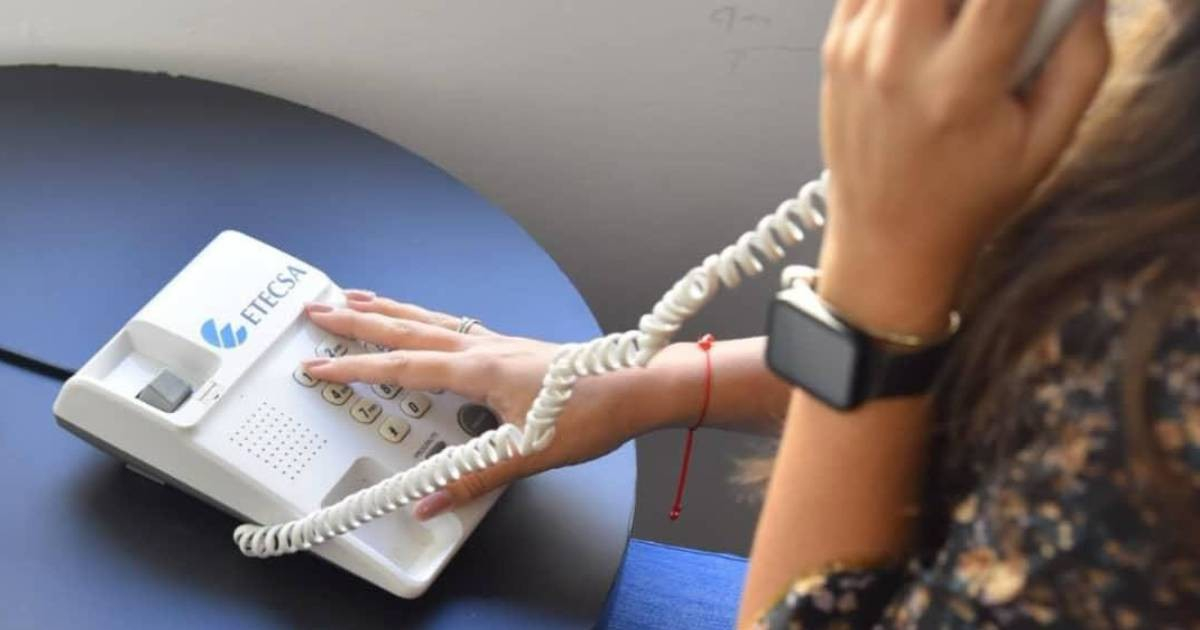
A recent effort by ETECSA aimed at promoting electronic billing for landline services quickly turned into an outpouring of public grievances. Many Cubans reported paying for a service they haven't been able to use for months or even years.
The state-run telecommunications monopoly posted an invitation on its official Facebook page for customers to receive their bills via email. To subscribe, users needed to send their information to the designated company address.
However, a seemingly straightforward question, "Do you have a landline service?" prompted an avalanche of responses filled with frustration, irony, and anger.
"What phone? What's that?" one user sarcastically replied.
"Why do we need a bill if the phones don't work?" another questioned.
Instead of focusing on the digital receipt's benefits, many took the opportunity to voice complaints about malfunctioning lines that, according to their accounts, continue to generate bills despite being out of service.
Nationwide Issues Highlighted by ETECSA's Post
The comments shed light on a widespread issue across various parts of Cuba. Residents in Havana neighborhoods like La Víbora, Cerro, Arroyo Naranjo, Luyanó, Boyeros, and San Miguel del Padrón have been without landline service for several months to over two years. Similar complaints emerged from Matanzas, Mayabeque, Ciego de Ávila, Casablanca, and Boca de Camarioca, among other areas.
Commonly cited issues include stolen or burned cables, fallen poles, unresolved technical faults, and digital cabinets failing whenever power outages occur due to insufficient backup.
"After they digitalized the phone service, we're mostly cut off, especially with the blackouts," lamented one Cuban woman.
Another user pointed to a recurring technical problem: "They need to provide backup to the panels; phones lose service when the power goes out."
Ongoing Billing for Non-Operational Services
A frequent complaint involves being charged monthly fees while issues remain unaddressed. The pattern is familiar: a customer reports the problem to 114, weeks or months pass, and they receive excuses like "there are many issues," "no cable," or "no budget," yet the bill keeps coming.
"I've had a broken landline for three years; still, I keep paying, bill after bill," wrote a woman from Havana.
Another lady shared her story of being without service since November 2025. Despite paying until December of that year, ETECSA sent a collector for a 60-peso debt, threatening to terminate her contract.
This situation is at odds with data acknowledged by the company. ETECSA admitted in June that parts of its infrastructure cannot operate for more than 24 hours without electricity.
According to the state-run newspaper Granma, by mid-2025, there were over 25,000 service interruptions in the country's landline network. About 24% had been unresolved for more than six months, even though regulations mandate a 72-hour repair timeframe.
Accusations of Bribery and Connectivity Challenges
Among the comments, some users alleged that bureaucracy and resource shortages have fostered a climate ripe for informal payments.
One customer claimed they've been trying to transfer their landline service to a new residence since 2022 without success, asserting that a solution would require paying hundreds of dollars in bribes.
"Of course, I have a landline. I just can't use it because you're so bureaucratic you won't allow a transfer from where I've been living since 2022. And it's 2026 now. PS: This happens because I don't have $400 for the bribe," they stated.
These allegations were made on social media, with no official response from ETECSA noted in the post.
The nature of the promotion also drew mockery. ETECSA's call to use the internet and email for digital billing came amid connectivity challenges and frequent power outages.
"Email? With what connection?" an internet user quipped.
Criticism arises during a time of gradual decline in the nation's telecommunications infrastructure. Persistent power cuts have compelled ETECSA to reduce services, and a significant portion of batteries meant to sustain the network during outages no longer provide adequate support.
The situation worsened in eastern Cuba following Hurricane Melissa in October 2025, leaving vast areas without communication, with over 40% of landline service disrupted during recovery.
Earlier in August, Cuban comedian Ulises Toirac also publicly criticized the state of telecommunications, urging ETECSA to reinvest earnings from the tariff increase implemented in May 2025 into infrastructure. As a potential solution to the deteriorating service, he even suggested allowing technologies like Starlink in Cuba.
Common Questions About ETECSA's Landline Service Issues
Why are Cuban landlines not working?
Cuban landlines are often out of service due to issues like stolen cables, damaged infrastructure, and insufficient power backup during outages.
What is ETECSA doing about the landline problems?
ETECSA has acknowledged infrastructure challenges but continues to charge users despite ongoing service issues. The company's efforts to address these problems have been criticized as inadequate.
How are customers reacting to ETECSA's service?
Customers have expressed frustration and skepticism about ETECSA's service, with many criticizing the lack of timely repairs and the persistent billing for non-functional services.