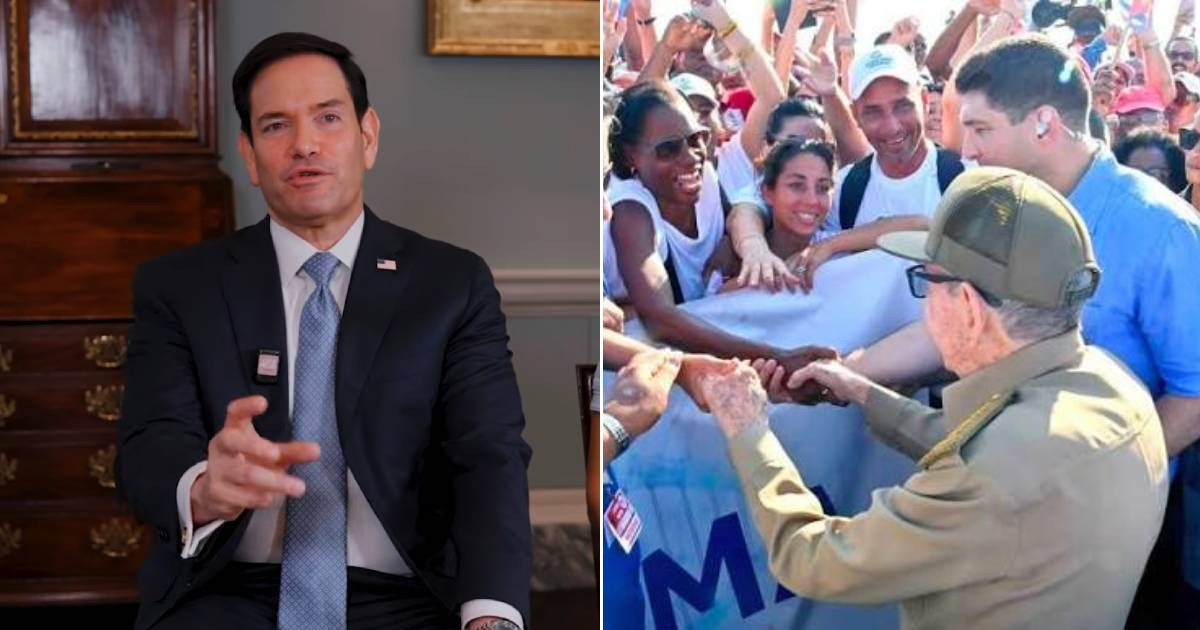
On Tuesday, U.S. Secretary of State Marco Rubio expressed confidence that Cuba will be on an "irreversible path toward a very different future" before the end of the Trump administration. However, he cautioned that this transformation won't occur immediately.
Rubio made these remarks during episode 51 of the "Katie Miller Pod" podcast, recorded at the State Department alongside his wife, Jeanette.
"You can't have something in place for 70 years, deeply rooted, and expect to uproot it overnight and replace it with something new. There's a transition that must happen and a process to get there," the Secretary of State explained.
Lessons from Eastern Europe
To provide context, Rubio referenced the recent history of Eastern Europe as an example. "Eastern Europe offers a lesson in this regard. It took Eastern European countries between three to five years to truly become what we recognize today. Poland is probably the best example," he noted.
The U.S. chief diplomat emphasized that Cuba is a priority for the Trump administration due to national interest, not just personal ties to the island.
"I work for the United States. I care about Cuba. Obviously, I have a personal connection, but I don't work for Cuba. I work for the U.S., and it's in our national interest to have a secure, stable, and U.S.-aligned Cuba," Rubio declared.
A Persistent Critic of Havana
As the son of Cuban immigrants who arrived in the United States in 1956, Rubio has been one of the most vocal critics of the Havana regime, a stance he has maintained since becoming Secretary of State.
The podcast statements reinforce a message Rubio had delivered days earlier. On August 7, he revealed in an Axios interview the strategy of "closing every escape mechanism" for the Cuban government, and on the same day, he set the goal of placing Cuba on an "irreversible trajectory" by the end of the administration.
Since January 2026, the Trump administration has taken more than two dozen actions against the Cuban regime, imposing sanctions on over 40 entities and at least 38 individuals linked to organizations like GAESA and CUPET.
In July, Rubio had already dismissed the idea that Washington had a public timeline for regime change, although he expressed hope it would happen "tomorrow." His reference to Poland as a model for a three-to-five-year transition suggests the administration is managing medium-term expectations rather than immediate impacts.
"It's certainly a priority for us because it's in our national interest. I never guarantee anything, but it's certainly a priority," Rubio concluded, extending the same objective to Venezuela: that both countries become "secure, stable, and aligned with the U.S."
Understanding U.S. Policy Towards Cuba
What is Marco Rubio's stance on Cuba?
Marco Rubio is a longstanding critic of the Cuban regime. He emphasizes that the U.S. should work toward a secure, stable, and U.S.-aligned Cuba, which is in the national interest.
Why does Rubio compare Cuba's situation to Eastern Europe?
Rubio uses Eastern Europe as a reference to illustrate that significant transitions can take years, as it happened with countries like Poland, which took three to five years to stabilize and align with Western ideals.
What actions has the Trump administration taken against Cuba?
Since January 2026, the Trump administration has sanctioned over 40 entities and 38 individuals connected to Cuban structures such as GAESA and CUPET, as part of its strategy against the Cuban regime.