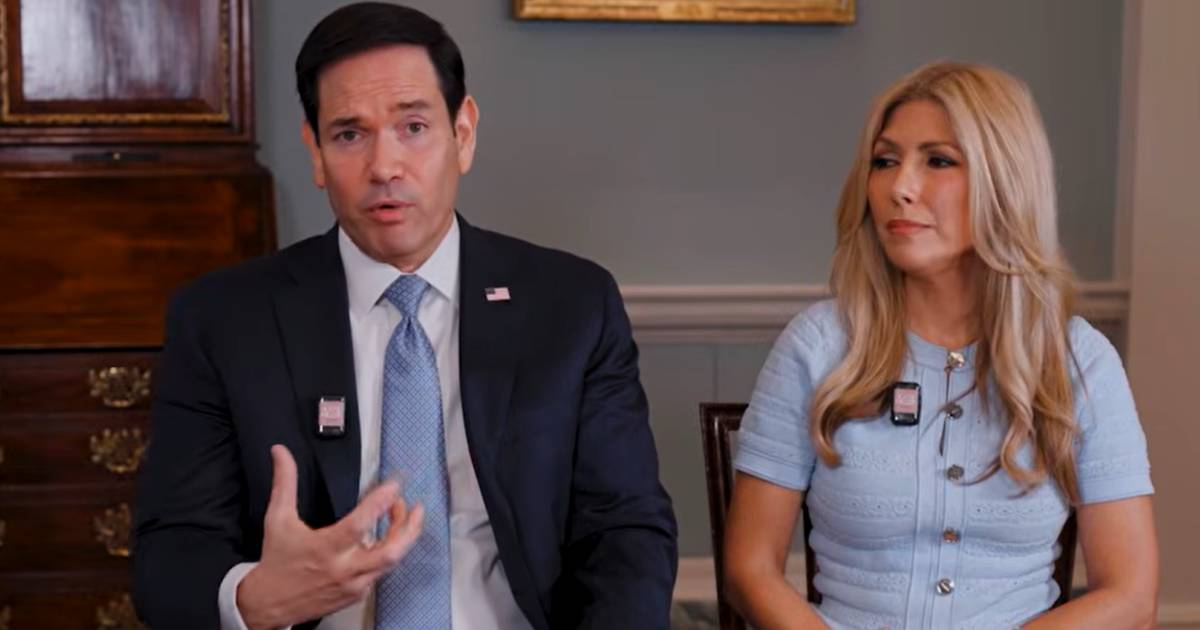
Marco Rubio, a prominent figure in Washington known for his staunch opposition to the Cuban regime, has clarified the distinction between his personal connections and political responsibilities. As the son of Cuban immigrants, Cuba holds significant personal meaning for Rubio, yet he emphasizes his commitment to serving the United States in his role under the Trump administration.
“I care about Cuba. Naturally, I have a personal connection, but my work is for the United States,” Rubio stated in an interview with Katie Miller at the State Department, joined by his wife, Jeanette. This statement came in response to Miller’s inquiry about whether Cuba might follow Venezuela after the U.S. operation that led to Nicolás Maduro's capture.
While Rubio refrained from suggesting a similar scenario for Cuba, he expressed confidence that before the current administration ends, Cuba will be on an "irreversible" path towards "a very different future." He also acknowledged that dismantling a long-established system requires a transition, not an overnight change.
Distinguishing Personal Ties from Political Duty
Rubio stressed the importance of differentiating his family's history from his official responsibilities. “I believe it is in our national interest to have a Cuba that is secure, stable, and aligned with the United States,” he asserted, extending these sentiments to Venezuela as well.
This distinction is crucial for a politician whose Cuban-American identity has been a hallmark of his public career. Upon taking office as Secretary of State in January 2025, Rubio spoke in Spanish during his swearing-in, honoring his Cuban immigrant parents who arrived in the U.S. in 1956. He became the first Hispanic to lead U.S. diplomacy.
Security Concerns and Strategic Interests
From his position at the State Department, Rubio has consistently framed U.S. policy towards Cuba as a matter of national security rather than personal heritage. In April, he argued that Cuba's proximity—just 90 miles from Key West—necessitates a different approach from conflicts in the Middle East or Asia. “That’s why it matters; that’s why it’s important,” he insisted.
Adding to the geographical argument, Rubio has highlighted the presence of strategic adversaries on the island. He accused the Cuban regime of hosting intelligence facilities linked to China and Russia, warning that the U.S. wouldn't tolerate foreign military or intelligence operations so close to its shores.
In May, Rubio made a similar distinction, declaring, “The future of Cuba belongs to the Cuban people,” while affirming that Washington would act against perceived threats to national security. He dismissed the notion of U.S. policy being a nation-building project from abroad.
He also cautioned that a potential systemic collapse in Cuba could directly affect the United States, potentially triggering a new migration crisis, violence, or instability just miles from the U.S. coast. His recent remarks seem to bolster this perspective.
Understanding U.S. Policy Toward Cuba
Why does Marco Rubio emphasize a distinction between personal and political responsibilities regarding Cuba?
Marco Rubio highlights the distinction to clarify that while he has personal ties to Cuba due to his heritage, his political actions are guided by U.S. national interests and security concerns, not personal connections.
What strategic concerns does Rubio associate with Cuba?
Rubio associates strategic concerns with Cuba due to its proximity to the U.S. and the presence of intelligence facilities tied to China and Russia, which he views as threats to national security.
How does Rubio view the future of Cuba?
Rubio envisions an "irreversible" path for Cuba towards a different future, emphasizing that the Cuban people's future should be determined by themselves, while the U.S. focuses on its security interests.