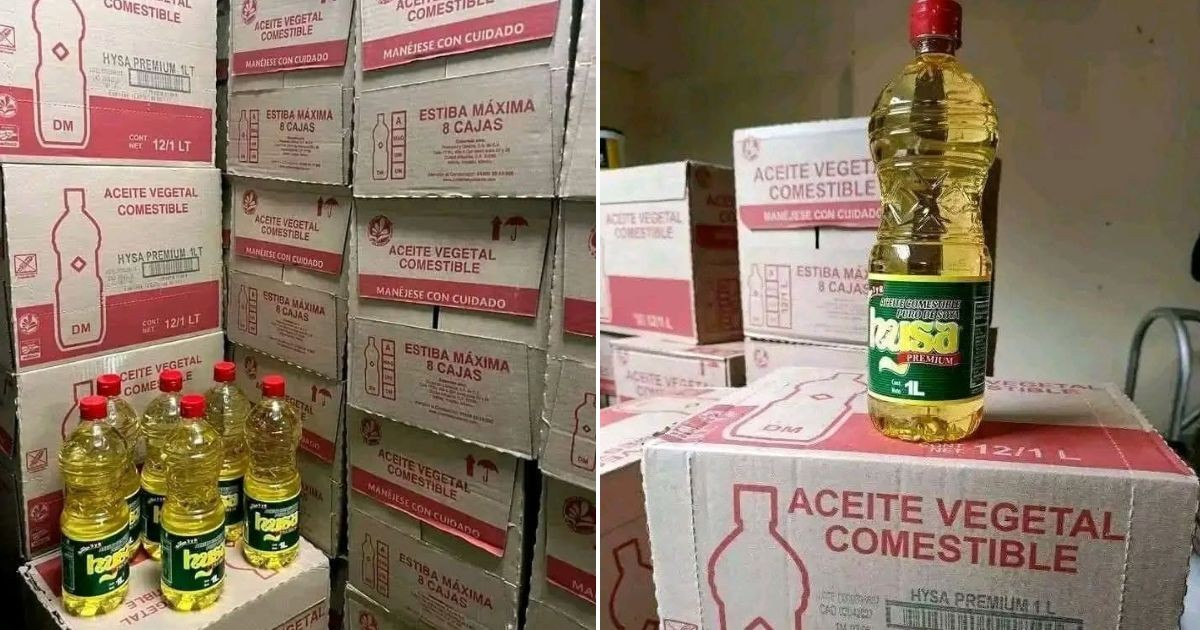
In the face of rising costs for essential goods, the municipality of Pinar del Río has set a maximum retail price of 2,150 pesos for cooking oil. This move is part of a broader wave of local price control measures being enacted across Cuba.
Announced on Tuesday, this regulation was shared via the Provincial Government of Pinar del Río's social media platforms.
The Municipal Administration Council has also determined a wholesale price of 1,950 pesos for the oil.
Authorities have defended this decision as a reaction to what they describe as "abusive and speculative" pricing, although they did not specify the packaging or quantity of oil covered by these prices.
The local government claims its actions are backed by the powers granted to municipal administrations under Decree-Law 24 of 2020 and various resolutions from 2023, 2022, 2025, and 2025. These regulations enable local Popular Power bodies to set prices for certain products within their regions.
Additionally, the administration has pledged to increase inspections at all food distribution points. This will involve patrols and control visits conducted by integrated working groups.
Sellers who violate the new pricing rules may face penalties outlined in Decree-Law 91 of 2024 and Decree 30 of 2021.
Consequences include fines, confiscations, forced sales, temporary suspension of licenses, and the potential for permanent revocation of permissions and authorizations. Authorities may also permanently revoke licenses for self-employment and order partial or complete closures of businesses and establishments.
The municipal government has provided phone numbers—52173655, 52126364, and 52174194—for the public to report any breaches of the established pricing regulations.
This measure highlights a contradiction within the regime's economic policy. In June, the Ministry of Finance and Prices removed national caps on cooking oil, poultry, powdered milk, pasta, and sausages.
Miguel Díaz-Canel admitted that these controls had failed to curb inflation and led to product shortages, a shift to the black market, reduced tax revenue, and even higher prices.
Although the central government indicated it would cease widespread price caps and transferred the authority to manage prices to local administrations, numerous local governments reinstated food price limitations within two months.
For example, Villa Clara set the oil price at 2,500 pesos per liter and eggs at 110 pesos, despite these products already being sold at higher prices in certain areas.
Matanzas also joined this "war" against inflation by setting reference prices for oil, eggs, chicken, rice, and beans, while limiting the commercial margin to 30%.
In Songo-La Maya, Santiago de Cuba, the authorities pegged the price of oil at 2,500 pesos and eggs at 110 pesos, with threats of fines, confiscations, and closures for those exceeding these values.
The new price established in Pinar del Río is 350 pesos lower than the oil price in Villa Clara, Matanzas, and Songo-La Maya, which highlights the uncoordinated application of different values for the same product depending on the region.
Economists Pedro Monreal and Elías Amor have criticized the return of local controls, warning that such measures could lead to shortages and drive goods to the black market without addressing the root causes of inflation.
"176 measures and only one achievement: proving they learned nothing," Monreal remarked, questioning the disappearance of the supposed liberalization shift announced in June within less than two months.
FAQs on Pinar del Río's Price Cap on Cooking Oil
Why did Pinar del Río set a price cap on cooking oil?
The local government set a cap in response to what they considered "abusive and speculative" pricing, aiming to control the escalating costs of this essential product.
What are the potential consequences for sellers who exceed the price cap?
Sellers face penalties such as fines, confiscations, forced sales, suspension of licenses, and possible permanent revocation of permissions and business closures.
How does the price cap in Pinar del Río compare to other locations in Cuba?
The cap in Pinar del Río is 350 pesos lower than in Villa Clara, Matanzas, and Songo-La Maya, indicating a lack of coordination in pricing strategies across different regions.