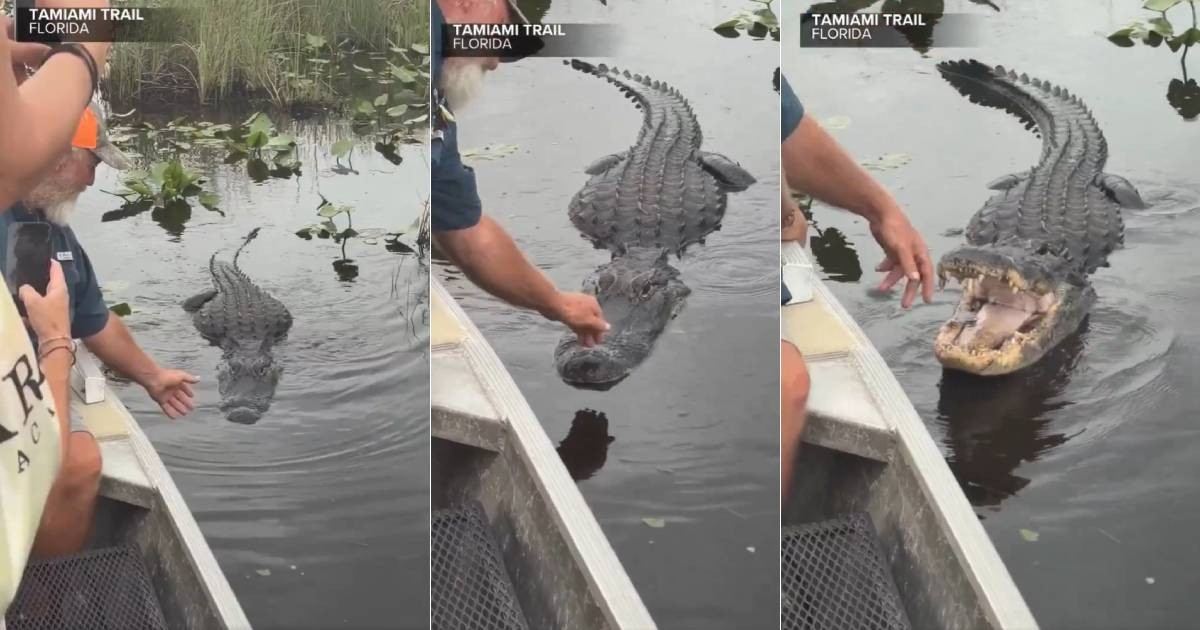
A tour guide navigating through Florida's Everglades staged a scene both breathtaking and risky by luring a massive wild alligator to his boat. The guide petted the reptile's snout and managed to coax it into opening its powerful jaws for a group of tourists eager for the "perfect photo."
This dramatic moment was captured in a video lasting about a minute, filmed by Eve Wishart, a Scottish tourist exploring the Tamiami Trail area in the Everglades.
The video, verified and distributed by the agency Storyful, gained traction after being shared by American media outlets such as ABC7 and Fox Local, quickly spreading across social media last week.
The footage shows the guide leaning over the bow of the boat, with his face and hands perilously close to the partially submerged alligator.
"Come on, smile!" the man is heard saying as he touches the reptile's snout.
Moments later, the alligator opens its jaws wide in front of the boat, creating one of the most striking images in the video.
For the tourists, the scene became an unforgettable experience.
Wishart told Storyful that she watched the interaction with a mix of fascination and fear.
"I was amazed and nervous watching it unfold," she recounted. "I've never seen anyone interact with a wild alligator like that before," she added.
Florida's Wildlife Regulations
While this encounter might have seemed like a showcase of confidence and expertise with these creatures, it exemplifies the type of behavior Florida authorities advise against—and sometimes outright prohibit.
The Florida Fish and Wildlife Conservation Commission (FWC) bans the deliberate feeding of wild alligators. This is because these reptiles can start associating humans with food, lose their natural fear, and begin approaching people more frequently.
An alligator accustomed in this way could pose a danger not only to the person feeding or attracting it but also to anyone else it encounters later.
Violations related to feeding alligators can result in penalties that escalate with repeated offenses and, in severe cases, lead to criminal consequences.
Strict Rules in the Everglades
Within the boundaries of Everglades National Park, the regulations regarding wildlife interaction are even more stringent. The National Park Service advises maintaining a minimum distance of approximately 15 feet from alligators and crocodiles, prohibiting any touching or feeding of these animals.
The danger of ignoring these warnings is not just theoretical.
One of the most notorious incidents occurred during a tourist tour in the Everglades when an airboat captain lost his left hand after being bitten by an alligator while interacting with the creature during an excursion. The hand was later retrieved from the reptile's stomach, but doctors were unable to reattach it. Authorities also investigated the circumstances of the incident due to the existing restrictions on feeding wild alligators.
Records from the FWC show that serious attacks are relatively rare compared to Florida's large alligator population, but their consequences can be devastating.
The identity of the guide in the video has not been publicly disclosed, and so far, no charges or penalties related to the episode have been confirmed.
The FWC advises reporting alligators that pose a threat to people, pets, or property through their specialized hotline and maintaining a safe distance from these animals.
FAQs About Alligator Interactions in Florida
What should I do if I encounter an alligator in Florida?
If you encounter an alligator, maintain a safe distance and do not attempt to feed or provoke it. If the alligator poses a threat, contact the Florida Fish and Wildlife Conservation Commission through their specialized hotline.
Why is it dangerous to feed wild alligators?
Feeding wild alligators can cause them to associate humans with food, leading them to lose their natural fear and approach people more often, which can be dangerous for both the alligator and humans.
Are there penalties for feeding alligators in Florida?
Yes, feeding wild alligators in Florida is illegal and can result in escalating penalties with repeated offenses, potentially leading to criminal charges in severe cases.