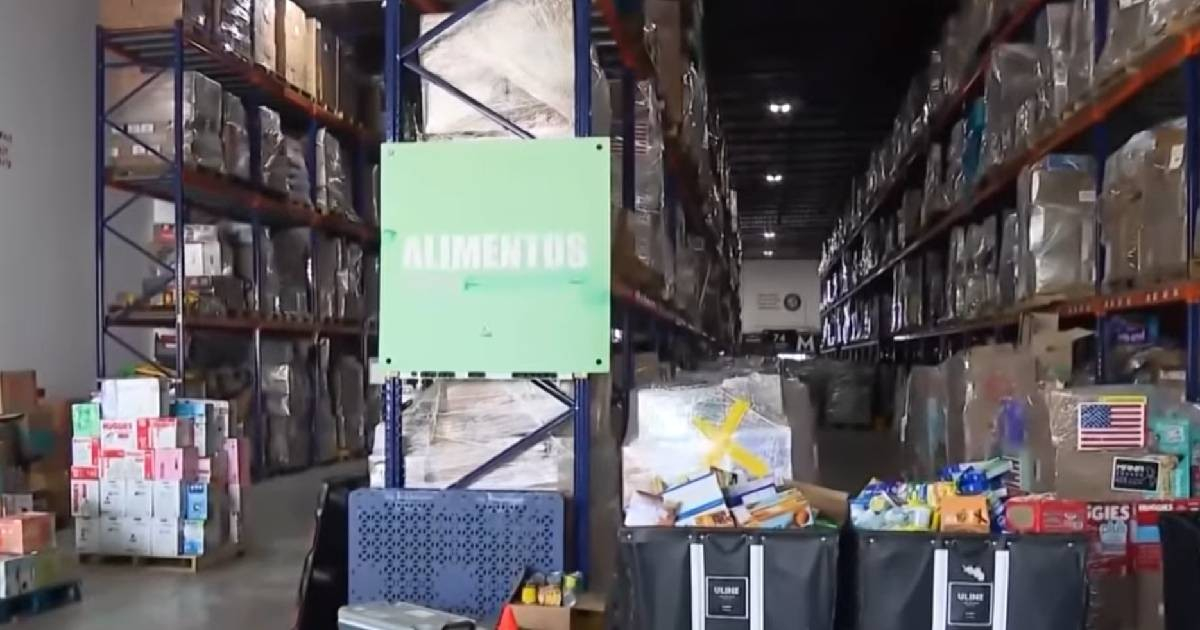
The humanitarian organization Global Empowerment Mission (GEM), based in Doral, launched an emergency operation on Monday to collect and send aid to those affected by the 7.4 magnitude earthquake that hit western Colombia. This earthquake is the strongest recorded in the country over the past decade.
From its warehouse in Doral, GEM is accepting both monetary and in-kind donations—such as non-perishable food, water, medicine, hygiene kits, and clothing—while dozens of volunteers pack supplies for shipment to the affected areas. The organization has already deployed teams on the ground in Colombia to assess needs and coordinate relief efforts.
Coordinated Relief Efforts
GEM's leadership explained to Noticias Telemundo the reasoning behind their response: "Typically, in these types of disasters, the initial response includes water supplies, some rescue operations, first aid, and medical assistance." In subsequent phases, the focus expands to cover broader needs.
The organization emphasized that supplies are arriving from various parts of the country. "We receive trucks here daily from Wisconsin and other parts of the United States. It's just the direct access route to reach the disaster sites," a GEM representative noted.
Community Call to Action
The appeal to the community was straightforward: "Any small bag of donations, no matter how small, is welcomed for those who have lost almost everything at this time."
The operation for Colombia is in addition to GEM's ongoing efforts for Venezuela, where just weeks ago, they sent over 50 tons of humanitarian aid following June’s earthquakes. "While we're still actively working on Venezuela, Colombia has now been added to our efforts," the organization’s team acknowledged.
Impact of the Earthquake
The earthquake, with its epicenter in San José del Palmar, in the Chocó department, occurred at 7:34 am and was felt in Bogotá, Medellín, Cali, Pereira, Barranquilla, as well as in Ecuador and Panama. The Colombian Geological Service recorded a depth of approximately 103 km.
By midday, the official toll reported 111 dead and 87 injured, as confirmed by President Abelardo De La Espriella. "As of 12:30 today, we had 111 fatalities, 87 injured, 1,575 damaged homes, 37 homes completely destroyed, and 61 buildings collapsed," stated the president, cautioning that these numbers could increase.
Pereira was the hardest-hit city, with its mayor, Mauricio Salazar, reporting at least 18 dead and dozens of structures collapsed. The earthquake also left 18 health centers damaged, 52 educational centers affected, and six airports with suspended flights, including those in Pereira, Quibdó, Manizales, and Buenaventura.
Government's Response to the Crisis
De La Espriella declared a national disaster status and tasked the National Unit for Disaster Risk Management with coordinating the humanitarian response, also announcing his relocation to Pereira. The earthquake struck just three days after he assumed the presidency on August 7 in Cali, marking this catastrophe as the first major crisis of his administration.
The United States Geological Survey issued an orange alert, estimating a likely scenario of between 100 and 1,000 deaths, a projection that the official numbers from the initial hours are beginning to confirm.
Key Questions About the Colombian Earthquake
What was the magnitude of the earthquake in Colombia?
The earthquake that struck western Colombia had a magnitude of 7.4.
Where was the epicenter of the Colombian earthquake?
The epicenter was located in San José del Palmar, in the department of Chocó.
How is GEM assisting the earthquake victims?
GEM is collecting monetary and in-kind donations, deploying teams on the ground for assessment, and coordinating the shipment of essential supplies to affected areas.