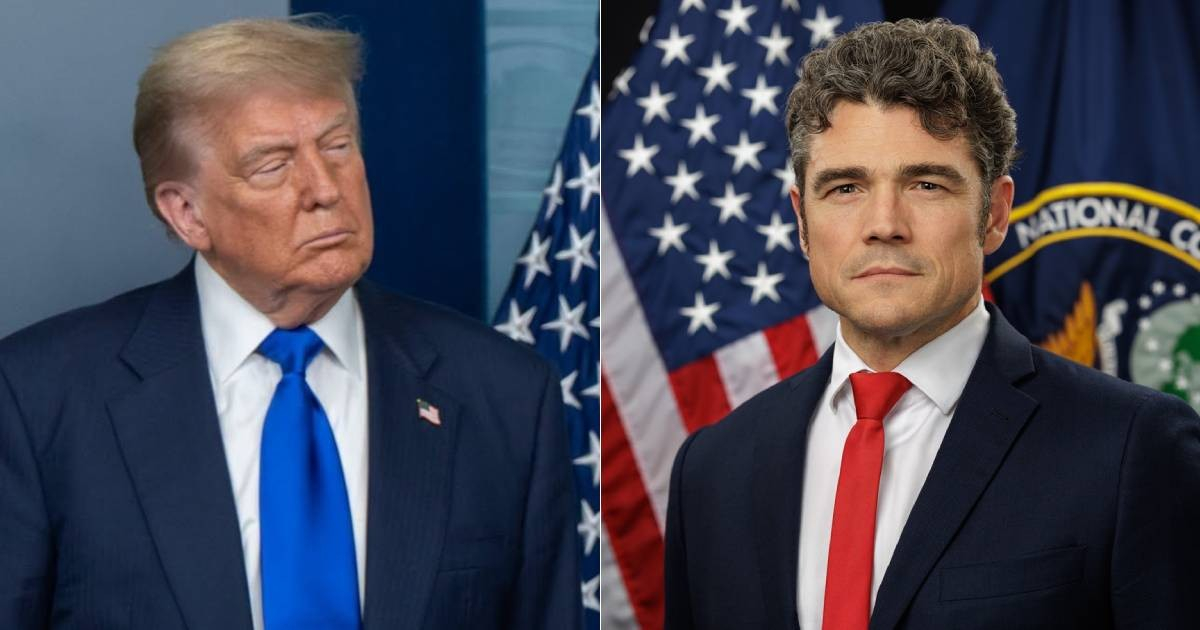
Joe Kent, who once led the U.S. National Counterterrorism Center, has accused hawkish factions in Washington of steering President Donald Trump towards a military confrontation with Iran in an effort to undermine his agenda and tarnish his political legacy.
In a detailed post on X, Kent, who stepped down from his role in March 2026 due to his disagreement with the conflict, argued that Trump was on track to fulfill much of his domestic agenda until the U.S. became embroiled in the Iranian conflict.
"Before the Iran issue, Trump was making significant strides in domestic policy. The truth is, this war-mongering faction has always despised Trump, and they lured him into this debacle hoping it would dismantle his legacy and derail his administration's promise to finally prioritize the needs of the American people," Kent stated.
The accusation represents a harsh critique from within the political circles that supported Trump and highlights the divisions the war has sparked within the movement that helped bring him back to the White House.
Proposed Withdrawal from the Conflict
Kent believes the wisest move for the president now is to withdraw the United States from the conflict before any further escalation makes a resolution even more challenging.
"The most effective action President Trump can take right now is to simply pull back; it's his best option to end the war with Iran," he wrote.
According to the former official, Trump would need to withstand what he called an inevitable pressure campaign from those favoring continued or expanded U.S. involvement.
Kent asserted that the president would have to "ignore the unavoidable barrage of pressure campaigns and outcries from the pro-war, neoconservative, and Israeli factions he will undoubtedly face."
Potential Solutions and Risks
The former director of the National Counterterrorism Center even suggested a potential solution to end the standoff: Trump could publicly declare a victory and privately negotiate to ease sanctions and unfreeze Iranian assets in exchange for reopening the Strait of Hormuz.
This maritime passage is a crucial point in the crisis due to its significance in global energy trade, with approximately 20% of the world's oil supply passing through its waters.
Kent warns that prolonging the current naval standoff presents an increasing risk to U.S. forces stationed in the region.
"Iran has shown that their ballistic missiles can reach our ships; we're one failed interceptor away from a mass casualty event that would drag us into a broader war," he cautioned.
His statements come amid heightened tension around the strait. Over the weekend, Iran's Supreme National Security Council laid out six demands for its reopening, including a permanent end to the war, withdrawal of U.S. naval and air forces from the region, lifting of sanctions, and payment of reparations.
Political Implications and Future Prospects
Tehran has not committed to fully restoring passage while U.S. forces remain in the area. Kent warned that Washington should avoid responding to these conditions with an escalation that could make a larger war unavoidable. He also urged consideration of the consequences that certain U.S. and Israeli operations might have had on Iranian society.
"We must consider how killing the Ayatollah and bombing the girls' school have contributed to radicalizing Iranians," he wrote.
The current conflict began on February 28, 2026, with Operation Epic Fury, a joint U.S.-Israeli offensive against Iranian targets that resulted in the death of Supreme Leader Ayatollah Ali Khamenei.
Since then, the war has seen cycles of attacks, negotiation attempts, and truces that have failed to take hold, with the Strait of Hormuz becoming a key point of economic and military tension.
Kent's criticisms extend beyond military strategy in Iran and directly address the future of the political movement built around Trump.
The ex-official revealed he is collaborating with Republican Representatives Thomas Massie and Marjorie Taylor Greene to build a broader political coalition that, he suggested, could even include left-wing sectors opposed to military interventions.
Kent also noted that the creation of a new political party is among the possibilities being discussed, a sign of the deep rifts within the political space that has traditionally supported the president.
Despite his harsh critique, Kent believes Trump still has the opportunity to frame a withdrawal from Iran as a political success and prevent the conflict from defining his presidency.
However, he warned, that opportunity might close quickly.
"Trump has the political leverage to present this maneuver as a victory, but the time to do so successfully is slipping away," he concluded.
Key Questions About the Iran Conflict
Why did Joe Kent resign from his position?
Joe Kent resigned due to his disagreements with the U.S. military involvement in Iran.
What does Joe Kent suggest as a resolution to the conflict?
Kent suggests that Trump should declare a victory and negotiate sanctions relief and asset unfreezing with Iran in exchange for reopening the Strait of Hormuz.
What risks does Kent associate with the ongoing conflict?
Kent warns that the current naval standoff increases the risk to U.S. forces, as Iran's missiles could potentially hit American ships, leading to a larger war.
What political implications does Kent foresee if the conflict continues?
Kent believes that the conflict could further fracture the political movement supporting Trump and stresses the potential for forming a new political coalition or party.