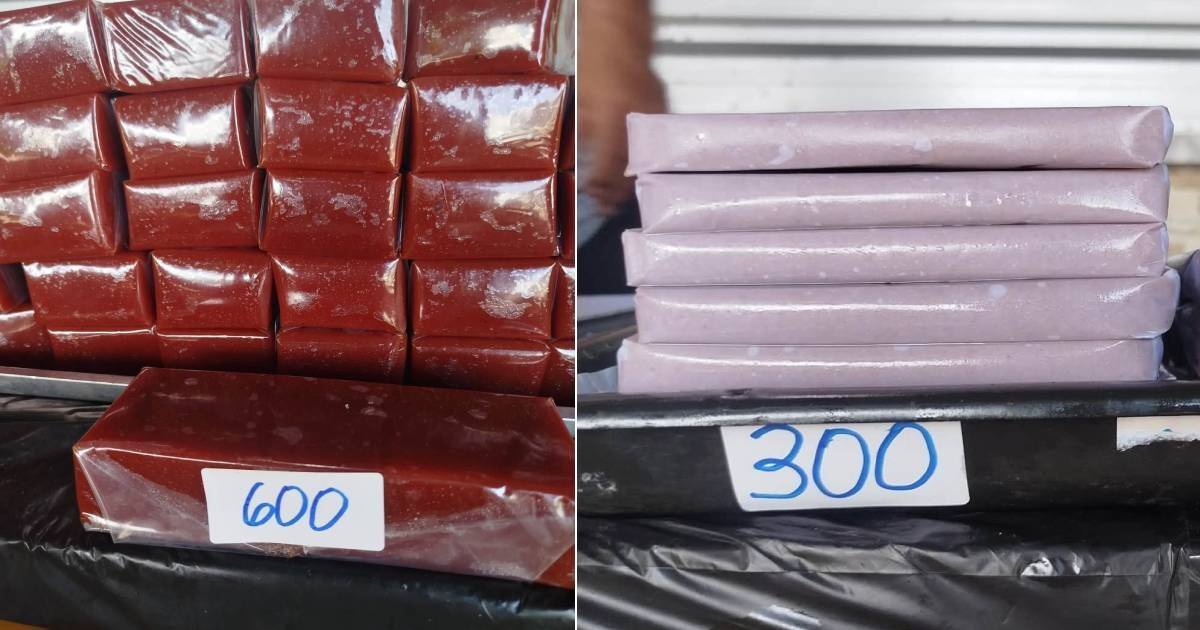
A guava paste bar priced at 600 Cuban pesos. This exorbitant price, displayed at a roadside stand along a Havana highway, has sparked a wave of anger on social media, highlighting a harsh reality for Cubans: traditional foods produced on the island itself have become unaffordable luxuries for those relying on a wage or pension.
Last Friday, Havana resident Joshua Suárez shared images on Facebook of typical products, including guava paste and peanut sweets, with price tags of 300, 500, and even 600 pesos.
His reaction was swift and impassioned.
“This must stop! Cubans against Cubans. Highway prices won’t crush the spirit to keep Cuban culinary traditions alive. But easy on the prices—guava and peanuts aren't imported,” he wrote.
The post attracted numerous comments reflecting discontent that goes beyond the price of sweets, touching on a critical issue for Cuban families: the growing gap between income and the cost of food.
Escalating Prices Across Cuba
“Cubans exploiting Cubans. Abusers,” summarized one user. Another commenter described it as “rampant financial speculation.”
The testimonies shared in the post suggest that the price surge is not confined to Havana. One user claimed that in Santiago de Cuba, a similar guava paste bar is sold for 800 pesos, while another noted that a kilogram of sugar reaches 1,200 pesos.
These figures are painfully challenging for those who survive solely on state salaries or pensions.
The minimum wage in Cuba has been set at 3,210 pesos per month since July 2026. At this income level, a single 600-peso guava bar represents nearly a fifth of the entire monthly minimum wage.
Blame and Responsibility
The debate spurred by the post also highlighted various explanations Cubans themselves propose for the relentless price hikes.
Some blamed vendors, middlemen, and private enterprises exploiting scarcity to increase their profits. Others pointed fingers at the Cuban government, criticizing its inability to curtail the decline in purchasing power.
“Those who benefit won't stop on their own; a firm hand protecting the people must apply the brakes,” demanded one commenter.
Vilma Franco criticized the regime’s decision to remove price caps, a move she believes further exposed consumers.
“Even if they weren’t always respected, they at least curbed speculation somewhat,” she remarked.
Who Can Afford the Essentials?
Beyond the debate about who sets prices lies a deeper concern: who can actually afford them?
“They don’t think about the children, the elderly, mothers, workers, etc., who can't buy any of these essential products,” lamented Ileana Álvarez.
Her comment depicts a reality especially challenging for retirees, families with children, and workers whose incomes lag far behind the rate at which prices rise.
Even those who publicly support the Cuban political system express their frustration.
Silvia Téllez, self-identified as a Cuban of “Homeland or Death,” called for direct intervention by authorities.
“Only the government can stop these abuses. If they don’t get involved up to their elbows, we’ll keep going downhill, and the government will lose the people's trust,” she asserted.
Another Cuban using the same slogan, Silvia Varela, emphasized the gap between prices and earnings. She mentioned wages that often don’t exceed 5,000 pesos and pensions around 3,200 pesos.
Her assessment was stark: “Cuba is mortally wounded.”
Administrative Measures and Economic Challenges
Authorities have attempted to address the uncontrolled prices through inspections and administrative actions. In Las Tunas, for example, more than 4,000 inspections were conducted, and 24 individuals were identified for allegedly charging abusive prices.
Meanwhile, Matanzas has set reference prices for several basic food items.
Nonetheless, administrative measures clash with an economy plagued by shortages, the devaluation of the Cuban peso, and incomes that keep losing purchasing power.
Understanding Cuba's Economic Crisis
Why are traditional foods becoming unaffordable in Cuba?
Traditional foods are becoming unaffordable due to rampant inflation and price speculation, coupled with a deteriorating economic situation where incomes do not match the rising costs.
What actions are being taken to address high prices in Cuba?
Authorities in Cuba are conducting inspections and imposing administrative measures to control prices, though these efforts face challenges due to economic scarcity and currency devaluation.
How do high food prices affect Cuban families?
High food prices significantly impact Cuban families, particularly those relying on state salaries or pensions, as they struggle to afford basic necessities amidst rising costs.