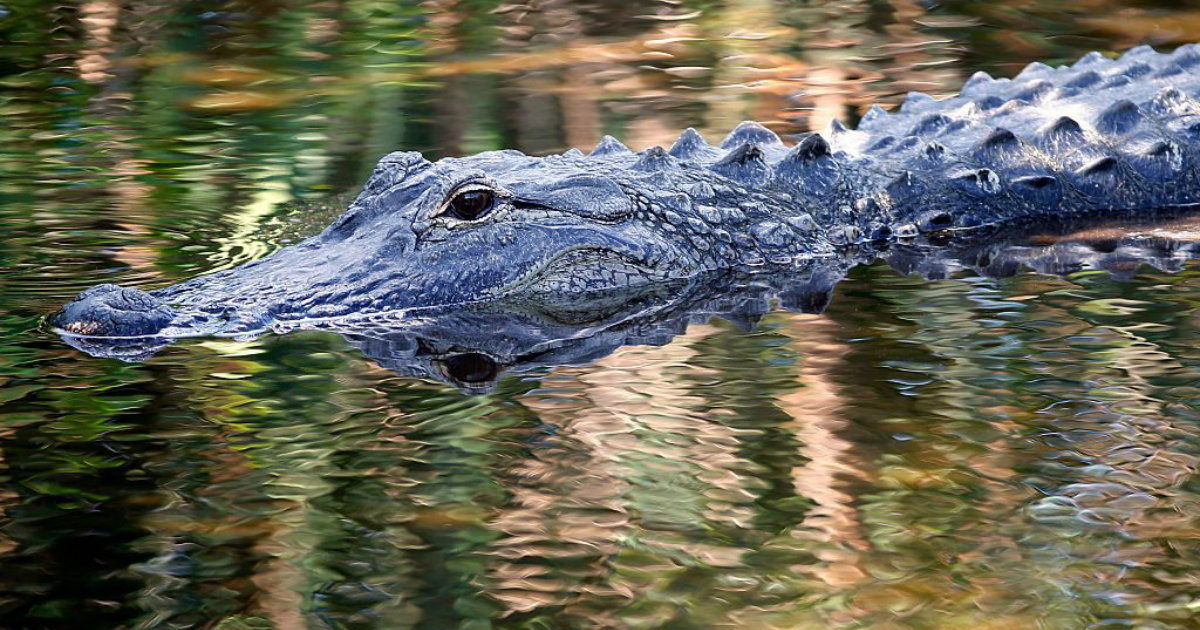
A woman attacked by an alligator while swimming in the Silver River, east of Ocala in Marion County, Florida, lost her right arm but was already recuperating at home by Monday.
The incident took place at approximately 2:20 p.m. on Saturday when the victim was enjoying the springs of the Silver River with a group of swimmers near Ray Wayside Park. According to her family, she attempted to fend off the reptile with a paddle, but it grabbed her arm and pulled her underwater, as reported by local media.
Bystanders in the vicinity managed to rescue her and bring her to shore. A nearby swimmer was credited by her family for saving her life by using a rope as an improvised tourniquet.
She was transported to UF Health Shands hospital in Gainesville as a trauma alert, where doctors amputated her right arm. By Monday, she had returned home and was reportedly in "good spirits."
Alligator Captured After Attack
The Florida Fish and Wildlife Conservation Commission (FWC) identified a 9-foot-8-inch alligator in the area, and a licensed trapper captured it. The river section was temporarily closed during the search but reopened to the public on Sunday after the reptile was caught.
Uptick in Alligator Attacks in Florida
This attack adds to a series of incidents recorded in Florida during the summer of 2026, particularly in Marion County. In late June, a 19-year-old was bitten while snorkeling in the Rainbow River, and an 11-year-old lost his right hand at Nelson Fish Camp when his father intervened, trying to pry open the alligator's jaws.
The most severe incident this summer occurred on June 28, when Brittany Clark, 31, was killed in the Econlockhatchee River in Seminole County. She was attacked by an alligator that severed her arm while swimming with her boyfriend and a friend. DNA tests identified the attacker as a nearly four-meter-long specimen. This marked the 33rd fatal alligator attack in Florida since 1948.
Understanding Alligator Behavior
Florida is home to an estimated 1.3 million alligators of various sizes, according to FWC data. As of February 2026, the agency had recorded a total of 500 unprovoked bites since 1948, resulting in 346 serious injuries and 32 fatalities. In 2025, there were 27 attacks, two of which were fatal, a 12% increase from the previous year.
Experts suggest that the high temperatures during summer speed up the reptiles' metabolism, making them more active, while drought conditions can push them into areas commonly occupied by humans. Josh Swander, a wildlife photographer and tour guide, summed up the situation by telling WESH 2, "I've lived in Florida my whole life, and I've never seen a summer with so many alligator attacks. It's crazy."
The FWC advises swimming only in designated areas during daylight hours, maintaining a safe distance from alligators, refraining from feeding them, and reporting any threatening animals to 866-FWC-GATOR.
Frequently Asked Questions About Alligator Safety in Florida
How many alligator attacks occur in Florida annually?
In 2025, there were 27 reported alligator attacks in Florida, which marked a 12% increase from the previous year.
What precautions should be taken to avoid alligator attacks?
The Florida Fish and Wildlife Conservation Commission recommends swimming only in designated areas during daylight, keeping a safe distance from alligators, not feeding them, and reporting any threatening animals to their hotline.
Why are alligator attacks more frequent in the summer?
The warmth of summer accelerates the metabolism of alligators, making them more active. Additionally, drought conditions can drive them into areas frequented by humans.