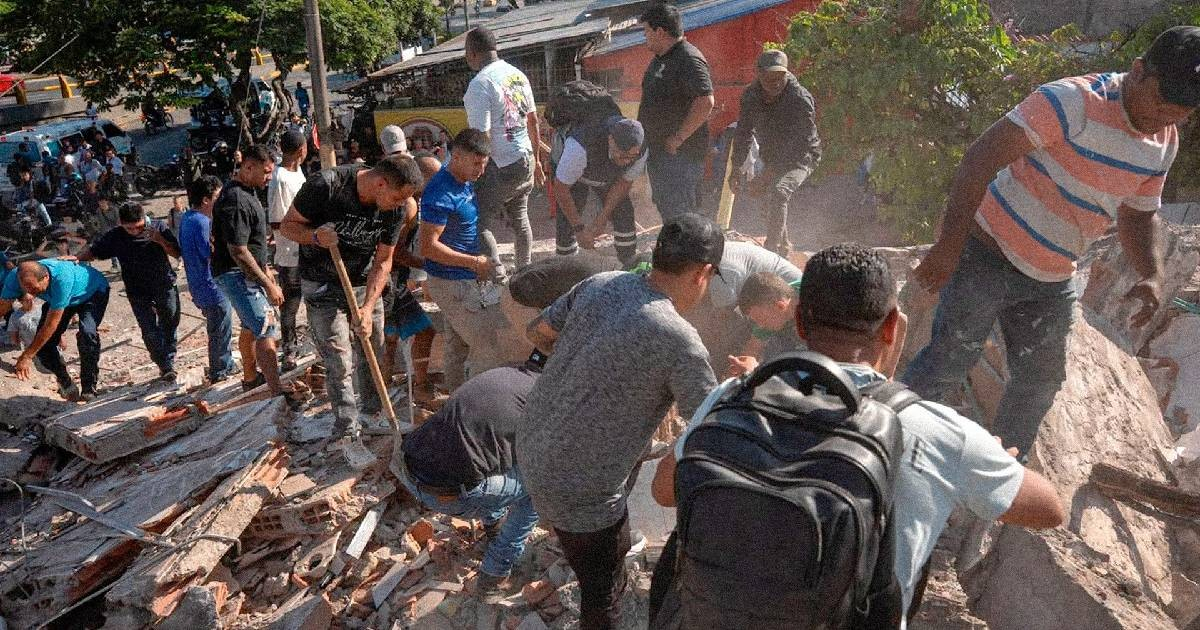
The tragic aftermath of a 7.4 magnitude earthquake that struck western Colombia early Monday morning continues to unfold. Local authorities have reported that the death toll has now reached 74, with numerous buildings reduced to rubble and individuals still trapped beneath the debris.
Centered in San José del Palmar in the Chocó department, the earthquake occurred at 7:34 a.m. local time and lasted approximately four minutes. Its tremors were felt not only throughout major Colombian cities but also in Ecuador and Panama. The Colombian Geological Service identified it as the most significant seismic event in the country over the past ten years.
Devastation in Pereira
Pereira's metropolitan area bore the brunt of the disaster. Mayor Mauricio Salazar confirmed 40 casualties in the region, stating, "The situation is truly tragic. So far, we've recorded 40 deceased, 65 collapsed buildings, and in 15 of those structures, there are believed to be trapped individuals," as he mentioned in an interview on La FM.
Salazar further explained that five hospitals in the city were overwhelmed by the surge of patients. He noted that people were also stranded on the megacable, but assured that they face no immediate danger and will be rescued once those in more precarious situations are attended to.
Impact Across Colombia
In addition to Pereira's fatalities, the quake claimed 27 lives in the Valle del Cauca excluding Cali, four in Chocó, and three in Manizales, culminating in a total of 74 deaths.
In Cali, Mayor Alejandro Eder reported the collapse of at least 25 buildings with occupants inside. He reached out to Bogotá and Medellín for rescue assistance, urging citizens to remain calm and evacuate any structures with significant damage, as posted on his social media account.
Governor Nubia Carolina Córdoba Curi of Chocó confirmed four deaths and 69 injuries in her region. She highlighted that although San José del Palmar was the epicenter, Quibdó, the capital, also suffered injuries and severe structural damage.
Infrastructure and Emergency Response
Seven airports, including those in Cali, Pereira, Manizales, Quibdó, Armenia, Cartago, and Buenaventura, have halted operations due to infrastructure damage. The Maritime Directorate ruled out any tsunami threat to Colombia’s Pacific coast.
President Abelardo de la Espriella, newly inaugurated just three days prior in Cali, rushed from Barranquilla to Bogotá to manage the crisis at the National Unit for Risk Management, alongside Interior Minister Rodrigo Lara and Vice President José Manuel Restrepo.
Global Assistance and Projections
The international community responded swiftly. The United States and Mexico offered aid, while Ecuador dispatched 47 rescue workers with dogs and specialized equipment. Ukrainian President Volodymyr Zelensky also called for global support to assist the affected areas.
The U.S. Geological Survey issued an orange alert through its PAGER system, projecting a potential death toll ranging from 100 to 1,000, suggesting that the final count could rise significantly beyond current figures.
Frequently Asked Questions About the Colombian Earthquake
Where did the earthquake in Colombia originate?
The earthquake's epicenter was located in San José del Palmar, Chocó department.
How many people have been affected by the earthquake?
As of the latest reports, 74 people have died, with numerous others injured and trapped under debris.
What has been the international response to the earthquake?
Countries such as the United States, Mexico, and Ecuador have offered assistance, with Ecuador sending rescue teams.