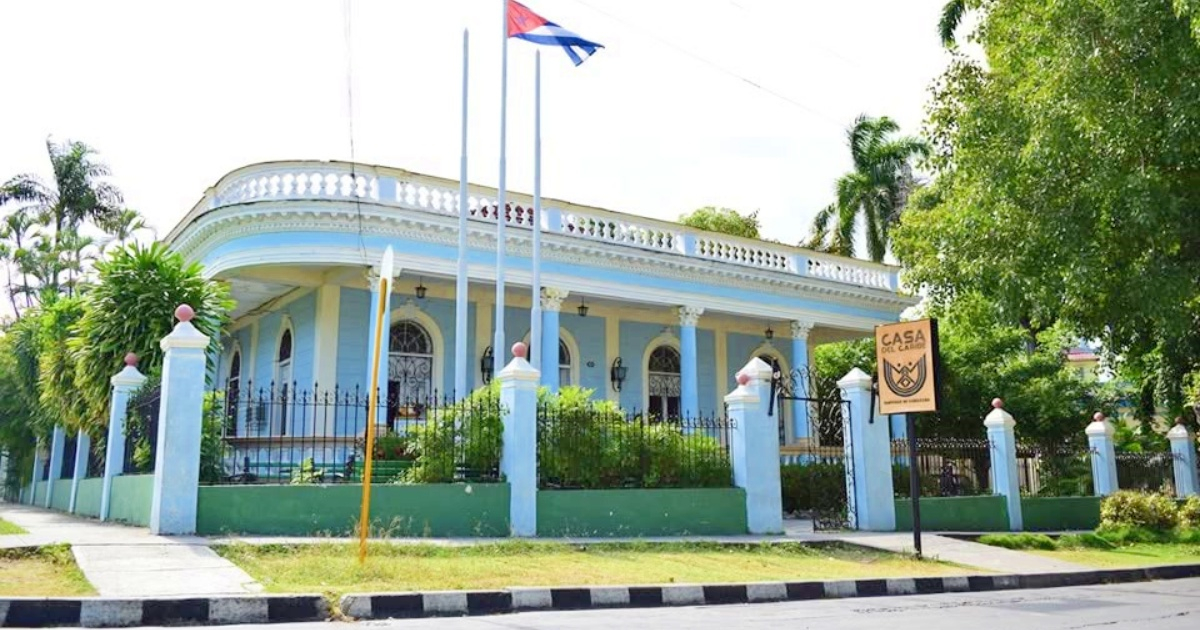
The Caribbean House, a renowned cultural institution in Santiago de Cuba, has issued a warning on its Facebook page about a scammer impersonating a babalawo and claiming to be an employee of the institution. This individual is allegedly deceiving people into handing over valuable items under the guise of preparing them as ritual "protections."
According to the official statement, the fraudster requests rings, chains, and other valuable items from victims, promising to transform them into spiritual protection objects, and instructs them to collect these items directly from the Caribbean House premises.
Fraud Alert to Santiago Residents
The statement is clear: "The Caribbean House alerts Santiago residents about the unscrupulous actions of a scammer posing as a Babalawo and claiming to be an employee of our institution. This individual requests personal items (rings, chains, etc.) to prepare as 'protections' and advises picking them up at the Caribbean House."
The institution has firmly denied any association with the individual: "Our institution has absolutely no connection with such an individual and does not endorse actions of this nature."
Exploiting Cultural and Spiritual Authority
The scam takes advantage of the role of the babalawo, a high-ranking priest in the Yoruba religion, which holds significant spiritual authority within Cuban Santeria and Afro-Caribbean religious practices.
By pretending to work for such a prestigious institution, the fraudster aims to gain the trust of potential victims before fleeing with their valuables.
Public Reaction and Call for Action
The public response on social media has been significant, with reactions ranging from outright rejection of the alleged scam to criticism of those who hand over valuable items to strangers.
"It's not about belief, it's about the scam and people's vulnerability," wrote one user, summarizing the sentiment of many.
Others pointed out the locale of the scam: "There on Avenida de las Américas, they're pretending to be babalaos, hunting prey."
Incredulity also found its place: "But is it possible for people to give a stranger an item? My God."
Several commenters called for authorities' intervention: "Arrest him or share his photo to identify him," and "Let the full weight of Cuban law apply," were among the most repeated demands.
Some comments claimed similar scams were observed in various parts of Havana—Miramar, Playa, and Arroyo Naranjo—though these reports are not independently verified.
The Caribbean House has not announced whether they have filed a formal complaint with authorities or if the individual has been identified.
A Recurring Pattern of Deception
This is not the first warning of this nature issued by the Caribbean House in less than a year.
In November 2025, the institution previously alerted the public about a fake religious consultation offered in its name, where a different individual was providing spiritual services in public spaces, falsely claiming to operate under its auspices.
At that time, the entity condemned the practice as "false" and "unauthorized," emphasizing its commitment to "authentic cultural and religious expressions" and rejecting "any attempt to manipulate them for personal or economic gain."
The pattern remains: exploiting the name and reputation of the institution to lend credibility to their deceit and attract victims who trust in its cultural and religious authority.
The Yoruba Association of Cuba had already urged in 2020 to report Santeria practitioners acting as "profane and fraudulent," creating non-existent ceremonies or deities for financial gain.
In this context, a consulted babalawo advised that victims of religious fraud could report the crime to authorities if they have documentary evidence.
Understanding the Caribbean House Fraud
What actions did the Caribbean House take against the fraudster?
The Caribbean House has issued a public warning on Facebook, denying any association with the fraudster, but has not confirmed filing a formal complaint with authorities.
How can people protect themselves from similar scams?
To protect against similar scams, individuals should verify the credentials of anyone claiming to be a religious or cultural authority and avoid handing over valuables to strangers.
What role does a babalawo play in Cuban Santeria?
A babalawo is a high-ranking priest in the Yoruba religion, holding significant spiritual authority in Cuban Santeria and Afro-Caribbean religious practices.