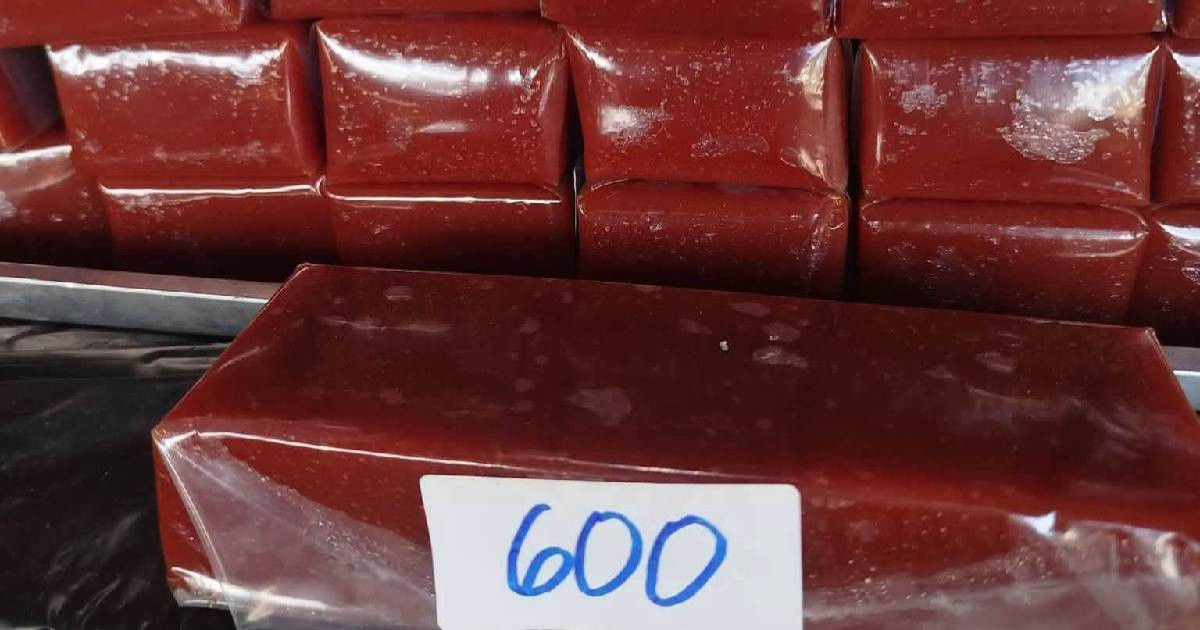
A photo shared on Sunday in the Facebook group "Ciudad de Matanzas en Fotos" showcases guava paste bars priced at 600 Cuban pesos (CUP) each, sparking outrage among Cubans. Many see this price as a stark representation of the rampant inflation consuming the nation.
Once a staple sweet in the Cuban diet, these guava bars have now become a luxury item for numerous consumers due to the relentless rise in prices.
"If this is the state of national production, imagine the imports..." wrote Mercedes Mercy Maa, the user who shared the image in the group. She did not specify when or where the photo was taken.
One commenter expressed dismay, saying, "It's disrespectful to the people to price a guava paste bar at 600, what a horror." Another linked the cost to the soaring price of sugar, remarking, "If something so cheap in past years is now a luxury, with a kilogram of sugar costing 1,350 pesos, imagine the quantity used."
"This is what happens when you destroy the agricultural sector," summarized another voice in the comments.
The Economic Weight of Guava Bars
Since July, the minimum monthly wage in Cuba is set at 3,210 CUP, making the cost of a single guava paste bar nearly 20% of a budgeted worker's income. Economists estimate that an individual needs about 96,060 CUP monthly to meet basic needs, which is roughly 30 times the current minimum wage.
The inflated price of this sweet treat also highlights the crisis within Cuba's sugar industry. The 2024-2025 harvest yielded less than 150,000 tons, the lowest level in over a century, while the country's internal consumption needs range from 600,000 to 700,000 tons annually. This production shortfall necessitates importing sugar at international prices, driving up costs for derivative products.
Price Controls and Economic Missteps
Price chaos worsened after the Ministry of Finance and Prices' Resolution 150/2026, published on June 20, removed retail price caps on products like oil, chicken, powdered milk, pasta, and sausages. As a result, oil prices soared from about 1,500 pesos in April to over 4,000 pesos in August, with prices reaching up to 7,000 pesos per liter in some areas.
In response, Matanzas established reference prices for certain basic foods on Saturday, setting oil at 2,500 CUP per liter and sugar at 400 CUP per pound. Similar measures were later implemented in Villa Clara, Santiago de Cuba, Holguín, and Guantánamo.
Economist Pedro Monreal criticized these developments as a failure of the economic package of 176 measures approved in June, stating, "176 measures and only one achievement: proving they haven't learned anything."
Cuban Inflation: A Growing Concern
According to the National Office of Statistics and Information, official year-over-year inflation reached 18.27% in June, while independent estimates place the real price increase closer to 70% annually when including the informal market. Amid this backdrop, provincial price caps attempt to curb inflation that continues to erode purchasing power.
A guava paste bar priced at 600 CUP now serves as another example of the widening gap between the prices Cubans face and the incomes they rely on to meet their needs.
Understanding the Economic Crisis in Cuba
Why are guava paste bars considered a luxury in Cuba?
Guava paste bars have become a luxury due to the significant inflation affecting Cuba, which has driven up the prices of traditionally affordable goods, making them less accessible to the average consumer.
How does the price of sugar affect other products in Cuba?
The high cost of sugar, a key ingredient, increases the production cost of products like guava paste bars, resulting in higher prices for consumers.
What are the implications of Cuba's sugar industry crisis?
Cuba's sugar industry crisis leads to reduced domestic production, forcing the country to import sugar at higher international prices, which then affects the cost of sugar-based products.