This past Saturday, state-run ACN released a jubilant report celebrating that 4,567 residents in Granma province gained access to water services or saw improvements in their supply during the first half of 2026. The announcement comes just days shy of the 64th anniversary of the National Institute of Hydraulic Resources (INRH), presenting modest achievements as grand victories.
True to its tradition of turning minimal gains into epic feats, the regime proudly reports that 2,946 people now receive water due to recent investments, while an additional 1,621 experienced "improved" supply through maintenance work on main lines and distribution networks. According to engineer Robisnel Maceo Ramos, head of investments at the local Hydraulic Resources division, these upgrades came at a staggering cost of "83 million 809 thousand pesos."
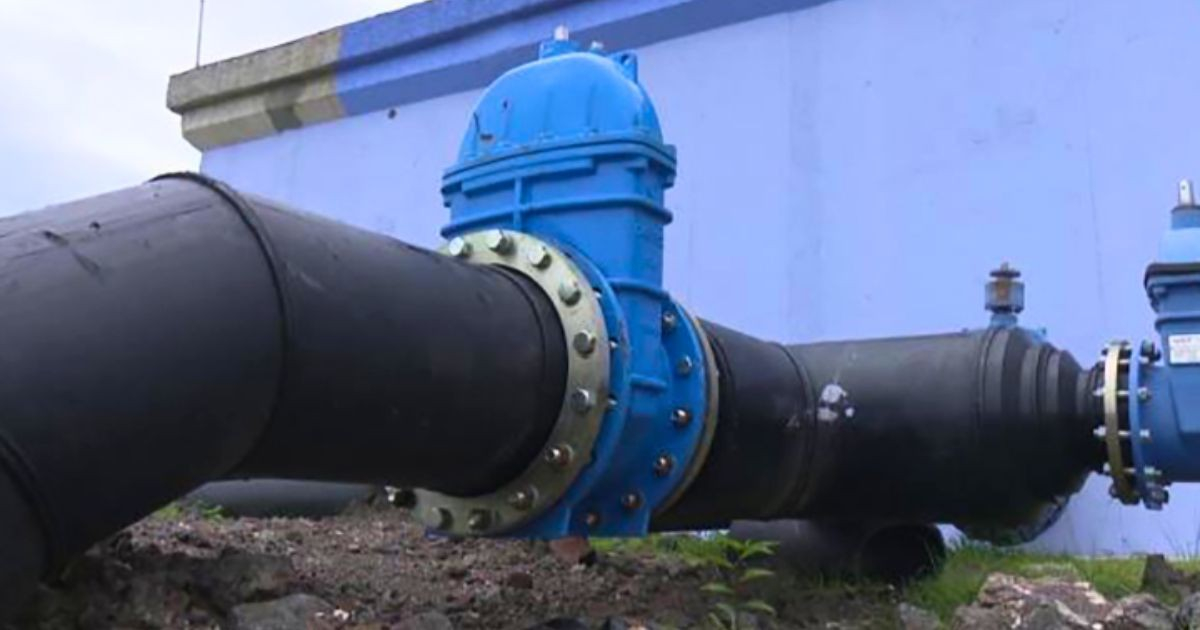
The projects involved installing 1.38 kilometers of main pipes and 5.31 kilometers of distribution lines, finally bringing water to the rural areas of Los Ranchos in Buey Arriba and Antonio Maceo in Bayamo, which had previously relied on water trucks. While this may seem like progress, in any country with functional infrastructure, such tasks would be considered routine maintenance.
Water Crisis Overshadows Minor Achievements
The glaring omission in ACN's propaganda-laden note is that Granma's population stands at 749,289, based on data from the National Office of Statistics and Information at the end of 2024. Thus, aiding 4,567 individuals covers a mere 0.6% of the provincial populace. The remaining 99.4%, many of whom suffer from unstable water supply, are conveniently left out of this narrative of success.
And Granma is just one piece of the puzzle. Nationwide, about 2.7 million Cubans face daily water shortages, according to INRH figures from May 2026, with millions more receiving intermittent service. In Havana, those affected rose from 200,000 in April to 376,055 in May, eventually surpassing 500,000 by July.
Even as Granma celebrates its new pipelines, the reality in December 2025 was stark: elderly residents of Río Cauto drawing water from the Cauto River or a lagoon just to survive after over a month without potable water.
Underlying Causes of the Water Shortage
The crisis has deep-seated structural issues, reluctantly acknowledged by regime officials. A staggering 87% of the water supply system relies on the electrical grid, making each power outage a direct water crisis. Less than half of the country's 480 critical pumping stations are shielded from electrical disruptions. Additionally, the system operates with just a fraction of the needed fuel, and it's estimated that 40% of the pumping equipment is in disrepair.
Back in Havana, desperation has eclipsed resignation. On July 5, residents of Mantilla blocked the Calzada de Managua after enduring over two months without water amid sweltering temperatures. One resident bluntly described the ordeal: "88°F and over two months without water in Mantilla. A small tank of well water costs 2,500 pesos; a water truck, 40,000." In San Miguel del Padrón, disputes erupted over a single bucket of water when only one truck was sent for the entire area.
The Cuban Observatory of Conflicts recorded 107 street protests in June 2026, a historic high, many directly linked to water shortages. The situation grew so dire that the regime had to deploy water trucks from the Revolutionary Armed Forces to supply parts of the capital.
ACN's report concludes with a dedication encapsulating the regime's logic: "These results are dedicated by their protagonists to commemorate the 64th anniversary, on August 10, of the creation of the National Institute of Hydraulic Resources, as directed by Fidel Castro Ruz." Sixty-four years since its founding, the INRH marks its anniversary by installing pipelines for a mere 0.6% of a province while millions of Cubans remain without water.
Understanding Cuba's Water Supply Crisis
What is the current water supply situation in Granma province?
In Granma province, a recent report celebrated improvements and new water connections for 4,567 residents. However, this accounts for only 0.6% of the province's population, leaving the majority still facing water supply issues.
How does electrical dependency affect Cuba's water system?
Approximately 87% of Cuba's water supply relies on the electrical grid, making power outages a direct cause of water shortages. Less than half of the essential pumping stations have protection against electrical disruptions.
Why have there been protests related to water shortages in Cuba?
Protests have erupted due to the severe water shortages affecting millions, including in Havana where affected numbers have drastically increased. The scarcity has led to desperation and public demonstrations over inadequate water supply.