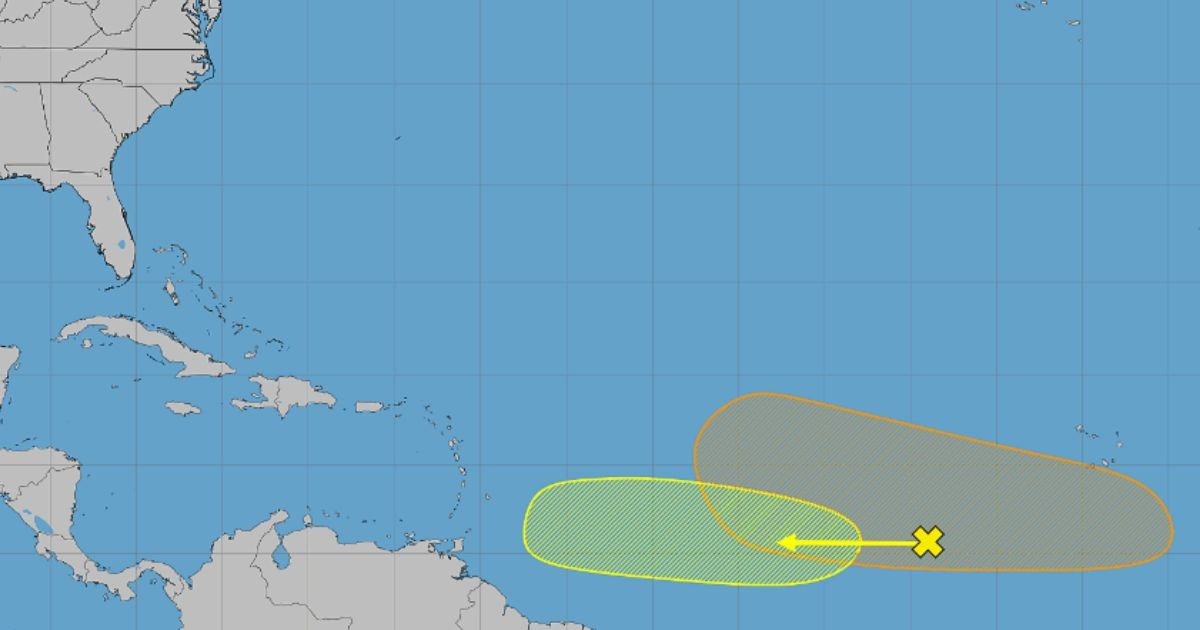
A tropical wave approaching the western coast of Africa now has a 40% chance of developing into a tropical cyclone over the next week. Environmental conditions could support its gradual development over the Atlantic.
The United States' National Hurricane Center (NHC) announced on Sunday that the system currently has almost a 0% chance of development within the next 48 hours. However, the probability increases to a medium level of 40% for formation within a week.
The tropical wave is expected to move off the west coast of Africa early this week. As it progresses, environmental conditions will likely be conducive to gradual development, potentially forming a tropical depression in the latter half of the week while it travels generally westward across the eastern and central tropical Atlantic.
In a second meteorological discussion, the NHC indicated that the wave could emerge from Africa on Tuesday, reiterating a medium probability of cyclone development within seven days.
Monitoring of this system has intensified compared to the previous day. On Saturday, the agency assessed its development chance at 30% over seven days, while Sunday's update raised it to 40%.
The NHC is also keeping an eye on another tropical wave located several hundred miles west-southwest of the Cape Verde Islands. This system has nearly a 0% chance of development over the next 48 hours and a 20% chance within the next week.
This second tropical wave under observation might undergo some gradual development from early to mid-week as it advances westward through the central tropical Atlantic. However, upper-level atmospheric winds would be less favorable as it nears the Lesser Antilles later on.
The system holds a 20% probability of cyclonic formation over the next seven days.
In its latest forecast update for the 2026 Atlantic hurricane season, the National Oceanic and Atmospheric Administration (NOAA) estimated that between two and six hurricanes could occur, maintaining its projection of below-normal activity.
In the report released last Thursday, NOAA adjusted its forecast to include seven to 13 named storms, with two to six potentially developing into hurricanes.
Among these, up to two could escalate to major hurricane status, with winds reaching at least 111 miles per hour.
The agency now calculates a 75% chance of below-normal cyclonic activity, compared to a 20% likelihood of a season near average and only a 5% chance of it being more active than usual.
Understanding Tropical Cyclone Development
What factors contribute to the development of a tropical cyclone?
Tropical cyclones typically form over warm ocean waters where environmental conditions such as low vertical wind shear, high humidity in the lower to middle levels of the atmosphere, and a pre-existing weather disturbance are present.
Why does the probability of cyclone formation increase over a week?
The probability increases as the wave moves into areas with more favorable environmental conditions, such as warmer waters and less wind shear, allowing for gradual development and organization of the system.