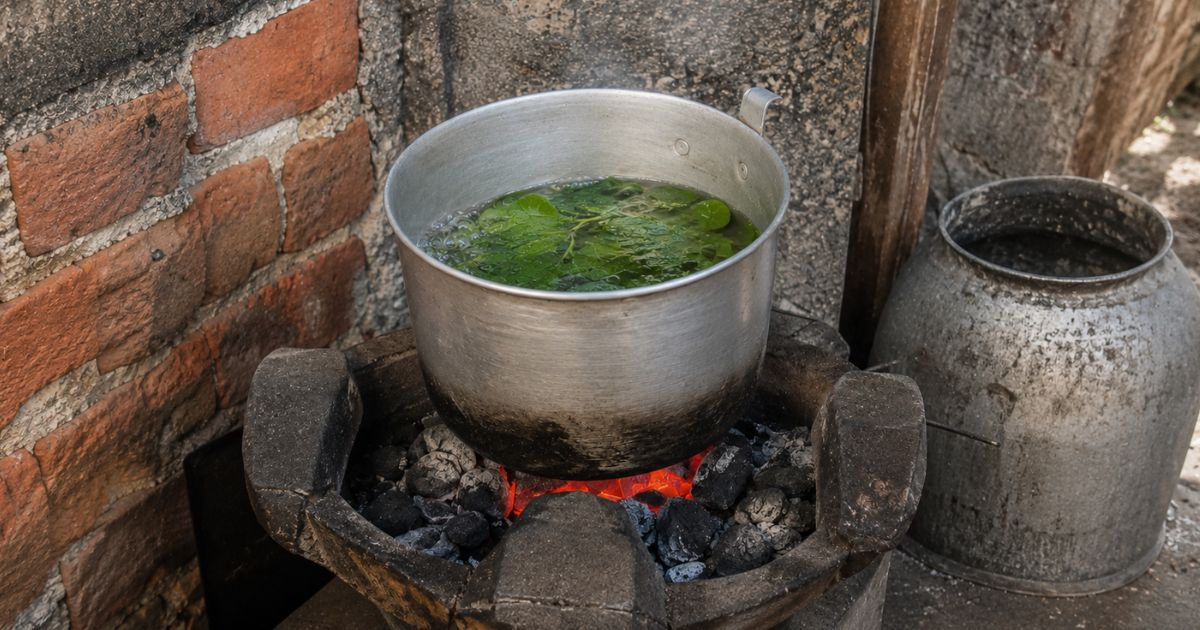
A Cuban woman's desperate search for medication, even at a local health clinic, to ease her husband's excruciating pain, believed to be from a kidney stone, culminated in her preparing an herbal concoction over a charcoal stove, a remedy passed down through her family for generations.
The tale, titled Los tengo abajo, was shared by La Hora de Cuba as a narrative by Eloísa García. She described her husband lying on the bedroom floor, struggling to find any position that might offer relief.
"My husband says it hurts to sit, lie down, walk, and even breathe. The pain is unbearable," García wrote, noting that he is typically a strong man who seldom shows discomfort.
When the couple visited a local clinic, they were informed that only acetaminophen was available—a situation that, while shocking, is not uncommon in Cuba.
Desperate Measures in a Healthcare Crisis
Unable to find other painkillers, García returned to her neighborhood and, along with her mother-in-law, began a door-to-door search for diclofenac injections.
Older neighbors had the medication in tablet form, but García explained that tablets offered no relief for her husband. She even sought out a nearby doctor, who suggested searching for tramadol.
Remembering a neighbor whose husband suffers from cancer, García hesitated to ask for help: "How could I ask this woman for the only thing that might ease her husband's pain?"
Nevertheless, she did, and the woman gave her a pill without hesitation. Her husband took it, but the pain persisted, accompanied by nausea.
Turning to Traditional Remedies
Her quest continued online. After walking several blocks to find an internet connection, García joined WhatsApp groups dedicated to sourcing medications but found nothing.
"I returned home defeated, unsure how to help my husband," she recounted. It was then she headed to the backyard, lit charcoal with a plastic bag, and set a pot of water on the fire.
She plucked wild herbs, known in her family as Los tengo abajo, which her grandmother claimed helped with kidney stones. "I washed the leaves thoroughly and tossed them into the bubbling water, watching them boil as my husband writhed in pain on the bedroom floor," she concluded.
García's story illustrates a recurring reality: from clinics to neighbors' homes, from online medication groups to ancestral remedies, Cuban families continue to improvise solutions amid the scarcity of basic medicines.
In April, a young Cuban shared how a neighbor handed over a pill meant for her own daughter to help a grandmother suffering from panic attacks without her medication.
Natural remedies have become a frequent alternative. During the 2025 epidemiological crisis, Cubans turned to cherry leaf infusions due to medicine shortages, while another family brewed papaya leaf teas to alleviate chikungunya symptoms.
The use of plants extends beyond family remedies. Health authorities in Santiago de Cuba promoted onion and garlic syrups and other plants as alternatives to shortages, though a doctor consulted by CiberCuba emphasized these should not replace proven pharmacological treatments.
Official efforts also reached agriculture: Pinar del Río doubled the land dedicated to medicinal plants in 2025 amid challenges in supplying medications to the populace.
A recent digital survey highlighted the issue: out of 1,788 respondents, 95.6% reported some difficulty obtaining medicines over the past year, and 54.2% faced severe barriers or were unable to acquire them.
FAQs on Cuba's Healthcare Crisis
Why did the Cuban woman resort to herbal remedies?
Due to severe medication shortages, the woman turned to family-trusted herbal remedies to alleviate her husband's pain from a kidney stone.
What challenges do Cubans face in accessing medications?
Cubans frequently struggle with medication scarcity, often relying on neighbors, online groups, and traditional remedies to find relief.
How have natural remedies been used in Cuba during crises?
During crises, Cubans have used natural remedies like cherry leaf infusions and papaya leaf teas to compensate for medicine shortages.