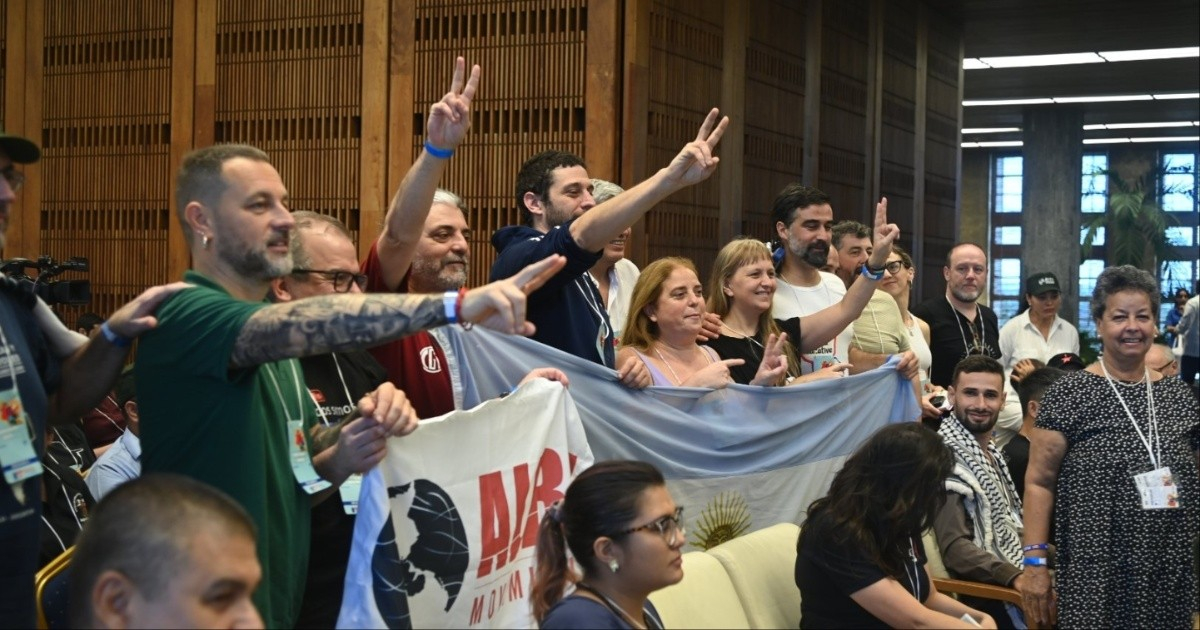
On Saturday, Cuban Foreign Minister Bruno Rodríguez Parrilla joined Miguel Díaz-Canel in meeting with delegates from the IV Continental Assembly of ALBA Movements at the Palace of the Revolution. Rodríguez took to his X account to highlight the gathering as a platform to "emphasize the importance of unity and solidarity among nations, especially in the current context of political aggression and persecution imposed by the US government."
The assembly, held in Havana from August 6 to 9, brought together 188 delegates from 27 nations with the slogan "For socialism, one hundred years walking with Fidel," in anticipation of the centenary of Fidel Castro's birth on August 13.
Díaz-Canel seized the opportunity to address the attendees with familiar rhetoric: "When many around the world bow to Washington's mandates, to their criminal order to isolate us, you have chosen to be in Cuba during the most difficult times."
The Cuban leader also used the metaphor of oxygen to describe the support from leftist movements: "When the empire tries to suffocate us by all means, you provide us with lifeblood through your superior strength."
The event concluded with a declaration of defiance: "And above all, know that even in the worst circumstances, Cuba will continue to fight, continue to resist, and continue to triumph. This is our commitment to the everlasting legacy of Fidel."
This gathering is part of a systematic pattern of ideological events the regime hosts in August. The previous Friday, Díaz-Canel inaugurated the XXIV International Meeting of Communist and Workers' Parties with over 100 delegates from 48 organizations, and the International Colloquium "Fidel: legacy and future" is scheduled from August 10 to 13.
The stark contrast with the reality faced by Cubans is glaring. While the regime entertains foreign delegations at the Palace of the Revolution, the power grid suffers a record deficit of 2,380 MW, resulting in power outages ranging from 15 to 24 hours daily in Havana and up to 87 consecutive hours in Matanzas.
Additionally, the economy has shrunk by 15% since 2020, and tourism has plummeted with 112,000 fewer visitors this year so far, marking the worst decline since 2002.
The backlash on social media was swift. In response to official posts, Cubans retorted with comments like "For this, there is fuel," "Hypocrites all, why don't they live in Cuba like ordinary Cubans?" and "And from this side... Cuba is dying."
Rodríguez, who recently dismissed the notion of a humanitarian crisis in Cuba and blamed the US embargo for the country's plight, engaged in another day of ideological diplomacy on Saturday, while the populace endures ongoing blackouts and widespread shortages.
One online user encapsulated the public sentiment with a single phrase: "Let them walk into the neighborhood... and they will see the reality and the true support."
The Cuban Reality Under Scrutiny
What was the purpose of the IV Continental Assembly of ALBA Movements?
The assembly aimed to emphasize the importance of unity and solidarity among nations, particularly against the backdrop of political aggression from the US.
How is the Cuban economy currently performing?
The Cuban economy has experienced a 15% decline since 2020, and the tourism sector has seen a significant drop, with 112,000 fewer visitors this year.
What challenges are Cubans facing with the power supply?
Cubans are dealing with a power grid deficit of 2,380 MW, leading to prolonged blackouts, with Havana experiencing outages of up to 24 hours and Matanzas up to 87 hours consecutively.
How did social media users react to the official posts about the assembly?
Social media users expressed indignation, criticizing the government's priorities and pointing out the stark contrast between the regime's actions and the everyday struggles of ordinary Cubans.