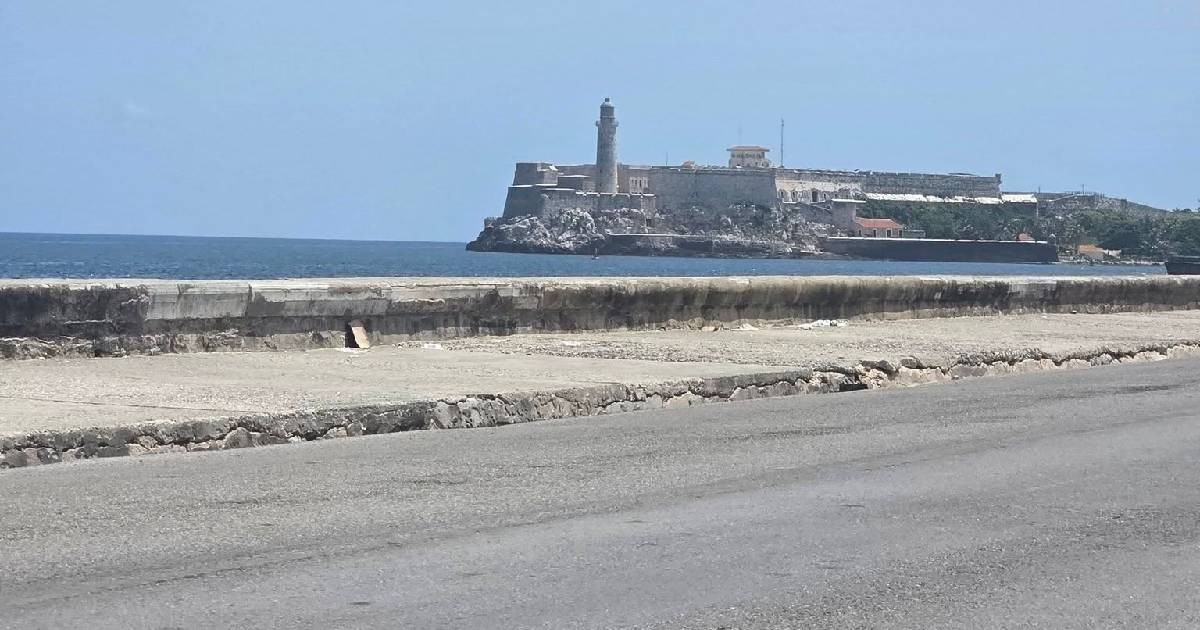
A Cuban living in Kentucky, USA, recently traveled to Havana and painted a stark picture of the situation in Cuba, indicating that it's worse than most people imagine. This account adds to a growing number of stories from visitors in 2026 who have documented the island’s rapid decline.
His post, which gained traction on Facebook, stated, "The reality is harsher than many think: daily power outages lasting hours, entire nights without electricity where the heat becomes unbearable, leaving people unable to sleep or find rest."
Struggles with Basic Services
Discussing other essential services, he noted, "Water barely reaches homes, and when it does, it's only sporadically, as if it were a privilege. People are just surviving, not truly living."
The Daily Challenge of Finding Food
He described the struggle for food as an odyssey, with endless lines for everything and a constant need to improvise because resources simply aren't available. "The toughest part is not just the scarcity; it's the sadness that pervades the streets, visible in the eyes and the exhaustion of a people who can't endure anymore. Cubans have always been resilient, but this is not living. It's pain, frustration, and helplessness. We can't keep hiding what's happening because it's real, affecting millions every day," he emphasized.
This narrative has become a familiar theme throughout the year: Cuban expatriates returning to visit their families and foreign tourists leaving the island with similar descriptions of prolonged blackouts, empty stores, water shortages, and visible exhaustion among the population.
International Observations and Experiences
An early 2023 visit by a Spanish tourist was summed up with a widely shared phrase: "One of the most challenging yet incredible trips of my life." She noted constant power outages, fuel shortages, and accumulated garbage in the streets.
A Cuban woman residing in Germany who returned in January was even more blunt: "It wasn't a holiday." She encountered electricity cuts, water shortages, nearly empty stores, difficulty paying with local currency, and diseases like Zika, dengue, and chikungunya.
Another Cuban visiting family in Baltony, Songo-La Maya, in Santiago de Cuba, faced extreme conditions: the community had been without electricity for over two weeks due to stolen transformer oil. "I was confronted with a harsh reality," she stated.
Statistics Highlight the Crisis
Data corroborate these accounts. Reports from 2026 indicate that 33.9% of Cuban households experienced hunger recently. About 80.4% were unable to cook due to power outages, and 48.3% lost food because of lack of refrigeration. Additionally, 81.3% must boil or chlorinate water before consumption.
The national electric system, outdated and stretched to its limits, has suffered six total collapses in 2026, with deficits exceeding 2,000 MW and outages lasting up to 20 hours daily in some provinces. In March, blackouts impacted 64% of the national territory.
The energy crisis drags down the rest of the basic services. Without electricity, water pumping systems fail, refrigerated food spoils, and cooking becomes impossible for millions of families.
In May, the UN warned that Cuban hospitals had to suspend most services, maintaining only intensive care and emergency services.
The regime's own Minister of the Food Industry publicly admitted that Cuba failed to deliver basic products such as oil, chicken, and yogurt through the ration book system, which the state formally guarantees to every household.
A Cuban woman returning to the island after a decade was shocked by the situation. Testimonies collected in July describe families buying food only to lose it hours later due to a power outage, and people reorganizing their entire daily routine around the availability of electricity.
Spanish blogger Susafly, who toured Havana, Viñales, Cienfuegos, Trinidad, Santa Clara, and Cayo Santa María in December 2025, published a detailed account in January this year, concluding with a sentiment that reflects the general feeling: "It doesn't look like 2026 will be any different."
Understanding Cuba's Ongoing Crisis
What are the main challenges Cubans face today?
Cubans are dealing with prolonged power outages, water shortages, food scarcity, and a failing healthcare system. These issues are compounded by economic difficulties and infrastructure failures.
How is the international community responding to Cuba’s crisis?
The UN and other international bodies have issued warnings about the dire situation, urging for humanitarian aid and reforms. However, geopolitical dynamics often complicate the response.