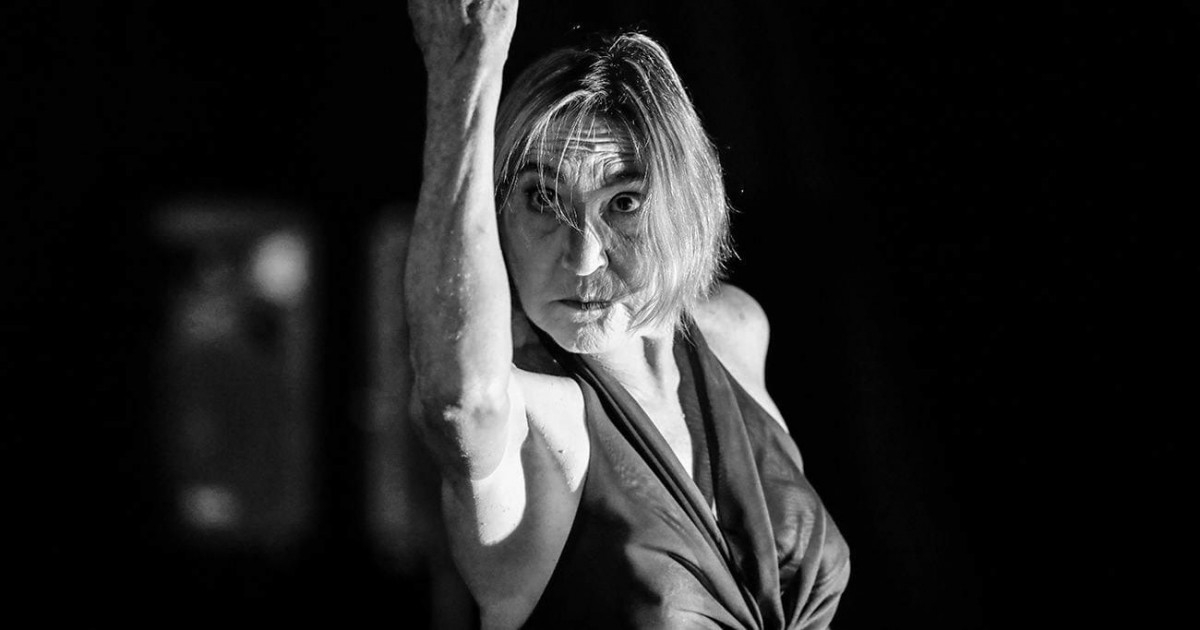
Renowned Cuban choreographer Rosario Cárdenas, recipient of the National Dance Award, recently shared a poignant message on Facebook from Havana, shedding light on the harsh realities she and her dance company face: lacking electricity, water, transportation, and even basic medical services like X-rays.
Cárdenas' social media post starkly encapsulates the cultural and day-to-day collapse occurring on the island. She expressed the challenges of working double time amidst such deficiencies, with the added burden of uncertainty. "Working twice as hard when there isn't even the bare minimum, and with a mind clouded by uncertainty. No lights, no water, no transportation, unable to get an X-ray for bone pain... and yet, we persist, unable to escape the heat or find solace in our faded landscapes... The situation doesn't end; it worsens. We don't know how we'll manage tomorrow," she conveyed.
Her message wasn't directed at the regime or the authorities, but rather inward, to her artistic community. It was a tribute to the collective effort of those who continue to create despite the odds. "Deeply rooted within me is the shared effort of each one of us, working together to achieve what we can, creating at the edge defined by fatigue and uncertainty... united under such harsh, unimaginable conditions for these times," she added.
Cárdenas concluded her note with gratitude toward her collaborators and dancers: "All my respect and admiration to each of you. Thank you for existing and working with such honor when everything is lacking."
The Resilience of Cuban Artists
Founder of the Rosario Cárdenas Company—initially called Danza Combinatoria in 1989 and renamed in 2003—the artist was honored with the National Dance Award in 2013, the highest accolade in Cuba's dance sector. Earlier this year, she premiered the piece "Siempre vuelvo. Visitaciones a Belkis Ayón" at the Sala Covarrubias of the National Theater of Cuba, featuring 14 performers.
Her voice joins a chorus of Cuban artists and intellectuals who, in 2026, have publicly decried the crisis's impact on their work. Musician Israel Rojas acknowledged that power outages hinder rehearsals and recordings, while Carlos Alfonso and Ele Valdés of Síntesis described the situation as "mass psychological torture." Actor Luis Alberto García reported enduring three days and nights without power in July, and a Cuban writer described seven consecutive days without electricity just before Cárdenas' publication.
A Nation in Energy Crisis
Behind these struggles lies Cuba's worst energy crisis in decades. So far in 2026, the nation has experienced at least seven total blackouts of the National Electric System. This Saturday's peak hours saw the Electric Union projecting a deficit of 2,280 MW, with just 1,050 MW available against a 3,300 MW demand. Some areas have faced up to 87 continuous hours without power.
The energy crisis has led to a breakdown in water supply—87% of the pumping system relies on electricity—leaving over 500,000 Havanans without regular access to potable water. The United Nations warned in May 2026 that the humanitarian crisis in Cuba is worsening due to fuel shortages, power cuts, and economic pressures, directly affecting health, food, and water.
In March, the Assembly of Cuban Filmmakers denounced systematic repression against critical intellectuals and artists, making public statements acts of resistance beyond mere complaints. Cárdenas summed it up with a phrase accompanying her signature: "Dance is an ephemeral multisensory landscape. In it, I inscribe what simultaneously erases."
Understanding the Cuban Crisis
What are the main challenges faced by Rosario Cárdenas and her company?
Rosario Cárdenas and her company face significant challenges including lack of electricity, water, transportation, and access to essential medical services, which complicates their ability to work and create.
How has the energy crisis impacted daily life in Cuba?
The energy crisis has resulted in frequent and prolonged blackouts, affecting the water supply and leaving many without basic amenities. This has exacerbated the humanitarian crisis, impacting health, food, and water access.