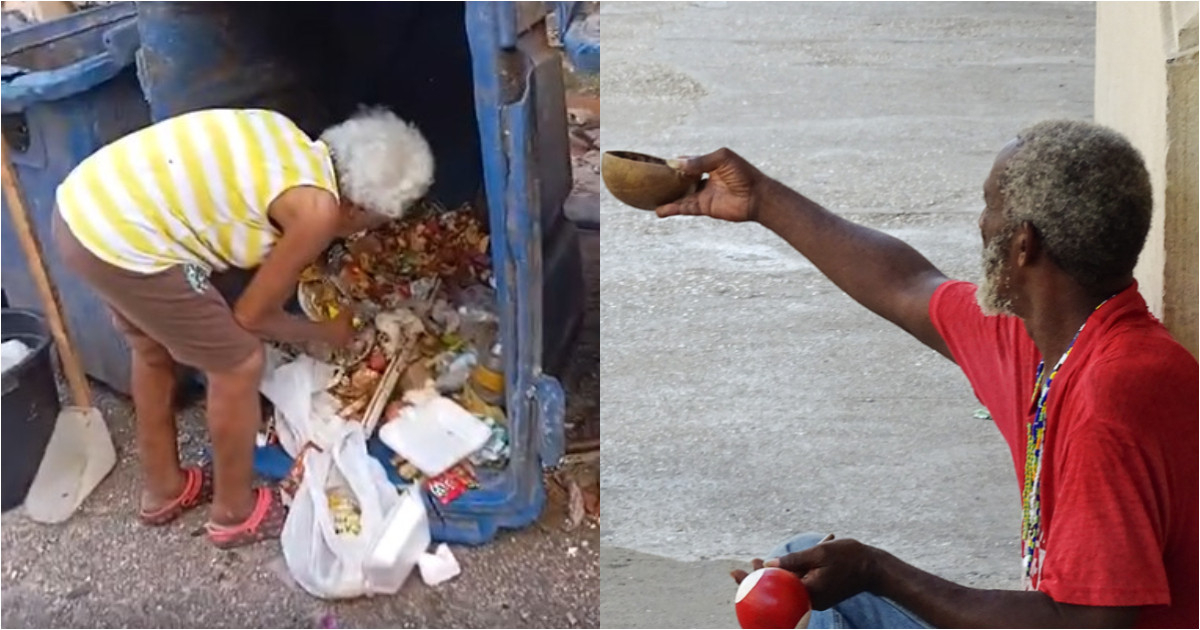
Cuban author and scholar Yanetsy Pino Reina recently described the Cuban regime as a "living monument to incompetence," challenging the idea that its nearly 70-year tenure should be seen as a political triumph.
In a critical analysis shared on her Facebook profile, Pino argued that the regime's longevity is not a testament to its competence. Instead, she attributes it to a system that has suppressed freedoms, controlled food access, and persecuted dissenters.
A Legacy of Control and Dependence
Born in 1977 in Sancti Spíritus and holding a Ph.D. in Literary Sciences from the University of Havana, Pino points to the decline in agriculture, industry, healthcare, education, and the energy system as results of decades of state control, bureaucracy, and reliance on foreign allies.
She further questioned how Cuba, surrounded by the sea and with a rich sugarcane heritage, struggles to provide basic food supplies while the population endures blackouts, shortages, and increasing emigration.
Manipulation and Misery
Pino asserts that the regime has managed to prolong its rule by manipulating information and wearing down society. She suggests that unrestricted access to satellite internet could swiftly undermine this control.
The writer, who won the 2018 Casa de las Américas Prize, emphasized that the regime's persistence should not be mistaken for political effectiveness. She argues that the very structures designed to control society are now eroding its own foundations.
"Ultimately, no monopoly of force can contain an entire nation when the truth spreads, and people suddenly realize that the 'emperor' has not only been naked but has been selling us the same 'suit' for six decades," Pino concluded.
Intellectual Debate and Economic Struggles
Pino's critique is part of a broader intellectual discourse gaining momentum this year. Historian Ivette García González published an analysis in July, highlighting a profound contradiction between the Cuban government and the Revolution it claims to represent, a contradiction she argues has always existed.
Another opinion piece from March identified fear and incompetence as the cornerstones of the regime's stagnant state.
The backdrop for Pino's assessment is dire, resembling the challenges of the Special Period. Since 2020, Cuba's economy has contracted by over 15%, most of the population lacks adequate food access, blackouts can last over 24 hours in some areas, and Prisoners Defenders recorded a historic high of 1,306 political prisoners in June, including 40 minors.
Understanding the Cuban Regime's Incompetence
What does Yanetsy Pino Reina criticize about the Cuban regime?
She criticizes the regime as a "living monument to incompetence," arguing that its longevity is not due to competence but due to suppression of freedoms and control over resources.
What are the consequences of the Cuban regime's control, according to Pino?
Pino attributes the deterioration of agriculture, industry, healthcare, education, and energy systems to decades of state control, bureaucracy, and dependency on external allies.
How does Pino suggest the regime's control could be weakened?
She suggests that unrestricted access to satellite internet could swiftly undermine the regime's information control.