The 65th Cuban National Baseball Series is slated to commence on October 4, featuring a significantly different structure than previous years: fewer games, limited long-distance travel, and the 16 teams divided into four regional groups. This was confirmed by the state-run program Bola Viva on Saturday.
This announcement updates an earlier statement by Cubadeportes S.A., which had initially set the competition's start date for September 27. The technical congress to finalize organizational details will be held on October 1.
The most notable change is the division of teams into two regions and four groups. The Western Zone includes Group A — consisting of Pinar del Río, Artemisa, Isla de la Juventud, and Industriales — and Group B — made up of Mayabeque, Matanzas, Cienfuegos, and Villa Clara. Meanwhile, the Eastern Zone hosts Group C — featuring Sancti Spíritus, Ciego de Ávila, Camagüey, and Las Tunas — and Group D — encompassing Holguín, Granma, Santiago de Cuba, and Guantánamo.
Each team will play 44 games during the regular season: 24 against opponents within their group and 20 against teams in the other group of the same zone.
This number starkly contrasts with the 75 or more games played in recent seasons, directly highlighting the severity of Cuba's ongoing crisis.
At the end of the qualifying phase, the top four teams from each zone will advance to the playoffs, totaling eight teams competing for the championship.
The decision to structure teams geographically is not arbitrary: the scarcity of fuel and the poor state of transportation make long-distance travel between provinces unfeasible. According to Swing Completo, the format was designed "to prevent the event from being canceled," in a context where "scarcity and problems are the norm."
This approach had already influenced Cuban baseball in 2026. In May, the National Commission suspended the youth championships for Under-12, Under-15, and Under-18 categories due to the energy crisis. Prior to that, the regime organized the IV Elite League—a shortened tournament with only six teams—as a bridge between the 64th and 65th National Series amid the same material constraints.
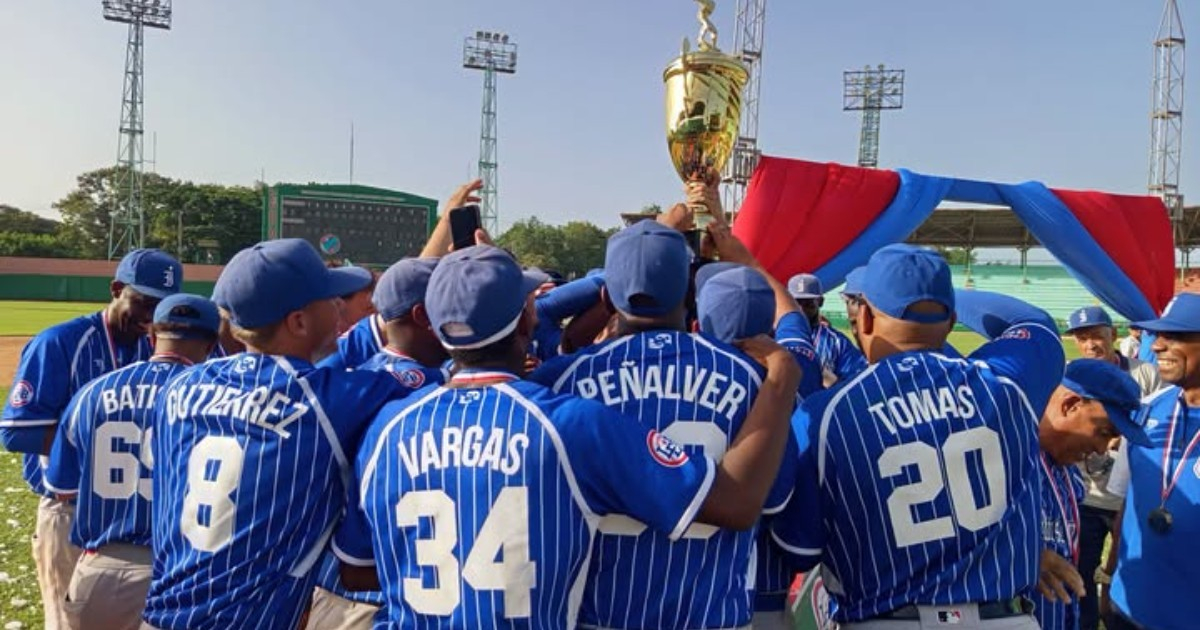
Industriales claimed victory in that Elite League on July 9, their first championship since 2009, positioning them as a team to watch in the upcoming season.
The immediate sports landscape casts further shadows: the Cuban national team returned on Friday without a medal from the Central American and Caribbean Games in Santo Domingo 2026, after suffering a 1-9 defeat against Puerto Rico in the bronze medal match, marking one of the worst historical performances of Cuban baseball in that tournament.
The concept of geographic zoning had been a part of the National Series in past stages but was phased out after the 2012-2013 season. Its reinstatement in the 65th edition is not a technical decision but rather a necessity due to the country's systemic collapse.
Key Insights into the Cuban National Baseball Series
Why is the Cuban National Baseball Series adopting a regional format?
The regional format is being adopted due to the scarcity of fuel and deteriorating transportation infrastructure, making it impractical for teams to travel long distances between provinces.
How many games will each team play in the new format?
Each team will play 44 games during the regular season, with 24 games against teams in their own group and 20 against teams in the other group within the same region.
What is the significance of Industriales' victory in the Elite League?
Industriales' victory in the Elite League was significant as it marked their first championship since 2009, highlighting them as a team to watch in the new season.