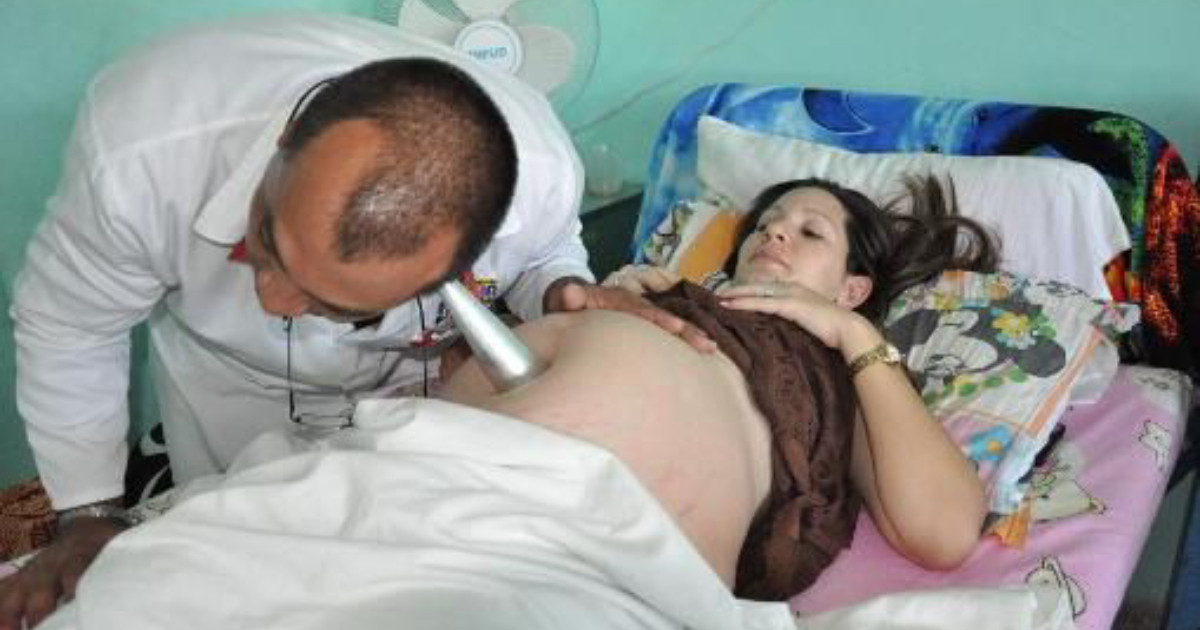
During the first half of 2026, the rate of teenage pregnancies in Las Tunas municipality rose by three percentage points, reaching 19%. This concerning trend was highlighted during the regular session of the Municipal Administration Council on Thursday, where the Government's Economic and Social Program was assessed.
This increase is particularly alarming as it occurred despite local authorities intensifying preventive measures. Nearly 5,000 family planning consultations for teenagers were conducted in the semester, marking an 11.6% rise from the previous period. Additionally, 71 educational activities aimed at curbing early pregnancies were held in schools, reported the official newspaper 26 on Saturday.
During the same timeframe, 688 births were recorded in the capital municipality, 156 more than in the first half of 2025, indicating a general rise in birth rates in a region long plagued by the worst maternal and infant health indicators in the country.
Las Tunas: A Microcosm of a Broader Crisis
While Las Tunas is not alone in this crisis, it remains one of the most severely affected areas. At the start of 2023, the province led the nation in teenage pregnancy rates with a staggering 22.7%, significantly higher than the national average of 17.8%.
By the first quarter of this year, provincial Health Director Ariel Guevara Bringas had warned that the provincial rate had climbed to 21%, driven by 70 new pregnancies recorded in April alone.
The current 19% figure pertains to the capital municipality, suggesting that the situation in other areas of Las Tunas might be even more dire.
Nationwide Concerns and Structural Challenges
On a national level, Deputy Minister of Public Health Julio Guerra Izquierdo acknowledged in May that teenage fertility in Cuba is approximately 19%, with only a minimal reduction of one percentage point from 2024 to 2025.
"We've only seen a 1% decrease between 2024 and 2025, and we are not satisfied with the current situation," the official admitted.
The issue is deeply rooted in structural problems that preventative campaigns have been unable to solve, such as the chronic shortage of contraceptives, inadequate sexual education, and a legal framework since 2022 that set the age of sexual consent at 12 years.
An analysis by the Gender Observatory of Alas Tensas (OGAT), drawing on official data from the 2024 Demographic Yearbook of Cuba by the National Office of Statistics and Information (ONEI), revealed in August 2025 that a majority of 64.5% of pregnancies among Cuban girls and adolescents involve adult men, which national and international organizations view as a severe human rights violation.
Urgent Need for Attention in Health and Education
The Las Tunas Municipal Administration Council also pointed out urgent needs in addressing school mortality indicators in the 5 to 14 age group and the rate of congenital malformations, both additional signs of the deterioration of maternal and child health in the area.
In April, UNICEF, the United Nations Population Fund (UNFPA), and the European Union launched a joint 36-month, one-million-euro program focusing on municipalities in Las Tunas, Camagüey, Holguín, and Granma. This initiative implicitly recognizes that these eastern provinces harbor the country's worst indicators in teenage pregnancy, and national policies have not sufficed to reverse the trend.
Understanding the Teenage Pregnancy Crisis in Las Tunas
Why has teenage pregnancy increased in Las Tunas despite prevention campaigns?
The rise in teenage pregnancy rates in Las Tunas is attributed to structural issues such as a lack of access to contraceptives, insufficient sexual education, and a legal framework that allows for early consent. These challenges have persisted despite the implementation of prevention campaigns.
What measures have been taken to address teenage pregnancy in Las Tunas?
Authorities have conducted nearly 5,000 family planning consultations for teenagers and organized 71 educational activities in schools aimed at preventing early pregnancies. Additionally, international organizations have launched a joint program to tackle the issue in the region.
How does teenage pregnancy in Las Tunas compare to national trends?
Las Tunas has one of the highest teenage pregnancy rates in Cuba, significantly above the national average. The province's rate reached 22.7% in 2023, while the national average was 17.8%.