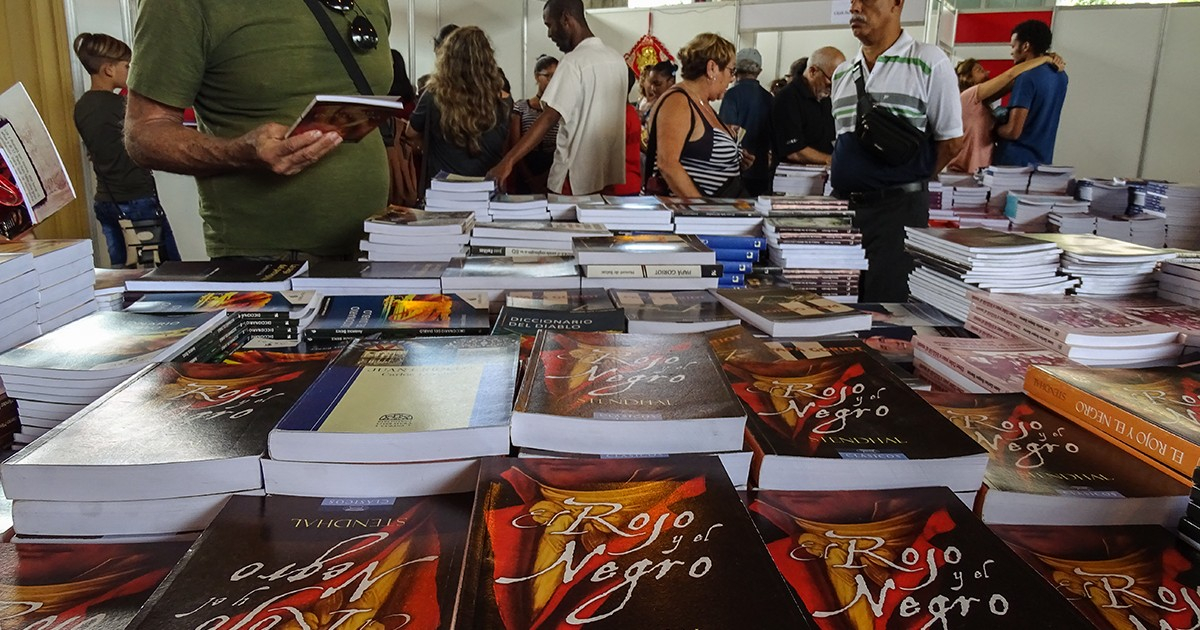
Rodolfo Alpízar Castillo, a prominent Cuban writer, translator, and linguist, declared on Friday his decision to abstain from participating in the 34th Havana International Book Fair. Scheduled from August 10 to 16, he criticized any state budget allocation for the event as funds taken away from a populace enduring power outages, water shortages, and transportation breakdowns.
In a Facebook post, Alpízar recalled that months ago, it was deemed impossible to hold the fair due to the country's dire circumstances. He agreed back then that the event should be postponed until conditions improved.
"They explained to me months ago that holding the fair was impossible given the country's difficult situation, and I concurred it should only happen when things got better. Now, we're in an even worse state—three hours of electricity a day, water every five days or more, zero public transport, oil costing 5,000 pesos, etc.—and yet, apparently, conditions are now 'better' and the fair can proceed," the author expressed.
His conclusion was unequivocal: "As I cannot comprehend this, for me, there is no fair."
Alpízar also issued a moral rebuke against the public expenditure for the event: "To me, every cent spent from the budget on the fair is a cent stolen from the people's well-being. I will not support it with my presence, even if my stance changes nothing."
The message concludes with a personal statement of conscience: "Nothing changes, but my conscience is at peace with myself."
Alpízar's Symbolic Voice from Within the System
Alpízar's voice carries a unique symbolic weight as it comes not from exile or traditional opposition, but from within Cuba's own cultural system. A recipient of the Aurora Borealis Prize from the International Federation of Translators in 2011 and former vice president of the UNEAC's Literary Translators Section, Alpízar has been publicly critical throughout 2026, including in June when he issued five political demands to Díaz-Canel, such as #AmnestyNow and #ReferendumNow.
Crisis Amidst Celebration
The backlash comes as Cuba's energy crisis reaches unprecedented levels. On August 5, Cuba set a new record with 2,411 MW of power outages, with several total collapses of the National Electric System occurring between July and August, the most recent on August 2 and 3.
This harsh reality starkly contrasts the official narrative. Despite the acknowledgment by the Organizing Committee that the event is being held "in extremely complex and difficult times," the regime insists on proceeding with the celebration, dedicated to the centennial of Fidel Castro's birth on August 13, during the event, with Russia as the guest of honor.
Public Outcry and Economic Struggles
The fair was initially suspended on February 7, five days before its planned opening, when the regime imposed emergency measures due to the energy crisis. It was rescheduled four months later with a change of venue from the historic San Carlos de la Cabaña Fortress to the Cultural Station of Línea and 18 in El Vedado.
On social media, Cubans have voiced their outrage over hosting a large-scale event while families endure more than twenty hours without electricity and line up for water. Alpízar's opposition adds to the chorus of protests and unrest accompanying the official announcement of the event.
In May, Energy and Mines Minister Vicente de la O Levy admitted that Cuba lacked "absolutely any fuel oil, nor any diesel," while CEPAL forecasts a 6.5% contraction in Cuba's GDP for 2026, with the Economist Intelligence Unit predicting an even larger decline of 7.2%.
Cuban Book Fair Controversy: Key Questions and Answers
Why is the Havana Book Fair being criticized?
The fair is criticized for state budget allocations during severe economic and infrastructural issues, diverting funds from citizens suffering from power outages, water scarcity, and transportation collapse.
What makes Rodolfo Alpízar Castillo's criticism significant?
Alpízar's criticism is significant because it comes from within Cuba’s cultural sphere rather than traditional opposition, highlighting dissent within the system.
How has the energy crisis impacted Cuba recently?
Cuba has experienced record power outages and total collapses of its National Electric System, exacerbating the hardships faced by the population.