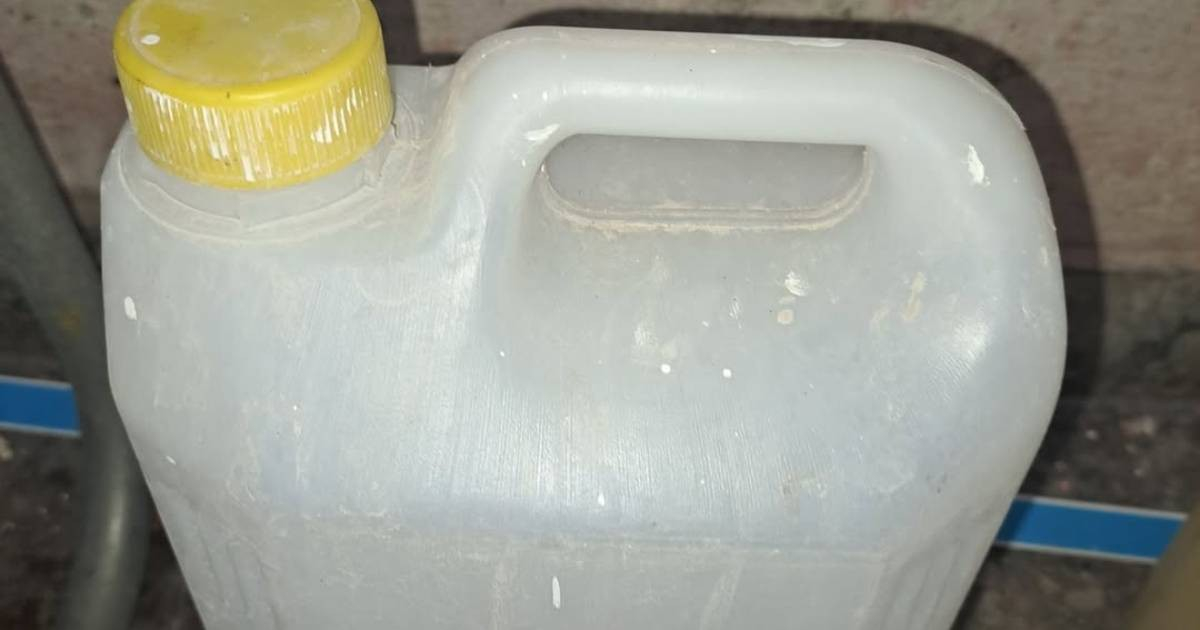
In a stark reminder of the dire situation in Cuba, two young girls, around seven years old, were seen carrying gallon jugs of water by themselves, wearing only flip-flops and without any adult supervision. They were fetching water from the cistern of a primary school in Havana.
This scene was vividly described by Yulieta Hernández Díaz in a Facebook post she shared on Friday, capturing the water crisis plaguing the Cuban capital in a single image.
"Today I saw two little girls, thin and tiny. They must have been about 7 years old, carrying a gallon of water each from their school's cistern," Hernández Díaz wrote.
Community Reliance on School Cisterns
The cistern belongs to Mariana Grajales Primary School and has become a vital water source for locals, as regular water supply in their homes has essentially dried up.
The gravity of the situation is underscored by a tragic incident: days earlier, a local resident suffered a fatal heart attack while hauling water from the same cistern. "He died carrying water, there's no other way to put it," the author commented.
Hernández Díaz contrasts this harsh reality with her own childhood memories—playing under garden hoses and swimming in rivers and lakes during family vacations—an experience far removed from today's reality.
The Growing Water Crisis
"There’s no transport, no fuel, no family trips, no vacations, no electricity to pump water, no potable water supply. Children no longer laugh or sing," she lamented.
This situation is not an isolated case. As of July 2026, over half a million Havana residents were without regular access to potable water, according to experts from Aguas de La Habana.
The number had surged from around 200,000 affected individuals in April to 376,055 in May, reaching over half a million by July. Nationwide, estimates from the same period indicate that 2.7 million Cubans face severe water scarcity.
Infrastructure Failures and Government Response
The core issue is that approximately 87% of the water supply system relies on electric pumps, which fail with each blackout.
Facing such widespread shortages, the regime deployed military water trucks in municipalities like El Cotorro, while a 55-gallon tank of water on the black market soared to prices between 2,000 and 2,500 pesos.
Hernández Díaz penned her testimony amidst rainfall in Havana, noting that locals collect rainwater as a survival tactic. Yet, the rain no longer brings her comfort: "I used to enjoy the rain, but now it makes me sad. I no longer bathe in downpours. While it rains, I think of the collapses, of buildings in MIRACULOUS STATIC, of a COUNTRY FALLING APART."
Official Promises and Public Skepticism
In response to official announcements about solar-powered water pumping systems and Cuban delegations exploring municipal autonomy in China, the author posed rhetorical questions: "Now? How long will it take? How long will it last? Will the water come?" She also questioned the social assistance platform: "Can they apply for social assistance? Aren’t more than 8 million Cubans vulnerable? I feel vulnerable."
Public grievances are mounting. This same Friday, a Cuban mother complained about having her water cut off and being threatened, while another Cuban reported going nine months without water in her neighborhood. In May 2026, the United Nations warned that the combination of blackouts and water shortages heightens the risk of dengue, chikungunya, and other diseases.
Hernández Díaz concluded her post with a single word that encapsulates the plight of millions of Cubans: "We continue to OVERLIVE."
Understanding Cuba's Water Crisis
What is the main cause of the water crisis in Havana?
The water crisis is largely due to the reliance of approximately 87% of the water supply system on electric pumps, which are prone to failure during frequent power outages.
How have the water shortages affected Havana residents?
Residents are forced to rely on school cisterns for water, face inflated prices on the black market, and are exposed to increased health risks as water shortages combine with power outages.
What measures has the Cuban government taken to address the crisis?
The government has deployed military water trucks to affected areas and announced plans for solar-powered water pumping systems, although skepticism remains about the implementation and effectiveness of these measures.