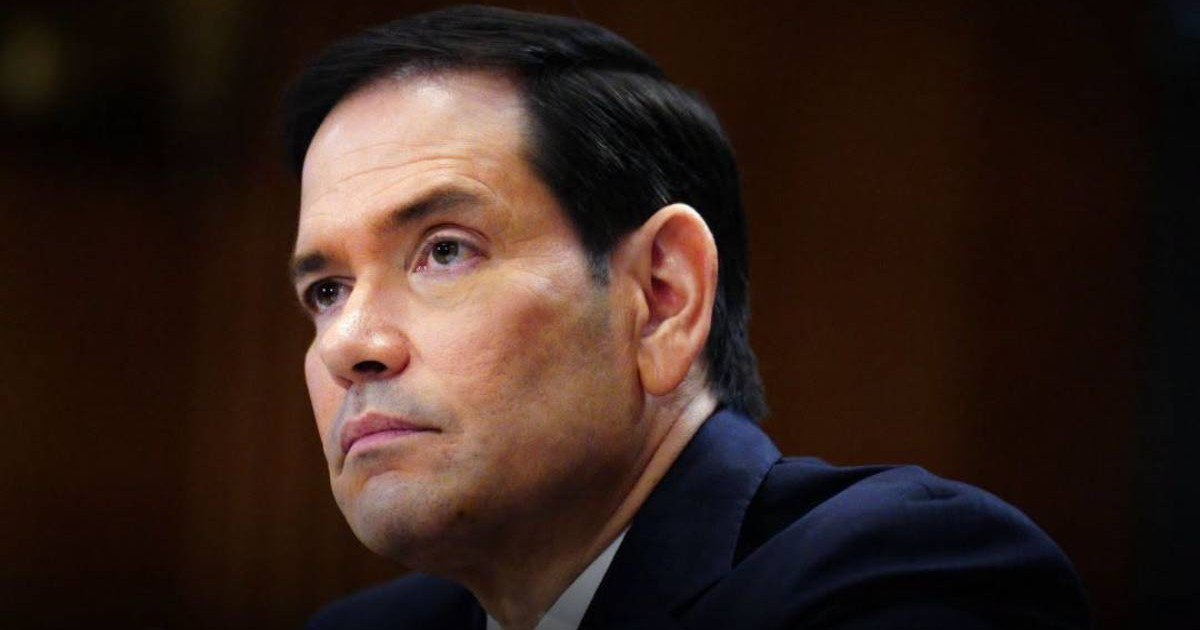
Secretary of State Marco Rubio detailed a long-term strategy against Cuba's government in an exclusive interview with Axios this Friday. This approach focuses on gradually dismantling the Cuban regime's survival mechanisms, rather than seeking an immediate collapse, allowing internal contradictions to do the heavy lifting.
The core of Washington's strategy is encapsulated in this statement: "We're teaching them that there are no escape valves." It's not about an immediate shock but rather a gradual tightening intended to make Havana race against time, not the United States.
Rubio emphasized that patience is key, marking a shift in U.S. foreign policy strategy. "What we've lost in American foreign policy and geopolitics is the concept of patience and persistence," he asserted.
The Timeline of Perseverance
Rubio was clear about the extended timeline and the need for perseverance. "Don't expect us to give up. This situation won't resolve in the next two and a half years," he stated. "Every time they devise a new escape mechanism, we simply shut it down."
This patient strategy is grounded in reality. Cuba faces an unprecedented situation: for the first time, it lacks both an external sponsor and the U.S. attention as a primary focus.
Impact of External Factors
The harshest blow to the regime hasn't been the economic sanctions but the capture of Nicolás Maduro. This has severed external support, cutting off the Venezuelan supply of up to 100,000 barrels of oil daily and the revenue from selling about 60% of that oil on the global market.
As pressure mounts, Washington continues to explore potential interlocutors within the Cuban government for a future political transition.
The Search for Dialogue
Axios highlighted that Rubio has engaged in discussions with Raúl Guillermo Rodríguez Castro ("Raulito"), a colonel in the Ministry of Interior and grandson of Raúl Castro. Nonetheless, U.S. officials expressed doubt about this channel's viability, as "Raulito," or "El Cangrejo" as he's known, may lose political backing in Cuba after his grandfather's passing.
In June, Rubio told Congress there are "certain technocrats" within Cuba's political apparatus with whom collaboration might be possible, though he did not name specific figures.
Rubio's statements to Axios may serve as a message to those hoping for an immediate external solution to the regime's downfall.
A Shift in Expectations
Rubio has subtly addressed this issue on multiple occasions. Last month in Manila, he dismissed any public timeline. "I've never set a schedule for when change will happen or what it will look like. I wish it were tomorrow, because the Cuban people deserve a better future," he said.
Washington's bet is that economic pressure, the absence of sponsors, and the inability to find new avenues will ultimately force the Cuban government to confront decisions it has delayed for decades.
Rubio outlines the horizon as the end of Trump's presidency. He doesn't promise the regime's fall but something more specific.
"My level of confidence is that by the end of this administration, at a minimum, Cuba will be on an irreversible path toward a different future." There are still two and a half years to go.
Understanding Marco Rubio's Cuba Strategy
What is Marco Rubio's approach to the Cuban regime?
Rubio's strategy involves a sustained pressure campaign aimed at dismantling the Cuban regime's survival mechanisms over time, rather than seeking an immediate collapse.
Why is the capture of Nicolás Maduro significant?
The capture of Nicolás Maduro has cut off a major source of external support for Cuba, including the supply of Venezuelan oil, which has been crucial for the regime's survival.
Who is Raúl Guillermo Rodríguez Castro?
Raúl Guillermo Rodríguez Castro, also known as "Raulito," is a colonel in Cuba's Ministry of Interior and the grandson of Raúl Castro. He has been identified as a potential interlocutor for future U.S. dialogue.