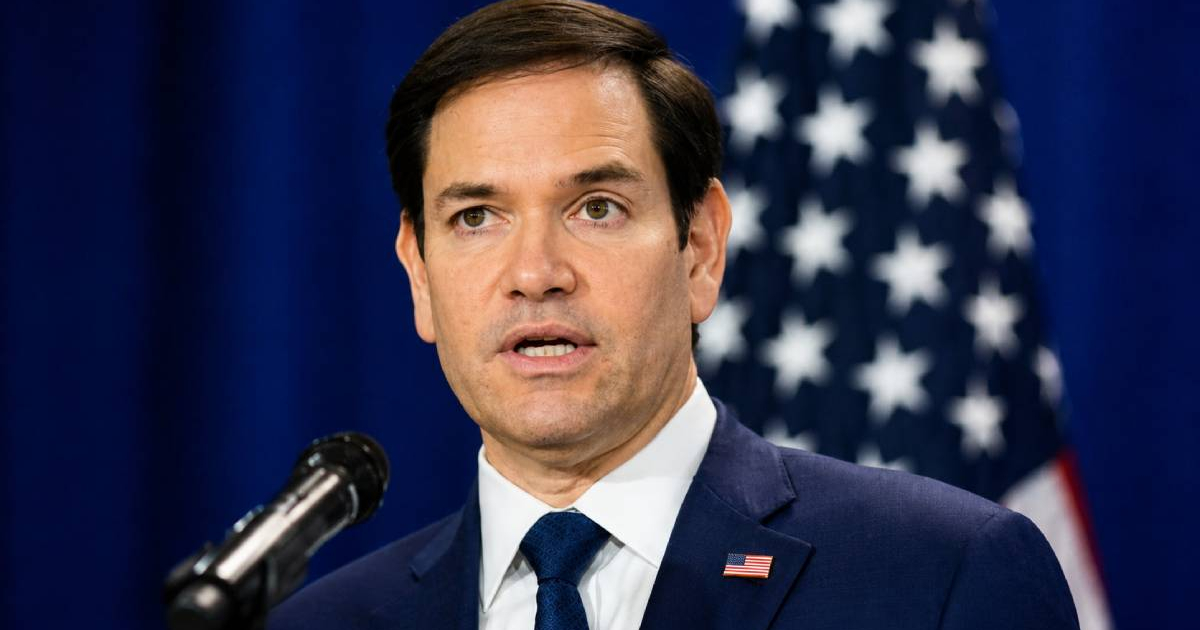
On Friday, Secretary of State Marco Rubio delivered a strong message, asserting that Washington will leave no escape routes for the Cuban regime in the face of the economic pressure from the Trump administration. "No way out," Rubio declared.
In an exclusive interview with Axios, Rubio discussed the ongoing pressure campaign against the Cuban government. "What we're trying to show them is that there are no escape valves," Rubio stated.
Strategies to Counter Cuban Tactics
Rubio emphasized that Havana is merely buying time by pretending to reform and seeking ways to bypass sanctions, but Washington is quick to shut down any new avenues as they emerge. "Every time they create a new mechanism to try and slip away, we simply close it off," Rubio remarked. "They certainly can't expect us to give up. This won't disappear in the next two and a half years."
Sanctions and Their Impact
Since 2025, the Trump administration has implemented various measures against Cuba. Sanctions have targeted 40 entities, ranging from foreign companies operating on the island to state-owned conglomerates in fuel, banking, and mining, affecting at least 38 individuals with economic restrictions, visa limitations, and residency revocations.
On Thursday, Rubio announced new sanctions against five Cuban entities and eight officials for military cooperation with Russia and China.
The Role of External Support
However, the Cuban-American insists that the most substantial blow to the regime wasn't due to direct sanctions but the capture of Nicolás Maduro, which severed the Venezuelan supply of up to 100,000 barrels of oil per day to Cuba.
"For the first time in Cuban history, the island lacks two things it has always relied on: an external sponsor and the absence of U.S. attention as a top priority," noted the Secretary of State.
U.S. fuel exports to Cuba reached $96 million in the first half of 2026, with more than half occurring in June, according to the US-Cuba Trade and Economic Council.
Its president, John Kavulich, was forthright in his comments to Axios: "Trump and Rubio have initiated the most effective sanctions program against a target country that any of their predecessors have. We've been around since 1994 and have never seen anything like this."
Perceptions of Cuban Reforms
Last week, Prime Minister Manuel Marrero Cruz assured the National Assembly of People's Power that economic reforms in Cuba do not signify abandoning socialism, despite introducing capitalist measures.
Rubio agreed with Marrero that the regime's strategy does not imply a genuine change. He made it clear that, in his view, it is another delaying tactic to feign reforms and ease international pressure while the regime seeks new ways to dodge sanctions. He assured that the United States will continue to watch closely and is in no hurry to act.
"One of the things we've lost in American foreign policy and geopolitics is the concept of patience and perseverance. (...) My confidence level is that, by the end of this administration, at a minimum, Cuba will be on an irreversible path toward a different future," Rubio concluded.
Understanding U.S. Sanctions on Cuba
What are the main targets of the U.S. sanctions against Cuba?
The sanctions primarily target 40 entities, including foreign companies operating in Cuba and state-owned conglomerates in sectors such as fuel, banking, and mining, as well as at least 38 individuals.
How has the capture of Nicolás Maduro affected Cuba?
The capture of Nicolás Maduro significantly impacted Cuba by cutting off the supply of up to 100,000 barrels of oil per day from Venezuela, which was a vital source of energy for the island.
What is the U.S. strategy regarding Cuban reforms?
The U.S. strategy is to remain vigilant and not rush into action, recognizing that the Cuban regime's reforms are seen as superficial maneuvers to relieve international pressure while still evading sanctions.