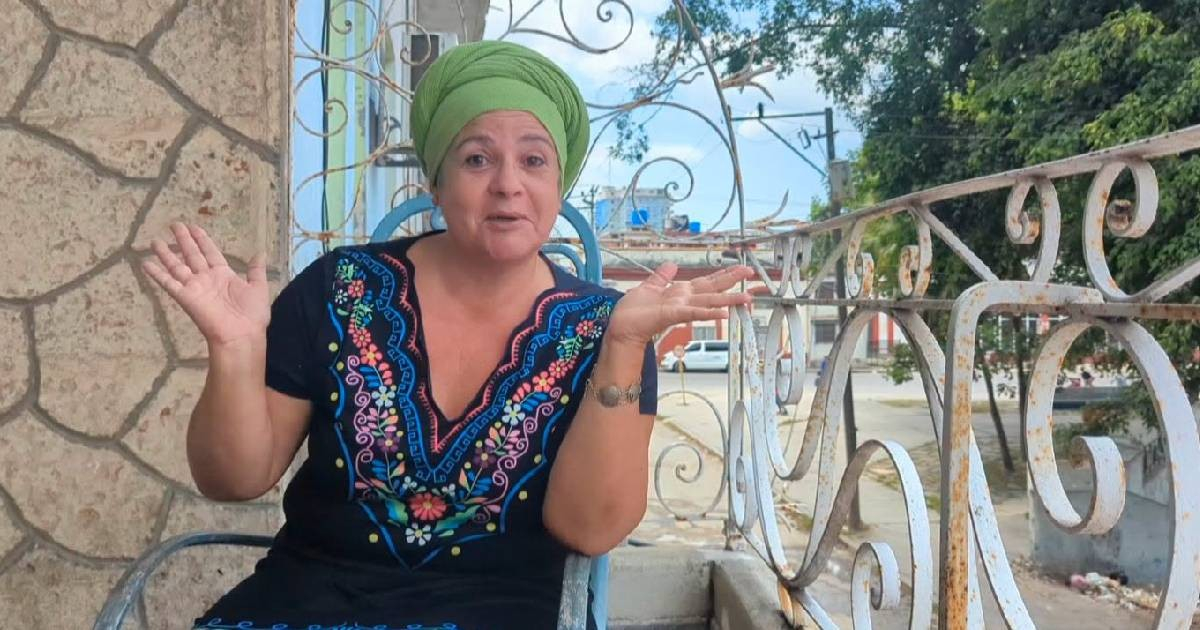
The Cuban actress and broadcaster Laritza Camacho issued a bold challenge on Thursday to members of the Communist Party of Cuba (PCC), urging them to publicly address a question that the regime tends to sidestep: Why does Miguel Díaz-Canel remain in power, and do the party's grassroots have the authority to propose his removal?
This challenge was made through a post on her Facebook profile, beginning with a sarcastic remark about the ongoing energy crisis: "Right now, I have both electricity and internet. Mark this historic combination."
Camacho carved out an exclusive space for PCC members, requesting other users to simply listen, like, or share the post without participating in the discussion.
Questioning the Status Quo
The core of Camacho's challenge was straightforward: "Considering that a party member is expected to speak the truth and that it is common practice within PCC cells to sanction those who lie, what is the reason for Miguel Mario Díaz-Canel Bermúdez's continued presidency? Do PCC cells have the power to propose his removal, at least as the party's first secretary?"
To back up her inquiry, Camacho listed what she termed "public lies": the promise to build one house per day, the monetary restructuring as a solution, and the reordering as a solution. "I think that's enough," she noted.
She also preemptively dismissed the regime's usual excuse: "Everything said by the current president of Cuba has been done publicly and under the effects of the blockade, so the blockade is out of this equation."
The Silent Contradiction
Camacho's call highlighted an internal contradiction within the party: if the PCC's statutes require members to speak the truth and penalize those who lie, why remain silent about their leader's unfulfilled promises? "Let's hear from the rank-and-file members. They too suffer from inflation and chaos, but what do they really think? Why do they remain silent, or why are we unaware if they speak?" she questioned.
She established clear guidelines: any user disrespecting or violating the space's rules would face restrictions. Moreover, she clarified that her profile does not monetize, allowing her to, in her words, "behave like the Cuban state when a 'Liborio' enterprise fails."
Not an Isolated Gesture
This challenge is not an isolated action. In July, Camacho openly declared, "I am against the Cuban government because the Cuban government is against Cuba," positioning her stance as a civic struggle without party affiliation. She also criticized the package of 176 economic measures approved by the National Assembly, questioning their relevance to the country's actual needs.
The PCC's internal context adds weight to Camacho's challenge. Earlier this year, Díaz-Canel himself acknowledged during provincial meetings in Santiago de Cuba and Guantánamo that there is no "true unity" within the party and called for its construction through "frankness and honesty." Additionally, there are reports of difficulties in attracting new members and a rise in resignation requests.
In July, the regime summoned PCC members in Vedado to publicly respond to the citizenry, signaling the mounting social pressure on the party's base amid the crisis.
Camacho concluded her post with a phrase encapsulating the challenge's spirit: "Let's put it to the test. Let's see if it works."
Frequently Asked Questions about Camacho's Challenge to the PCC
What question did Laritza Camacho pose to PCC members?
Laritza Camacho asked why Miguel Díaz-Canel remains in power and whether the PCC's grassroots have the authority to propose his removal.
What reasons did Camacho give for questioning Díaz-Canel's leadership?
Camacho cited unfulfilled promises, such as building one house per day and monetary restructuring, as evidence of "public lies" by Díaz-Canel.