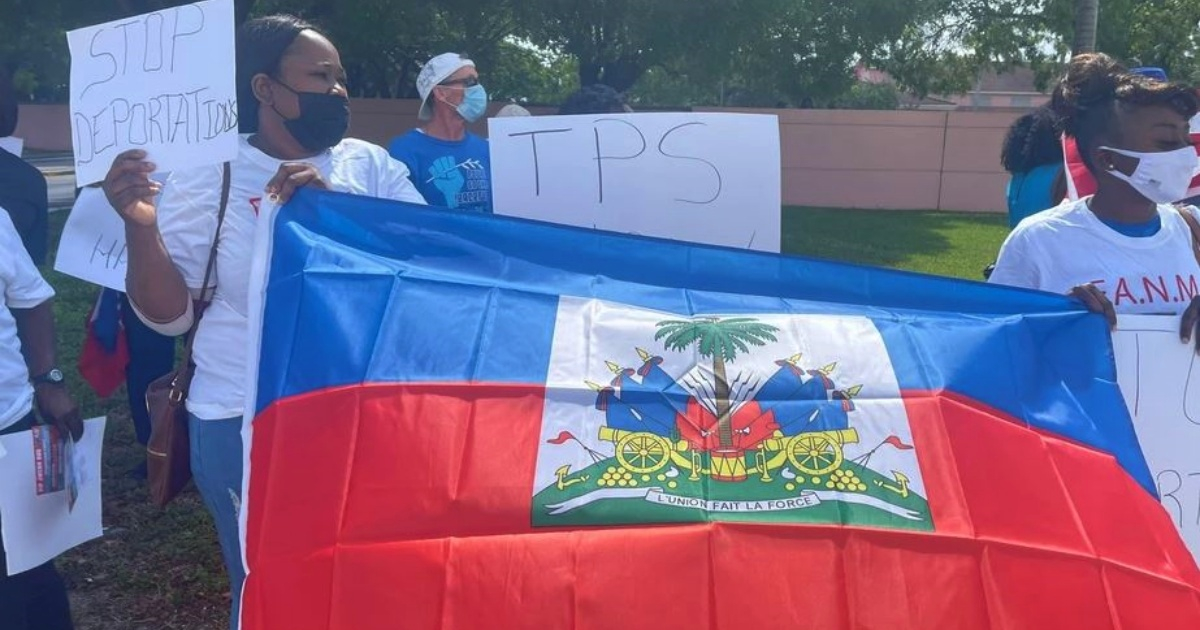
This Wednesday, a significant legal barrier was lifted concerning the fate of approximately 350,000 Haitians living in the United States. Federal Judge Ana C. Reyes issued a formal order, confirming that her previous judicial block, placed in February, is no longer effective.
This development paves the way for the Trump administration to proceed with deportations, as reported by U.S. media outlets.
The Temporary Protected Status (TPS) for Haiti officially expired at midnight on July 27. However, Judge Reyes' order was the formal step needed to remove the legal protections she had previously instituted.
Legal Decisions and Their Implications
In her concise ruling, Judge Reyes stated: "The Court's order, which suspended the effective date of the termination of Haiti's designation for Temporary Protected Status by the Secretary of the Department of Homeland Security, Kristi Noem, during judicial review, is no longer in effect."
Initiated in 2010 following the catastrophic earthquake that killed over 200,000 people in Haiti, the TPS program was renewed by successive administrations for more than a decade.
On June 25, the Supreme Court approved its termination, with a 6-3 vote, concluding that district courts lack the authority to review DHS decisions regarding TPS.
ICE's Active Measures: Voluntary Departure or Arrest
Markwayne Mullin, the Secretary of Homeland Security, expressed the administration's stance clearly on NewsNation: "We are pursuing them right now. These individuals can choose to leave voluntarily, or we will arrest and deport them. It's straightforward."
In Springfield, Ohio, at least 50 TPS holders were summoned by Immigration and Customs Enforcement (ICE) last week and left their interviews with electronic ankle monitors. Those who failed to appear were detained.
Activist Guerline Jozef, president of the Haitian Bridge Alliance, explained the shift in tactics: "Instead of mass deployments in communities, they are using strategies to summon people to their offices, either to detain them or place a monitor on their ankle, telling them they will be re-summoned if they do not 'self-deport' within a month."
Economic and Human Impact
Nearly 190,000 Haitians with TPS were employed in the U.S., contributing around $5.9 billion annually to the economy and paying $1.6 billion in taxes.
The elder care sector is particularly affected. Westminster Communities of Florida recently laid off 12 Haitian workers—nursing aides, dining, and cleaning staff—and will replace them with temporary workers.
A long-term care provider on the East Coast, speaking anonymously to CNN, highlighted the paradox: "This is a person doing essential work that no one else wants to do. We are sending her back to a place that is war-torn and dangerous. A woman who has paid taxes, raised her children here, and put down roots in this country. For what? What is the goal?"
The Global Refuge organization pointed out the contradiction: the State Department itself classifies Haiti as a "Level 4: Do Not Travel" destination, advising travelers to draft a will and provide DNA samples to aid in identifying their remains.
Continued Legal and Legislative Struggles
The legal battle, overseen by Judge Reyes, is ongoing. Attorneys representing the Haitians continue to argue that the termination was racially motivated, a claim partially acknowledged by the judge but dismissed by the Supreme Court due to insufficient evidence.
Haitians in Miami live in fear, viewing the situation as unjust after decades of contributing to the country; roughly 158,000 affected individuals reside in Florida.
The only visible legislative solution is bill H.R. 1689, which would extend Haitian TPS until January 2029. It passed the House of Representatives in April with 224 votes in favor and 204 against.
The bill is supported by Miami Republican Representatives María Elvira Salazar, Carlos Giménez, and Mario Díaz-Balart but remains stalled in the Senate, where Republican leadership has yet to bring it to a vote.
Understanding the Implications of TPS Termination for Haitians
What is Temporary Protected Status (TPS)?
Temporary Protected Status (TPS) is a designation by the U.S. government granted to nationals of certain countries experiencing problems such as armed conflict or natural disaster, allowing them to live and work in the U.S. temporarily.
Why was TPS granted to Haitians?
TPS was granted to Haitians in 2010 following a devastating earthquake that killed over 200,000 people and caused severe damage, prompting humanitarian concerns.
What are the legal and economic impacts of ending TPS for Haitians?
Ending TPS for Haitians could lead to the deportation of many who have lived in the U.S. for years, disrupting families and communities. Economically, it could result in the loss of billions in contributions to the U.S. economy and taxes.