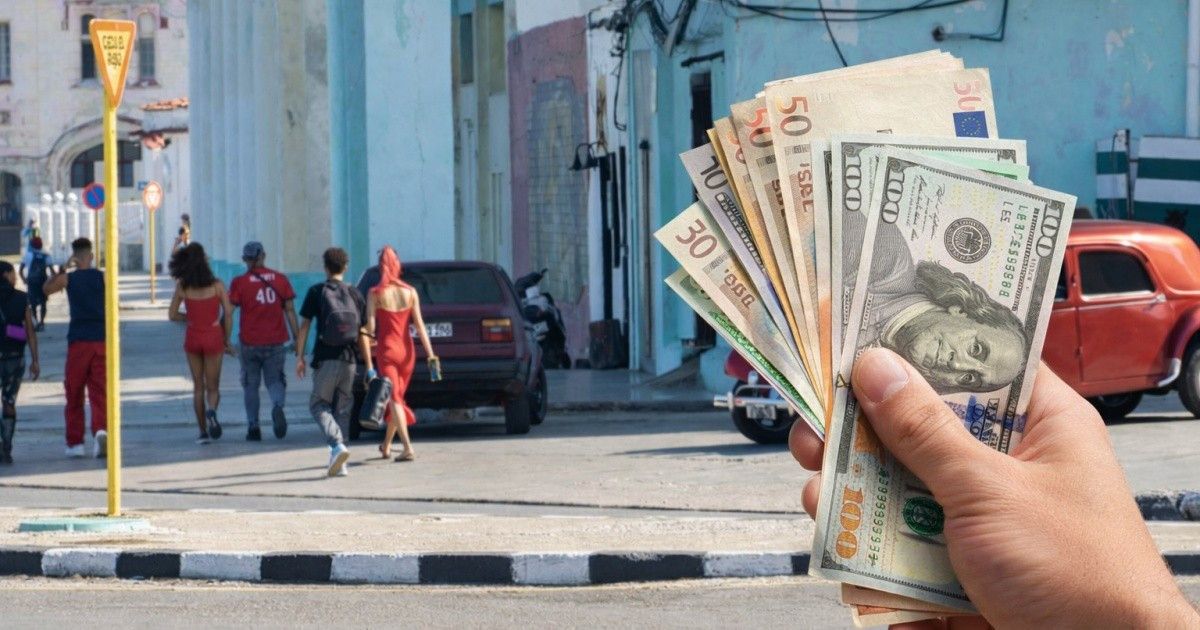
As of 8:00 PM Cuban local time, the informal currency market in Cuba wrapped up this Wednesday, August 5, 2026, without any fluctuations in its primary references.
The U.S. dollar and the euro closed the day at the same levels they opened, continuing to exert financial pressure on Cuban citizens. Meanwhile, the MLC (Moneda Libremente Convertible), which acts as a guide due to the limited transactions in this segment, experienced a slight decline.
U.S. Dollar: A Steady Force
The U.S. dollar (USD) ended Wednesday trading at 673 Cuban pesos (CUP), showing no change from the previous session and maintaining the same value as last week. This indicates a notable short-term stability.
Over the past month, the dollar has risen by 2.5 pesos from 670 CUP 30 days ago. However, this comparison should be approached with caution, as it might reflect index methodology adjustments rather than sheer market movements.
In the last 30 days, the dollar has fluctuated between a low of 655 CUP and a high of 675 CUP, marking the ebb and flow of the informal market amidst a structural scarcity of foreign currency.
Euro: Dominance in the Parallel Market
The euro (EUR) closed at 785 CUP, unchanged from yesterday and last week. However, over the past month, the euro has surged 20 pesos from 765 CUP, a 2.6% increase. As with the dollar, these figures might incorporate methodological adjustments.
The euro's value surpasses the dollar by 112 pesos, reinforcing its dominant position in the parallel market. Over the last 30 days, its price has ranged between 745 and 790 CUP, solidifying its status as the most expensive currency in Cuba's informal market.
MLC: Limited Circulation
The MLC closed around 450 CUP, though this is merely indicative due to the low volume of trades. It slipped by 1 peso from the previous day and has fallen 22 pesos compared to 472 CUP a week ago.
In the past month, it has decreased by 25 pesos from 475 CUP 30 days ago. This comparison may also reflect methodological changes. Without physical existence, its use is restricted to state-run stores that accept it, limiting its circulation compared to cash currencies.
Exchange Rates Summary
Exchange rates as of August 5, 2026:
- USD to CUP: 673 CUP
- EUR to CUP: 785 CUP
- MLC to CUP: 450 CUP (indicative value)
The official exchange rate from the Central Bank of Cuba (Segment III) remains at 615 CUP per dollar and 709 CUP per euro, far below the practical rates in the informal market.
Even though Segment III was introduced as a more flexible exchange mechanism, its official rate remains significantly distant from the informal market, failing to meet the real currency demand of the populace. The gap between the two markets is 58 pesos for the dollar and 76 pesos for the euro.
In a scenario marked by ongoing inflation, low state wages, and increasing partial dollarization of the economy, any fluctuation in the informal market has a direct impact on domestic prices and the purchasing power of Cubans.
Today's stability offers no relief: the dollar and euro remain at historically high levels, eroding the purchasing power of those earning income in pesos.
The CiberCuba Exchange Rate is an informal market index based on the automated analysis of thousands of currency exchange postings on Telegram and Facebook groups. The calculation filters out atypical offers and spam, weights each transaction according to its age, and consolidates a representative value updated multiple times a day.
Currency Conversion Equivalents
USD to CUP conversion as of August 5, 2026:
- 1 USD = 673 CUP
- 5 USD = 3,365 CUP
- 10 USD = 6,730 CUP
- 20 USD = 13,460 CUP
- 50 USD = 33,650 CUP
- 100 USD = 67,300 CUP
EUR to CUP conversion as of August 5, 2026:
- 1 EUR = 785 CUP
- 5 EUR = 3,925 CUP
- 10 EUR = 7,850 CUP
- 20 EUR = 15,700 CUP
- 50 EUR = 39,250 CUP
- 100 EUR = 78,500 CUP
- 200 EUR = 157,000 CUP
Frequently Asked Questions about Cuba's Informal Currency Market
Why is the informal currency market significant in Cuba?
The informal currency market in Cuba is crucial because it often reflects the real exchange rates used by the population, in contrast to the official rates which may not meet the actual demand for foreign currency.
What factors influence the stability of the U.S. dollar and euro in Cuba?
Factors such as foreign currency availability, economic policies, and inflation rates influence the stability of the U.S. dollar and euro in Cuba's informal market.
How does the exchange rate impact the Cuban economy?
Exchange rates significantly affect the Cuban economy by influencing import costs, purchasing power, and the overall cost of living, particularly for those earning in local currency.