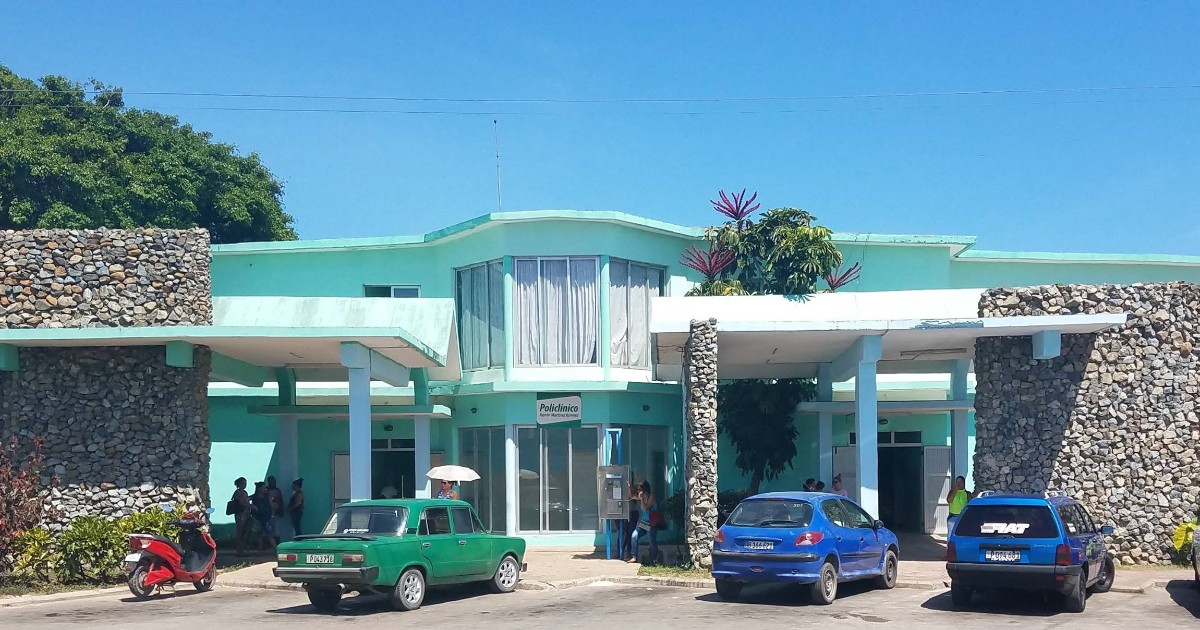
An unconscious man was discovered on the doorstep of a home in Santa Marta, a locality in the municipality of Cárdenas, Matanzas province. Those who came to his aid faced a series of obstacles while trying to secure urgent medical care.
According to a report by journalist Christian Arbolaez on Facebook, residents who found the man decided to take him immediately to the Ramón Martínez Ramírez clinic in Santa Marta.
Upon arrival, the situation worsened: the healthcare facility lacked the means to conduct a glucose test.
"The doctors and nurses did not have the necessary tools to perform a glucose test," Arbolaez shared, based on the accounts of those accompanying the patient.
Given the urgency, the companions made a decision that reflects the state of the Cuban healthcare system: they returned to the patient's own home to retrieve his personal blood sugar monitoring device to provide him with care.
At the same time, an ambulance from the SIUM (Integrated Medical Emergency System) was requested, but it took about an hour to arrive.
"Those who experienced the event expressed significant concern and lamented that, in the midst of an emergency, they had to seek the necessary resources on their own to treat the patient," wrote Arbolaez.
This episode is not an isolated case. The reference hospital in Cárdenas, Julio M. Aristegui Villamil, has been plagued with complaints of collapse since early 2026: anonymous medical staff have warned that patients need to bring their own syringes, catheters, and IV equipment, and that performing CT scans, MRIs, or various blood tests is not possible.
In May, another doctor warned that plans were underway to move the center's only functional anesthesia machine to another hospital, potentially leaving the main municipal facility without surgical capacity.
The lack of glucose meters in Cuban health facilities has been a documented issue for years. In 2023, even the state-run newspaper Granma admitted that glucose test strips had been missing from pharmacies "in recent years," with an estimated demand of 90 million units and a local production capacity projected at only 30 million.
Although the reason the Santa Marta resident lost consciousness is unknown, numerous cases of fainting in Cuba due to hunger have been documented.
In 2024, an elderly man experienced a hypoglycemic episode while waiting in line at a bank in Santiago de Cuba, standing in the sun, poorly nourished and ill, without a seat available despite his advanced age.
Months later, a man collapsed in front of a home in the Las Cruces neighborhood of Altamira, Santiago de Cuba, apparently due to a hypoglycemic crisis triggered by hunger and lack of food intake.
Understanding Cuba's Healthcare Crisis
What challenges did the man in Santa Marta face when seeking medical attention?
The clinic he was taken to lacked the necessary equipment to perform a glucose test, requiring those assisting him to find a blood sugar monitoring device from his home.
How is the healthcare system in Cárdenas described?
It has been described as collapsing, with reports of patients needing to bring their own medical supplies and the inability to perform necessary tests like CT scans and MRIs.
What has been reported about the availability of glucose meters in Cuba?
There is a chronic shortage, with a high demand not matched by local production, leading to a significant gap in availability.