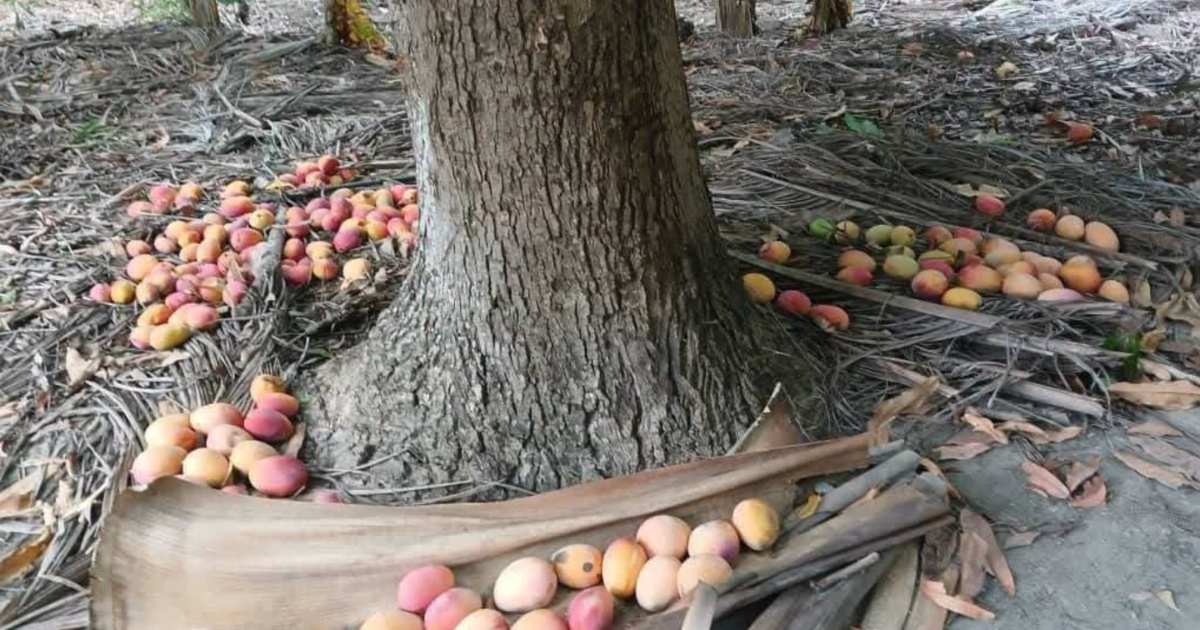
Farmers in the Río Seco community of Guantánamo province are facing a dire situation as tons of mangoes rot on the ground. State-run collection agencies have cited a lack of fuel and transportation as the reason for not gathering the harvest, according to a report from the Facebook page La Tijera News.
The report includes images and video showing the ground completely covered with ripe mangoes—yellow, orange, and red—left untouched, while farmers express frustration over months of labor going to waste due to government inaction.
Many farmers are hesitant to publicly speak out about the issue, fearing retaliation or being ignored by authorities, according to those affected.
The Ongoing Crisis in Mango Collection
This is not an isolated incident. In late July, spokesperson Chely Tamayo shared similar images from a farm in Maisí, describing the situation as "catastrophic and unacceptable." He highlighted the plight of farmer Aparicio Samón Leyva from the "Luis Ramírez López" cooperative in the same Río Seco area.
"Lack of fuel is not an excuse; it is the bottleneck turning essential food into waste," Tamayo stated. His complaint drew significant attention on social media platforms.
Government Acknowledgment and Legislative Action
Days later, Emilio Interián Rodríguez, a deputy and president of the CCS Sabino Pupo Milián cooperative, addressed the issue at the National Assembly. "We have lost the entire mango production, more than 100 tons of high-quality mangoes," he lamented. "A product we could have exported, processed, or turned into the best juice in the world." His remark, "We can't even make mango juice with so many mangoes here," became a viral expression of the absurdity of the situation.
Interián also shared that families in his district reported, "Last night we couldn't eat, my children went hungry." He emphasized that power outages prevent cooking and preserving food, while Cuba imports low-quality, overpriced juices and lets its own produce rot.
Repeated Failures and Broader Implications
The mango collection campaign in Guantánamo started on May 25, with a goal of processing 5,000 tons by mid-July—already a reduction from the 7,000 tons collected the previous year. By mid-July, approximately 1,600 tons were already considered lost.
The logistical collapse is worsened by fuel theft; in June, a diesel theft ring was dismantled at a provincial power plant.
This pattern is a recurring issue. In 2023, tons of mangoes were again lost in Guantánamo due to the same inefficiencies. The year before, the Ceballos agro-industrial company reported significant fuel shortages during the campaign; in 2021, 12,800 pounds of mangoes rotted in Camagüey due to similar collection failures.
The waste occurs at a critical time. A survey by the Food Monitor Program and Cuido60 revealed that 96.91% of the Cuban population lacks adequate food access, with 33.9% of households having at least one member who went to bed hungry in the past month.
Guantánamo has one of the highest rates of food insecurity in the country, with 78.7% of households affected.
Frequently Asked Questions about Mango Shortages in Cuba
What are the main reasons for the mango waste in Guantánamo?
The primary reasons for the mango waste in Guantánamo are the lack of fuel and transportation within state-run collection agencies, leading to an inability to gather and process the fruit.
How has the government responded to the mango crisis?
Government officials, such as Emilio Interián Rodríguez, have raised the issue in the National Assembly, highlighting the significant losses and calling for better management and resources to prevent future waste.
What impact does the mango waste have on local communities?
The waste exacerbates food insecurity in the region, where a significant number of households already struggle with inadequate food access. It also represents a financial loss for farmers who rely on the harvest for income.