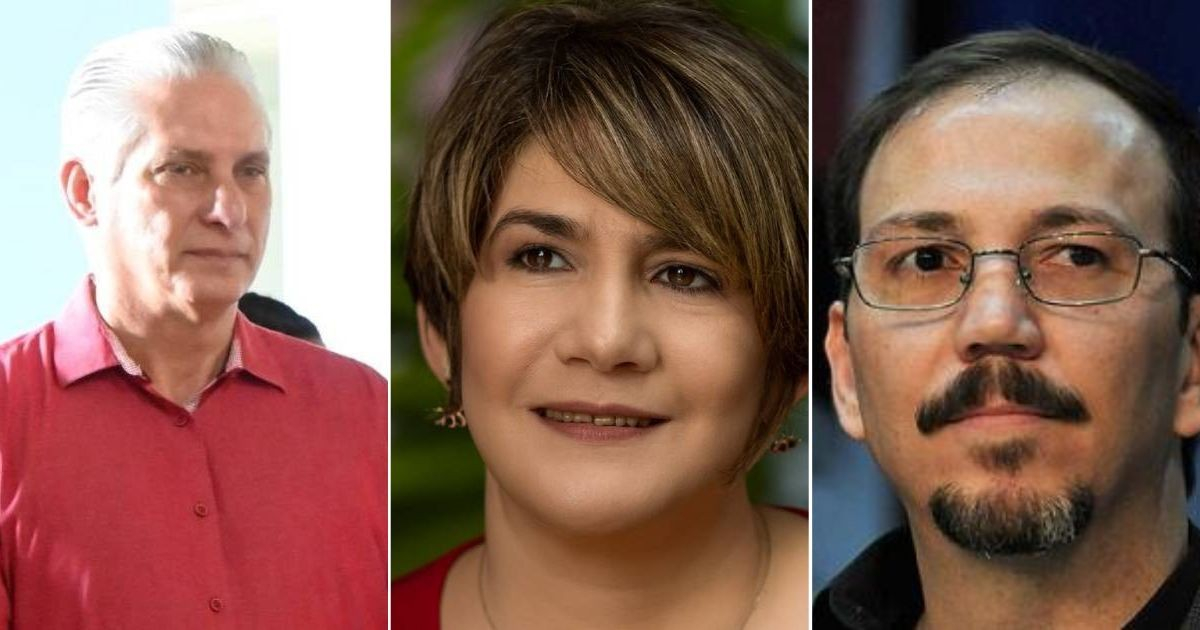
The U.S. government has formally listed sanctions in the Federal Register this Wednesday, targeting five individuals and six entities connected to the Cuban regime, including leader Miguel Díaz-Canel, his wife Lis Cuesta Peraza, and several members of the Castro family.
As reported by Martí Noticias, the publication of document 2026-15827 does not introduce any new sanctions. Instead, it permanently records the measures previously taken on June 4 by the Office of Foreign Assets Control (OFAC) of the Treasury Department, pursuant to Executive Order 14404, signed by President Donald Trump on May 1 of this year.
This formalization ensures that all assets and interests under U.S. jurisdiction belonging to the sanctioned individuals remain blocked, and it continues to prohibit U.S. citizens, businesses, or institutions from engaging in transactions with them.
Individuals and Entities Under Sanction
In addition to Díaz-Canel and Lis Cuesta, the list includes the ruler's stepson, Manuel Anido Cuesta; Raúl Castro's son, Alejandro Castro Espín; and the former Cuban leader's grandson, Raúl Alejandro Castro Calis.
The sanctions also extend to the Ministry of the Revolutionary Armed Forces (MINFAR), the Committees for the Defense of the Revolution (CDR), the Cuban Institute of Friendship with the Peoples (ICAP), the travel agency Amistur Cuba S.A. linked to ICAP, and the mining company La Victoria S.A.
Significance of the Sanctions
The inclusion of MINFAR is particularly significant due to the military's influence over vast sectors of the Cuban economy, primarily through the GAESA conglomerate. Meanwhile, the designation of La Victoria S.A., a joint venture between the Australian Antilles Gold Ltd and the state-owned Geominera S.A., led to the suspension of the Australian company's stock trading in June.
Alejandro Castro Espín's inclusion is notable as he is regarded as one of the most influential figures within Cuba’s security apparatus. He played a key role in the secret negotiations with the Obama administration that resulted in the restoration of diplomatic relations between the two countries in 2015.
Impact and Response
When announcing the sanctions in June, Secretary of State Marco Rubio emphasized that the measures aim to disrupt "the network that enables and finances Cuba's subversive and radical operations." He warned that anyone providing support to the sanctioned parties could face new designations.
The sanctions now published in the Federal Register are part of the third round of measures implemented under Executive Order 14404. Previously, Washington sanctioned GAESA, Moa Nickel S.A., several high-ranking security officials, and entities linked to intelligence and the National Revolutionary Police. In the ensuing months, the Trump Administration expanded restrictions on companies involved in the tourism, energy, and Cuban medical mission sectors.
Following the announcement of the sanctions in June, Miguel Díaz-Canel denounced the measures as "illegitimate" and asserted that Cuba would withstand what he called an "imperialist onslaught." The Cuban vice foreign minister claimed that Washington has imposed approximately 250 sanctions against the island since early 2026.
Key Questions on U.S. Sanctions Against Cuban Officials
Who are the main individuals affected by the U.S. sanctions?
The sanctions target Miguel Díaz-Canel, Lis Cuesta Peraza, Manuel Anido Cuesta, Alejandro Castro Espín, and Raúl Alejandro Castro Calis.
What is the significance of including MINFAR in the sanctions?
MINFAR's inclusion is significant due to the military's control over large portions of the Cuban economy via the GAESA conglomerate.
How did the Cuban government respond to the sanctions?
Miguel Díaz-Canel condemned the sanctions as "illegitimate," claiming that Cuba would endure what he referred to as an "imperialist onslaught."