For many years, the Cuban government heavily invested in the tourism sector as a cornerstone of its economic strategy.
Billions of dollars were allocated to erect new hotels and develop tourist hubs, largely managed by the military conglomerate GAESA, in hopes of drawing in a steady stream of foreign visitors and boosting foreign currency income.
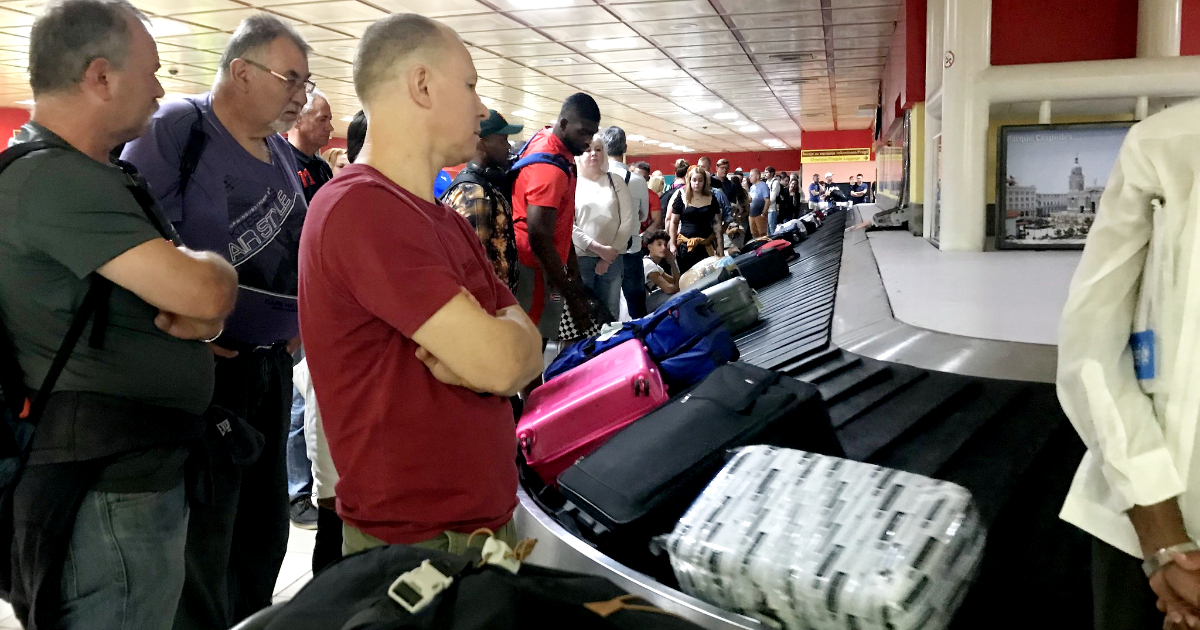
However, the latest report from the research center Cuba Siglo XXI indicates that this model is currently facing its most challenging period. The report highlights a significant shift: nearly half of those arriving on the island in May 2026 were Cuban expatriates, primarily visiting family and delivering aid, rather than engaging in tourism.
Emilio Morales, who authored the report, analyzed statistics from the ONEI regarding traveler entries by residence. He found that Cuban nationals living abroad made up 47.6% of arrivals in May, an unprecedented ratio that underscores the collapse of traditional tourism.
Cuban Diaspora as a Travel Backbone
The report emphasizes that many of these travelers do not stay in hotels or participate in conventional tourist activities. Instead, they often stay with relatives, bringing with them food, medicine, essential goods, and remittances to help mitigate the severe economic crisis gripping the island.
Empty Hotels and a Waning Industry
While the profile of visitors to the country changes, the report paints an increasingly bleak picture for the hotel industry.
Between January and May 2026, only 359,491 international visitors arrived in Cuba, marking a 58.45% decrease compared to the same period the previous year and an 82.74% drop from pre-pandemic levels.
Hotel occupancy rates reflect this decline, dropping from 23% in March 2025 to 18.9% the following year, then plummeting to just 12.9% in May 2026.
Authors of the report argue that much of the hotel infrastructure built over the past decade remains nearly vacant.
Misplaced Priorities in Tourism Investment
One of the key points raised in the report is that the regime prioritized expanding the tourism sector for years, while other strategic sectors faced progressive deterioration.
Significant resources were funneled into constructing luxury hotels, as issues in power generation, public transportation, agricultural production, water supply, and healthcare systems worsened.
According to Cuba Siglo XXI, this policy has also diminished the island's appeal as a tourist destination.
Frequent blackouts, fuel shortages, challenges in securing food, deteriorating public services, and transportation limitations negatively impact both the local population and the experiences of foreign visitors.
Humanitarian Visits Replace Vacation Travel
The report asserts that under current conditions, Cuban expatriates have become a primary support for the flow of travelers to the island.
Unlike traditional vacation tourism, these trips are mainly driven by family and humanitarian needs. Visitors bring food, medicines, hygiene products, appliances, and other hard-to-find items in the Cuban market, as well as financial support for their families.
The authors of the report suggest that this shift signifies the exhaustion of the tourism model that once played a crucial role in the state’s foreign currency earnings.
The report concludes that the internal economic crisis, the deterioration of basic services, the loss of Cuba's competitive edge as a destination, and recent U.S. sanctions against GAESA and its network are hastening the decline of a sector long touted as the main engine of the national economy.
Understanding the Decline in Cuban Tourism
Why are fewer tourists visiting Cuba?
The decline in tourist numbers is attributed to a combination of factors, including economic mismanagement, deteriorating infrastructure, and recent international sanctions affecting the tourism sector.
What role do Cuban expatriates play in the current travel landscape?
Cuban expatriates are now a significant portion of travelers to the island, primarily visiting family and providing essential goods and financial support, highlighting a shift from traditional tourism to humanitarian travel.
How has the hotel industry in Cuba been affected by the decline in tourism?
The hotel industry has seen a substantial decrease in occupancy rates, with many establishments remaining largely empty due to the sharp drop in international visitors.