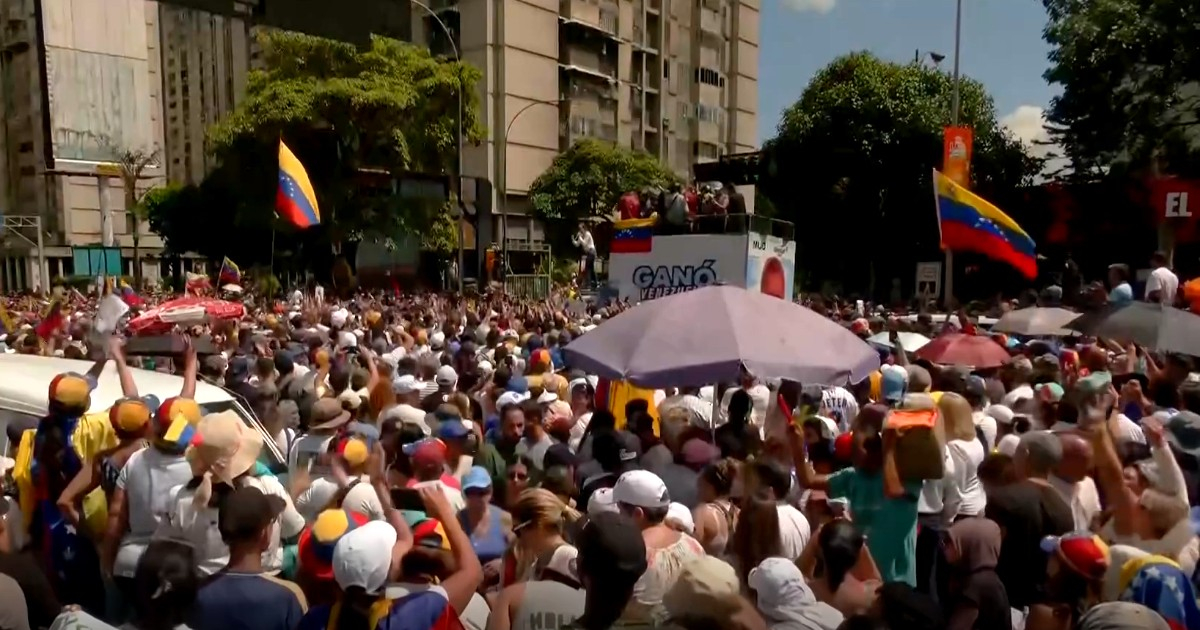
A bipartisan coalition of seven U.S. senators introduced a resolution on Wednesday demanding a peaceful transition to democracy in Venezuela through free, fair, and transparent presidential elections. The resolution also calls for the immediate release of all political prisoners in the country.
Led by Ted Cruz (Republican from Texas) and Jeanne Shaheen (Democrat from New Hampshire), the initiative is supported by Senators Tim Kaine, Rick Scott, Dick Durbin, Adam Schiff, and Jacky Rosen. It has been forwarded to the Senate Foreign Relations Committee for further consideration.
The resolution states that Delcy Rodríguez, who assumed interim leadership in Venezuela following Nicolás Maduro's capture on January 3, 2026, during Operation Absolute Resolve, "lacks the electoral mandate of the Venezuelan people, has not made significant efforts to call for free and fair elections, and is widely viewed as incapable of winning any such election."
Furthermore, the document warns that any arbitrary detention, forced disappearance, death, or serious harm inflicted upon political candidates or figures—specifically mentioning María Corina Machado—would be presumed to occur with the knowledge or approval of senior Venezuelan government officials, prompting Washington to hold the perpetrators accountable.
The resolution also emphasizes that "the structures that have sustained persecution in Venezuela for years remain intact," reaffirming the U.S. policy of supporting a peaceful democratic transition.
This resolution emerges amid tensions between Congress and the White House regarding the pace and conditions of Venezuela's transition. Recently, Secretary of State Marco Rubio stated that the process should take "months, not years," and testified before the Senate that the Trump administration's goal is a "friendly, stable, prosperous, and democratic" Venezuela with "all elements of society represented in free and fair elections."
However, on July 24, Donald Trump stirred controversy by declaring that Venezuela is "not ready yet" for elections, though he praised Rodríguez for doing "a fantastic job."
Meanwhile, on August 1, formal negotiations began between representatives of the Chavismo, led by Jorge Rodríguez, and an opposition delegation headed by Dinorah Figuera, with the stated aim of advancing towards an electoral transition. The U.S. expressed satisfaction with these talks on Tuesday.
Machado and opposition candidate Edmundo González Urrutia have conditioned their support for the process on concrete and verifiable outcomes: the release of political prisoners, restoration of democratic institutions, guarantees for all political actors, and a clear presidential electoral timetable.
The immediate background to this pressure is the Venezuelan presidential election on July 28, 2024, in which the State Department concluded that González Urrutia secured the majority of votes and that Maduro did not win.
The Senate resolution also recalls that Machado won the opposition primaries on October 22, 2023, with over 90% of the votes but was disqualified for 15 years by the Venezuelan Supreme Court of Justice.
In July, Rubio announced the formal start of the transition process, outlining a three-phase plan—stabilization, economic recovery, and transition to democratic elections—that Congress now seeks to solidify with this bipartisan resolution to ensure the administration remains firm in its democratic demands on the Venezuelan government.
Key Questions About Venezuela's Political Transition
What is the U.S. Senate's stance on Venezuela's political situation?
The U.S. Senate has issued a bipartisan resolution calling for a peaceful transition to democracy in Venezuela through free, fair, and transparent elections, along with the immediate release of all political prisoners.
Who are the key figures mentioned in the resolution?
The resolution mentions Delcy Rodríguez, who is currently the interim leader of Venezuela, María Corina Machado, a political candidate, and Edmundo González Urrutia, an opposition candidate, among others.
What actions does the resolution propose if human rights violations occur?
The resolution warns that any arbitrary detentions or harm to political figures would be presumed to have occurred with the knowledge or approval of senior government officials, prompting the U.S. to hold those responsible accountable.